Picking the right stocks is only part of improving investment returns. Michael Taylor looks at the gap between the trader you are and the trader you want to be, focusing on position sizing, risk management and why sticking to Stage 2 uptrends can help protect your P&L.

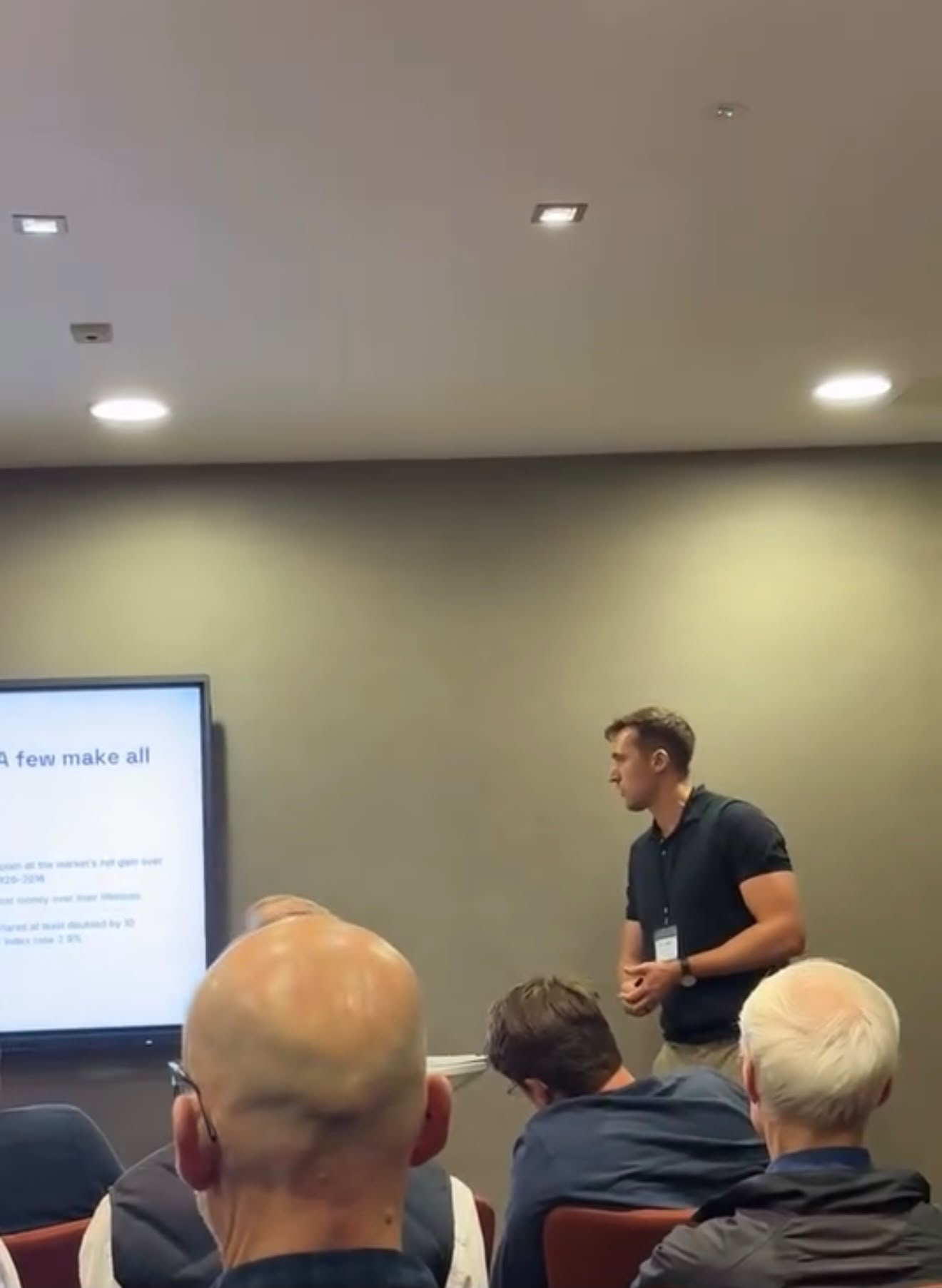
I gave a talk at Mello London this month called How to Improve Your P&L.
Most people go to investor shows for stock ideas. Unlike probably all speakers, I didn’t talk about a single stock.
Why?
Picking stocks is great. However, the way to win is by holding stage 2 uptrends and averaging up, but what is behind that is the person and not the stock.
The framework I used isn’t mine. It comes from Steven Goldstein’s book Mastering the Mental Game of Trading, and I borrowed it because I haven’t found a better one. It’s an excellent book and one I would definitely recommend reading. There’s the trader you are, and the trader you should be. Your P&L leaks out of the gap between the two.
That gap isn’t a metaphor. Morningstar measures it every year in its Mind the Gap study. Over the 10 years to December 2025, US funds returned 9.9% a year. The average dollar invested in those same funds earned 8.7%. The missing 1.2 points a year comes down to when investors chose to buy and sell.
You’ve probably heard of Peter Lynch, who ran the Magellan Fund for 13 years at Fidelity and averaged a 29.2% CAGR. Despite having one of the best-performing, if not the best-performing, funds in the world at that time, most of his investors still lost money. Why? Because they bought high and sold low.
And that’s in funds. I’d bet the gap in UK small-caps is far wider, although nobody publishes that study because nobody would want to read it.
You narrow the gap with two kinds of capital. Physical capital is the money, and how you put it at risk. Psychological capital is the mind making the decisions, and the body it runs on.
Size by risk, not conviction
Hendrik Bessembinder studied US stocks going back to 1926. Just 4% of them explained the market’s entire net gain over Treasury bills. More than half delivered negative returns over their lifetime.
It isn’t only America. By 10 September this year, 28 AIM shares had at least doubled, according to interactive investor. The AIM All-Share was up 2.9%.
The romance of buying and holding forever is a nice fantasy. The reality is that most stocks fail to beat T-bills and a handful pay for everything.
So your job isn’t to be right more often. It’s to make being right pay well and being wrong cost little.
Most of us do the opposite. We size by feel, and allocate more into the ones we love. This is silly because you should be allocating the same risk per trade unless you have clear data that suggests you should be sizing up your trades
Consider starting with the 1% rule instead: never risk more than 1% of your account on a single trade. This is just a suggestion, of course, and not financial advice, but using a strict limit per trade will help you and protect you.
Position size = (portfolio × 1%) ÷ distance to your exit
On a £100,000 account that’s £1,000 at risk. If your stop is 10% below your entry, you can buy £10,000 of stock. If it’s 25% below, you can buy £4,000.
The size comes from where the chart says you’re wrong. You want to be outside of the obvious stop-loss liquidity, but not too far away that it stunts your upside. All of the CEOs at any show will always be bullish and tell you why you should buy the stock.
Why 1%? Because everyone has a losing run. Lose 10 in a row risking 1% a time and you still have 90% of your capital.
No trader ever went bust taking small losses.
The 1% is a starting point, but there are other things that you should consider too.
- Volatility. The more volatile the stock, the wider the stop, and the smaller the position should be. Same £1,000 at risk.
- Market conditions. If the index itself is in decline, halve your risk per trade.
- Drawdown. Down 10% from your peak? Halve your risk until you’re back on track.
- Liquidity. On SETSqx, where the less liquid shares trade through market makers and periodic auctions, the spread is part of your loss. A 5% spread on a 15% stop is a third of your risk gone on day one.
Those thresholds are examples. Set your own, and write them down before you need them.
Buy Stage 2. Never Stage 4.
Every share moves through four stages. This is Stan Weinstein’s framework from Secrets for Profiting in Bull and Bear Markets, and I use it every day.
Stage 1 is the base: the stock goes nowhere. Stage 2 is the advance: the price trades above rising long-term moving averages, with heavier volume on up days as buyers accumulate. Stage 3 is the top. Stage 4 is the decline: the price sits below falling moving averages. Weinstein used the 30-week moving average. I use the 200-day.
Stage 2 is where money is made. Stage 4 is where it’s lost.
Rather than repeat myself here, it would be better to redirect you to an article I wrote for ShareScope in detail about this back in 2019.
I use ShareScope to find and plan my trades. To find all my filters, go to the filter library and type Michael, and all of my filters will show.
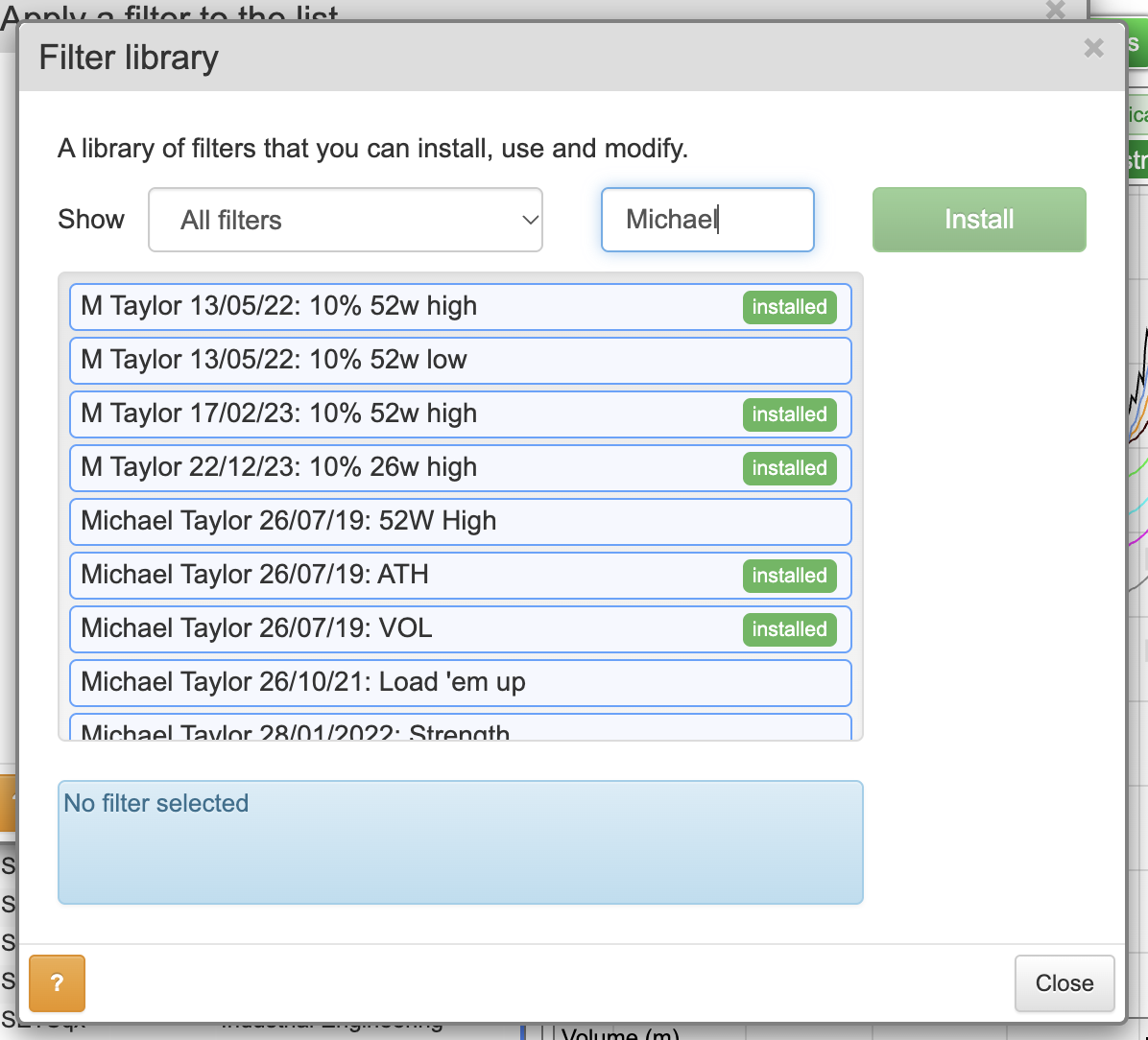
To find Stage 2 candidates, start with stocks near their highs. You can run this screen for yourself by selecting the ‘10% within 52-week highs’ filter within ShareScope’s Filter Library. Simply go to: Filter → Apply filter → Library.
Then set the exit before you buy. Write it down. Plan what you’ll do if the stock goes up as well as down, so you aren’t deciding in a panic.
Mark Minervini has said that those who trade without a stop loss eventually stop trading. He’s right.
In my next part, we’ll move onto the psychological aspect of improving your P&L.
Michael Taylor
Get Michael’s trade ideas: https://newsletter.buythebullmarket.com/
Free educational content: @shiftingshares
This article is for educational purposes only. It is not a recommendation to buy or sell shares or other investments. Do your own research before buying or selling any investment or seek professional financial advice.
This article is for educational purposes only. It is not a recommendation to buy or sell shares or other investments. Do your own research before buying or selling any investment or seek professional financial advice.