Machine tool manufacturer Renishaw and homeware and furniture retailer Dunelm are both highly profitable businesses, but they take very different approaches to how they use those profits. Richard Beddard examines their contrasting strategies and what they might mean for long-term investors.

5 Strikes
Since my last update seven companies have published annual reports and passed my minimum quality filter.
|
Name |
TIDM |
Prev AR |
Strikes |
# Strikes |
|---|---|---|---|---|
|
DFS |
DFS |
13/10/26 |
– Holdings – Debt – Growth |
3 |
|
DNLM |
Dunelm |
9/10/26 |
– Debt |
1 |
|
RSW |
Renishaw |
9/10/26 |
– CROCI |
1 |
|
SMIN |
Smiths |
8/10/26 |
– Holdings ? Acquisitions – Growth ? ROCE |
3 |
|
BTRW |
Barratt Redrow |
6/10/26 |
– Holdings ? CROCI – Growth – ROCE – Shares |
4 |
|
ALU |
Alumasc |
1/10/26 |
? Holdings – CROCI – Debt – Growth |
3 |
|
RCN |
Redcentric |
29/9/26 |
? Acquisitions – Debt – Growth – ROCE |
4 |
|
15/10/2026 |
||||
The next stage in the 5 Strikes process is to check each company’s director holdings, and their financial performance over the previous eight years. If a company fails to meet my arbitrary benchmarks I award it a strike. Companies that score less than three strikes join my watch list. This time, there are only two: Dunelm and Renishaw.
DNLM [-Debt]
Homewares and furniture retailer Dunelm intrigues me. In terms of strong consistent profitability (Return on Capital Employed) and its cash analog Cash Return on Capital Invested it is a first class business.
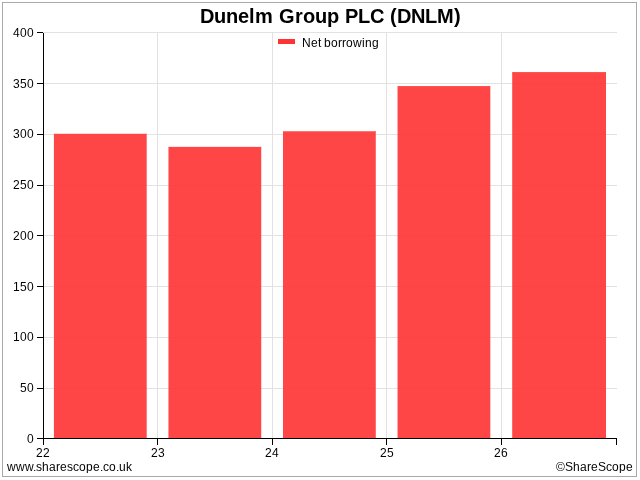
This has enabled Dunelm to take on debt without overly concerning shareholders about its ability to repay it. In 2026, Dunelm’s net borrowing of £362m was 70% of capital employed (excluding goodwill). It paid £15m in interest from £169 of free cash flow (for the firm).
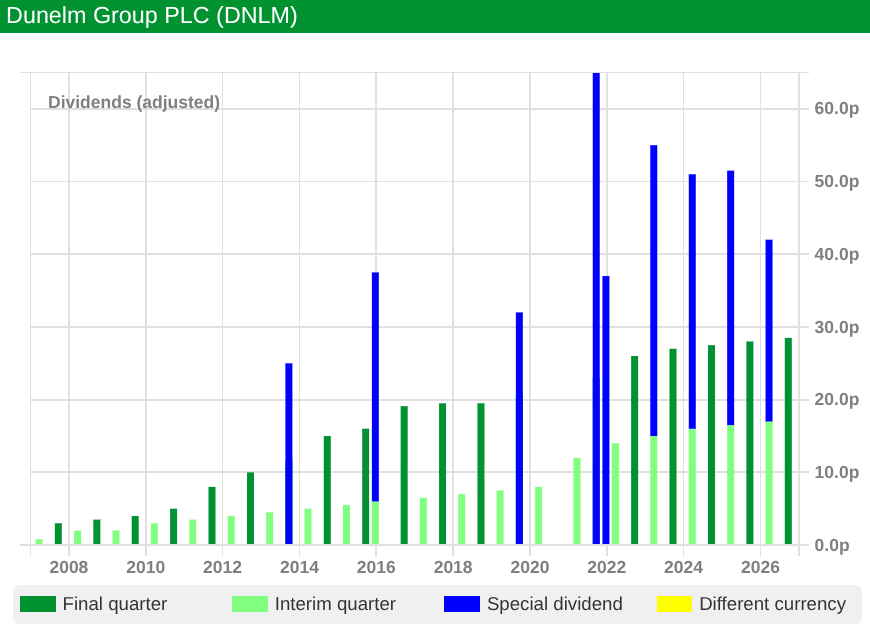
Dunelm has plenty of financial resources at its disposal, but it has not been investing very heavily. Over the four years since the business stabilised after a pandemic related boom (we spent more on our homes), capital expenditure has totalled £141m. There have been other small investments, but they amount to a fraction of the £621m the company has paid out in dividends.
Source: ShareScope
Since 2020, when Dunelm only paid one normal dividend at the half-year, it has paid a special dividend every year on top of the two regular dividends. Add in modest share buybacks, and in total the company has returned £659m to shareholders.
This conservative use of funds may be wholly appropriate for a business that already has a large market share. Dunelm’s share of the total UK and furniture market is just shy of 8%.
The company published a last update, which contains a convenient precis of its strategy. It is conservative. Dunelm is focused on optimising its product ranges, store refits, and efficiency, largely through automation.
It started the year to June 2027 with 204 stores, and by the end of the first half of the financial year in December it expects to have opened two more (the same number that it opened in the whole of 2026).
The annual report says Dunelm has identified 100 locations for new stores, and it expects to open up to ten a year. This is an acceleration, albeit a modest one. Even if it achieves the maximum it will increase the estate by about 5% a year.
It goes some way to explaining why the consensus of analysts in Sharescope predicts a steady increase in capital expenditure over the next three years, from £43m to £96.4m.
As they say, elephants don’t gallop. Apparently they can’t trot either. It will be interesting to see, whether Dunelm can break out of the casual stroll it has achieved over the last four years…
RSW [-CROCI]
Renishaw’s strike is for Cash Return on Capital Invested.
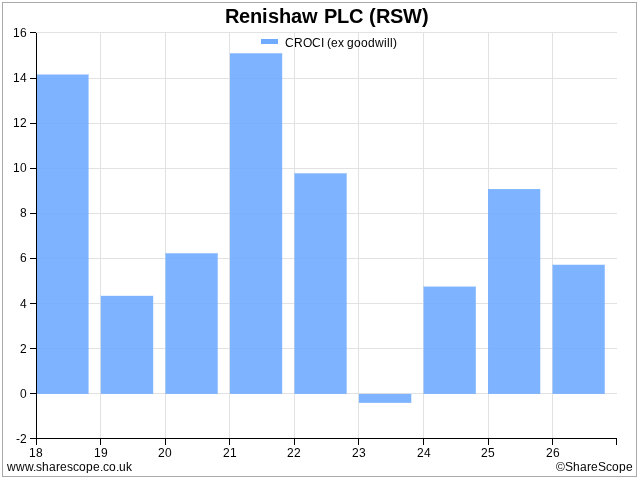
CROCI has only been negative once in the last eight years, and marginally so. But CROCI is quite variable and pales in comparison to its profit based analog Return on Capital Employed.
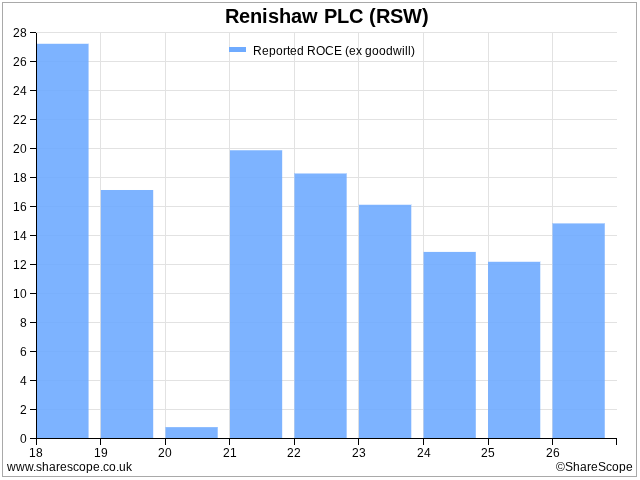
The reason is investment. In this respect, Renishaw is the anti-Dunelm. It ploughs a great deal of what it earns back into the business, investing in research and development, software, plant and equipment to make the machine tools and additive manufacturing machines it is famous for.
These investments should earn Renishaw revenue in the future. To match the cost to the period over which an investment earns revenue, the company depreciates or amortises it (spreads it out). Costs are moved into future years, which boosts profit in the years of investment. In contrast the cash flow statement includes the actual amount the company spent in the year.
In theory, investment leads to growth, but at Renishaw it does not come smoothly. Machine tools are capital equipment. Manufacturers buy them when the market for their products is buoyant and they are investing in new factories, or improving their existing facilities. When they are not doing so well, Renishaw’s customers use the equipment they already have.
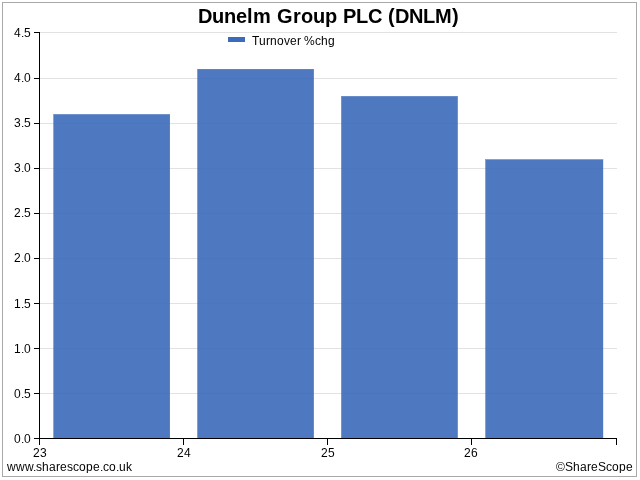
In 2026, demand was high for tools that help manufacture and test semiconductors and components for the aerospace and defence sectors and Renishaw grew turnover nearly 15% (17% at constant exchange rates).
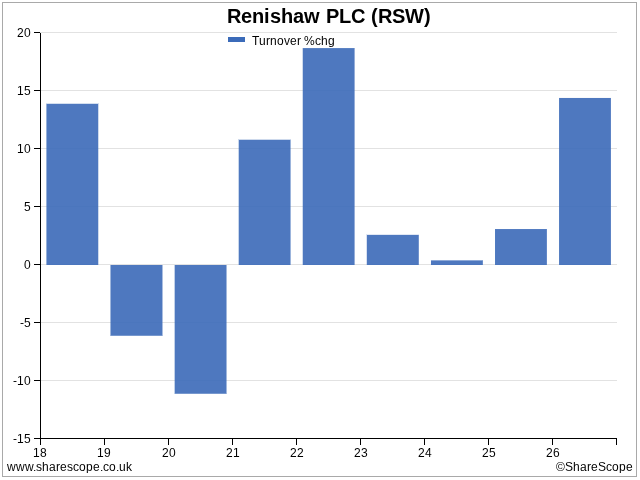
Renishaw reports unprecedented demand for encoders used across the semiconductor manufacturing process due to “exponential growth in demand for AI processing”.
I am sure I am not alone in wondering how long this boom will last. In its annual report, chief executive Will Lee writes:
“FY2027 has started strongly as we continue to benefit from the current upturn in demand for semiconductor manufacturing equipment. We expect further strong progress on revenue and profit in the year ahead.”
A bit longer then…
Capex to operating cashflow %
Can we spot investors like Renishaw and distributors like Dunelm at a glance? Perhaps we can, using the Capex (capital expenditure) to operating cashflow ratio, which you can find on the Ratios tab in ShareScope’s financials. This tells us what proportion of operating cashflow a company invested in intangible assets (software for example) and tangible assets (plant and equipment), in a given year.
These are the numbers for Renishaw and Dunelm:
|
Year/Capex to operating cashflow |
2023 |
2024 |
2025 |
2026 |
|---|---|---|---|---|
|
Dunelm |
7.8% |
11.5% |
14.3% |
13.0% |
|
Renishaw |
75.2% |
51.2% |
36.7% |
32.2% |
|
Source: ShareScope |
||||
One year could be misleading. Renishaw’s cashflow is volatile, and in 2023 and 2024 cashflow was weak, which partly explains the very high high capex to operating cashflow ratios in those years. Over time, a pattern emerges.
All the 0’s, 1’s and 2’s
So far this year, I have awarded less than three strikes to 87 shares. Thirteen have achieved no strikes, 25 have 1 strike, and 46 have two strikes. The links in the table below go to articles where I discuss these shares.
|
Name |
TIDM |
Prev AR |
Strikes |
# Strikes |
Link |
|---|---|---|---|---|---|
|
CER |
Cerillion |
12/1/26 |
0 |
||
|
HWDN |
Howden Joinery |
25/2/26 |
? Holdings |
0 |
|
|
PRV |
Porvair |
11/3/26 |
? Holdings |
0 |
|
|
NICL |
Nichols |
23/3/26 |
0 |
||
|
MGNS |
Morgan Sindall |
24/3/26 |
0 |
||
|
QTX |
Quartix Technologies |
25/3/26 |
? ROCE |
0 |
|
|
CCC |
Computacenter |
8/4/26 |
0 |
||
|
FOUR |
4imprint |
14/4/26 |
? Holdings |
0 |
|
|
KEYS |
Keystone Law |
13/5/26 |
0 |
||
|
AUTO |
Autotrader |
8/6/26 |
0 |
||
|
TAM |
Tatton Asset Management |
16/6/26 |
0 |
||
|
CWK |
Cranswick |
30/6/26 |
? Growth |
0 |
|
|
KNOS |
Kainos Group Ltd |
24/7/26 |
? Growth |
0 |
|
|
BOWL |
Hollywood Bowl |
5/1/26 |
– Debt |
1 |
|
|
MEGP |
Me Group International |
23/3/26 |
– Growth ? ROCE |
1 |
|
|
ALFA |
Alfa Financial Software |
24/3/26 |
– Growth |
1 |
|
|
GAMA |
Gamma Communications |
24/3/26 |
? Acquisitions – Holdings |
1 |
|
|
ROR |
Rotork |
27/3/26 |
– Holdings ? Growth |
1 |
|
|
CKN |
Clarkson |
30/3/26 |
? Growth – ROCE |
1 |
|
|
RMV |
Rightmove |
30/3/26 |
– Holdings |
1 |
|
|
IMI |
IMI |
31/3/26 |
? Holdings – Debt ? Growth |
1 |
|
|
FDM |
FDM Group |
10/4/26 |
– Growth |
1 |
|
|
HILS |
Hill & Smith |
10/4/26 |
– Holdings ? Acquisitions |
1 |
|
|
NXT |
Next |
16/4/26 |
– Debt |
1 |
|
|
BAG |
Barr (AG) |
21/4/26 |
? Acquisitions ? Growth |
1 |
|
|
SAG |
Science |
21/4/26 |
? Growth |
1 |
|
|
ELCO |
Eleco |
9/5/26 |
– Holdings ? Growth |
1 |
|
|
LSC |
London Security |
15/5/26 |
– Holdings |
1 |
|
|
W7L |
Warpaint London |
22/5/26 |
– Shares ? Growth |
1 |
|
|
PETS |
Pets at Home |
9/6/26 |
– Holdings ? Growth |
1 |
|
|
BMY |
Bloomsbury Publishing |
19/6/26 |
– Growth |
1 |
|
|
HLMA |
Halma |
24/6/26 |
? Holdings ? Acquisitions |
1 |
|
|
XPS |
XPS Pensions |
13/7/26 |
? Holdings ? Debt |
1 |
|
|
LTHM |
Latham (James) |
23/7/26 |
– CROCI ? Growth |
1 |
|
|
GAW |
Games Workshop |
28/7/26 |
? Holdings |
1 |
|
|
JET2 |
Jet2 |
3/8/26 |
? Holdings ? CROCI ? Growth ? ROCE |
1 |
|
|
CBOX |
Cake Box |
5/8/26 |
? Acquisitions – Debt |
1 |
|
|
CFX |
Colefax |
12/8/26 |
? Growth |
1 |
|
|
ASHM |
Ashmore |
16/9/26 |
? CROCI – Growth |
1 |
|
|
ARC |
Arcontech |
23/9/26 |
– Growth |
1 |
|
|
DNLM |
Dunelm |
9/10/26 |
– Debt |
1 |
|
|
RWS |
RWS |
8/1/26 |
? Acquisitions – Growth – ROCE |
2 |
|
|
IHP |
IntegraFin |
9/1/26 |
– CROCI |
2 |
|
|
RFX |
Ramsdens |
15/1/26 |
– CROCI ? Growth ? ROCE |
2 |
|
|
REL |
RELX |
19/2/26 |
? Holdings – Debt ? Growth |
2 |
|
|
IHG |
InterContinental Hotels |
26/2/26 |
? Holdings – Debt |
2 |
|
|
DATA |
GlobalData |
2/3/26 |
? Acquisitions – Debt ? ROCE |
2 |
|
|
GSK |
GSK |
6/3/26 |
? Holdings – Debt ? Growth |
2 |
|
|
MONY |
Mony |
9/3/26 |
– Holdings ? Growth |
2 |
|
|
STEM |
SThree |
9/3/26 |
– Holdings – Growth |
2 |
|
|
CTEC |
ConvaTec |
10/3/26 |
? holdings – Debt ? Growth ? ROCE |
2 |
|
|
BNZL |
Bunzl |
17/3/26 |
? Holdings – Debt – Growth |
2 |
|
|
HIK |
Hikma Pharmaceuticals |
18/3/26 |
? Acquisitions – Debt |
2 |
|
|
YU. |
Yu |
18/3/26 |
– CROCI ? ROCE |
2 |
|
|
JSG |
Johnson Service |
19/3/26 |
– Holdings – Debt |
2 |
|
|
ITRK |
Intertek |
20/3/26 |
? Holdings – Debt ? Growth |
2 |
|
|
BA. |
BAE Systems |
24/3/26 |
? Holdings ? Acquisitions – Debt ? Growth |
2 |
|
|
DOM |
Domino’s Pizza |
24/3/26 |
– Holdings – Debt ? Growth |
2 |
|
|
INCH |
Inchcape |
24/3/26 |
? Holdings ? Debt – Growth |
2 |
|
|
LUCE |
Luceco |
25/3/26 |
? Acquisitions – Debt ? Growth ? ROCE |
2 |
|
|
BBY |
Balfour Beatty |
2/4/26 |
– Holdings ? CROCI ? Growth – ROCE |
2 |
|
|
APTD |
Aptitude Software |
8/4/26 |
– Holdings ? Acquisitions – Growth |
2 |
|
|
IGG |
IG Group |
8/4/26 |
– Holdings – Growth |
2 |
|
|
SPX |
Spirax |
8/4/26 |
– Holdings – Debt ? Growth |
2 |
|
|
SVS |
Savills |
9/4/26 |
– Holdings – CROCI ? Growth ? ROCE |
2 |
|
|
MACF |
Macfarlane |
10/4/26 |
– Holdings – Debt ? Growth |
2 |
|
|
PAGE |
Michael Page |
13/4/26 |
– Holdings? CROCI – Debt – Growth – ROCE |
2 |
|
|
CAML |
Central Asia Metals |
15/4/26 |
– Growth ? ROCE |
2 |
|
|
FEVR |
Fevertree Drinks |
20/4/26 |
– CROCI – Growth |
2 |
|
|
JDG |
Judges Scientific |
22/4/26 |
? Acquisitions – Debt – Growth |
2 |
|
|
WINK |
M Winkworth |
24/4/26 |
– Holdings – Growth |
2 |
|
|
EKF |
EKF Diagnostics |
27/4/26 |
? CROCI – Growth ? ROCE |
2 |
|
|
IOF |
Iofina |
1/5/26 |
? CROCI – ROCE ? Shares |
2 |
|
|
AEO |
Aeorema Communications |
18/5/26 |
– CROCI ? Growth ? ROCE |
2 |
|
|
ASY |
Andrews Sykes |
18/5/26 |
– Holdings – Growth |
2 |
|
|
CARD |
Card Factory |
21/5/26 |
– Holdings – Debt |
2 |
|
|
ANP |
Anpario |
1/6/26 |
? CROCI – Growth ? ROCE |
2 |
|
|
QQ. |
QinetiQ |
10/6/26 |
? Holdings ? Acquisitions ? Growth – ROCE |
2 |
|
|
OXIG |
Oxford Instruments |
23/6/26 |
– Holdings – Growth |
2 |
|
|
REC |
Record |
23/6/26 |
– Holdings – Growth |
2 |
|
|
POLR |
Polar Capital |
3/7/26 |
? Holdings – Growth |
2 |
|
|
ULVR |
Unilever |
28/7/26 |
– Debt – Growth |
2 |
|
|
BKG |
Berkeley |
11/8/26 |
? CROCI – Growth ? ROCE |
2 |
|
|
NTBR |
Northern Bear |
12/8/26 |
– CROCI ? Growth ? ROCE |
2 |
|
|
MSI |
MS International |
17/8/26 |
– CROCI ? Growth ? ROCE |
2 |
|
|
GDWN |
Goodwin |
28/8/26 |
– CROCI – Growth ? ROCE |
2 |
|
|
RSW |
Renishaw |
9/10/26 |
– CROCI |
2 |
|
|
17/09/2026 |
|||||
Richard Beddard
Contact Richard Beddard by email: richard@beddard.net, web: beddard.net
This article is for educational purposes only. It is not a recommendation to buy or sell shares or other investments. Do your own research before buying or selling any investment or seek professional financial advice.