
A look at the junior gold mining sector, and whether it is really always better to sell picks and shovels, rather than prospecting for gold. Companies covered: CMCL, THX, ALTN and SEE.
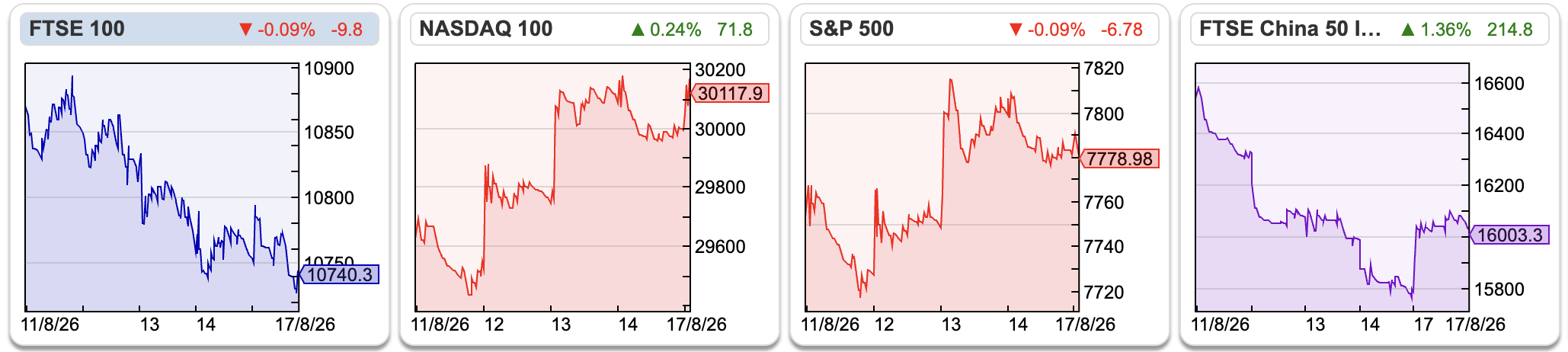
The FTSE 100 fell around -1% in the last 5 trading days to 10,740. The Nasdaq 100 was stronger, up +1.7% with the S&P flat. The FTSE China 50 was down -3%, and there have been a few articles highlighting Chinese GDP growth has been disappointing, perhaps caused by Japanese export firms becoming more competitive due to a weak Yen.
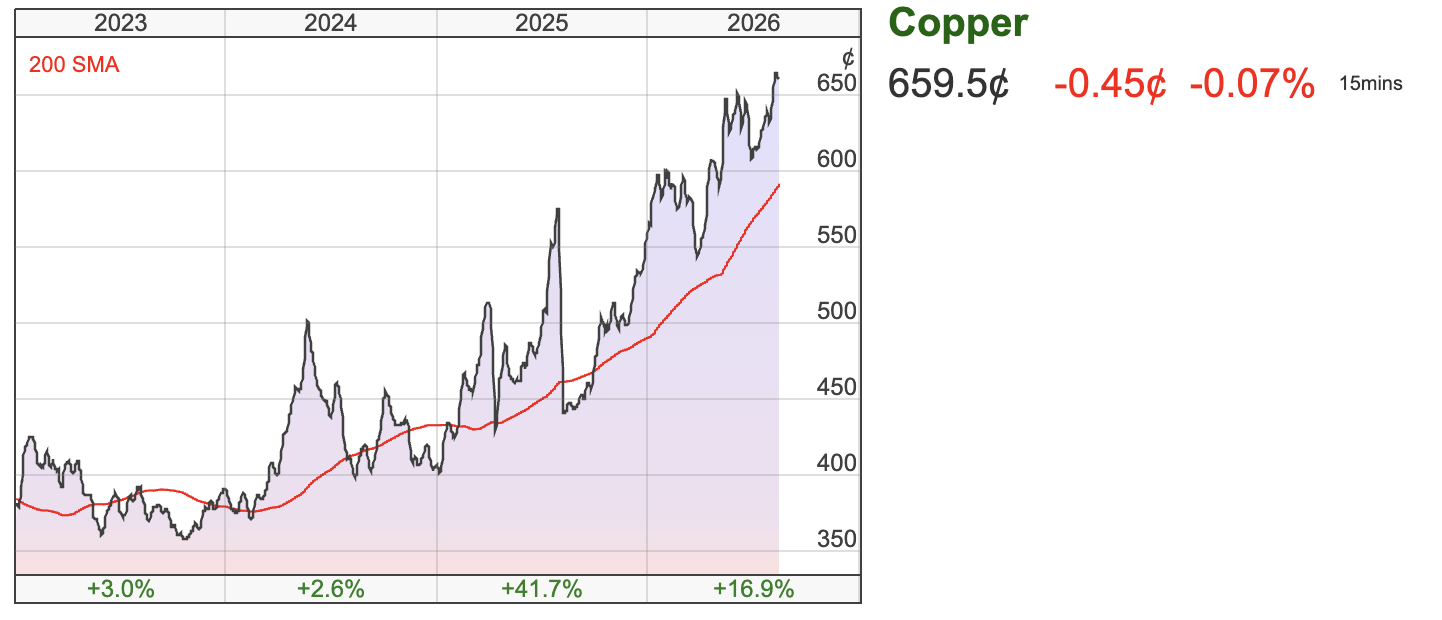
Copper (ticker HG1) is up +17% YTD and the price is in backwardation, which signals the supply is being squeezed. That may be global demand outstripping supply or that traders are attempting to front run a suggested new Trump tariff on copper, by moving physical metal to the USA ahead of the new levy.
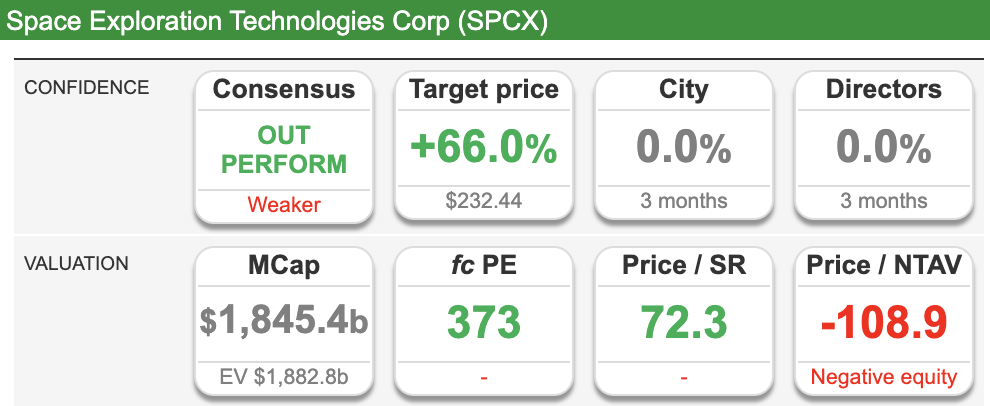
Dan Davies, former CSFB banks’ analyst, makes an interesting point on the capex going into AI. SpaceX is renting out the Colossus 1 datacentre to Anthropic for $15bn a year. Yet, the estimated build costs of that datacentre are $13bn (some estimates are much lower). Even allowing for running costs, depreciation, break clauses in the lease etc that seems a very high RoCE, probably over 50% per annum. In the context of SpaceX group valuation – 373x PER ratio or 72x Price/sales ratio – that’s not significant, but it does imply that the real money to be made is not in developing “frontier AI models” but instead renting out datacentre capacity.
Anthropic has grown Q2 2026 revenue to $11.5bn (an annualised run rate just below $50bn), but the group is not profitable. Hence, that $15bn a year paid to SpaceX is being funded by Anthropic’s VC investors. Tech investors are obsessed with “platforms”, “flywheels” and “network effects”. If you view the world this way, it is better to be selling picks and shovels from a platform at the entrance to the goldmine, rather than prospecting for gold. Or put another way, it’s better to be the YouTube platform, than Mr Beast the performer. For every YouTube star there are thousands, if not millions, of people uploading content that is not as popular. The payoffs from being a “picks and shovels” business are lower, but more certain. However, when everyone in Silicon Valley is thinking the same way, the insight is debased and loses value. Other than computer programmers, how many friends currently pay to use LLMs?
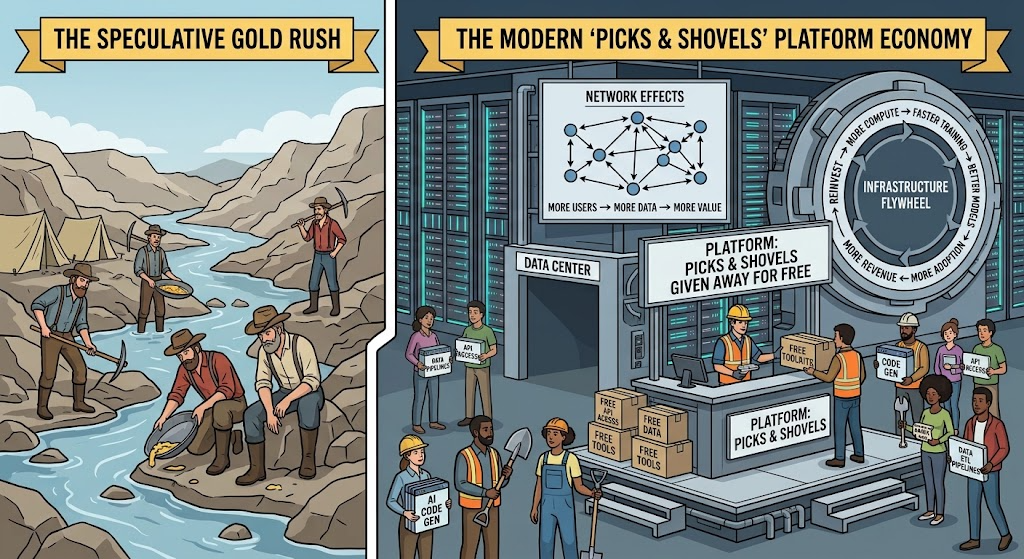
Most people use the tools because they’re free, available and fun. For example, I posted a link to Dan’s substack, and asked Gemini LLM to create a picture (above), for free. Dan concludes: “the amount of money that actual end-user customers are prepared to pay, at present, is a lot more than it used to be, but nowhere near the levels that would be needed to support the capex.”
Put another way: the picks and shovels are being given away for free at the moment, hoping that we will find the tools so useful we will be “locked in” and then pay a subscription. That model works for Spotify (free, but with deliberately annoying ads) and for Netflix (allowing password sharing between friends, then cracking down). It’s not clear the same applies to LLMs though. Perhaps if VC’s are funding AI groups, allowing them to give away picks and shovels, it is a transfer of value from VCs to individuals who use the tools while they’re free.
Coincidentally, this week I look at a few goldmining shares: Caledonia which has one productive mine in Zimbabwe, but needs to raise $500m for a second opportunity. Thor Explorations which operates the Segilola Gold mine in Nigeria and AltynGold which operates the Sekisovskoye gold mine in Kazakhstan. They come with a health warning, many investors ignore the sector completely – the pay offs are like lottery tickets. However, overlooked sectors can deliver high returns for contrarian investors (housebuilders following the financial crisis strikes me as an example).
Finally, ShareScope is partnering with Investor Summit on Friday 18 September at The Brewery, Chiswell Street, in The City. Use the code SHARESCOPE to get a discount of £15.
Gold mining: Caledonia (CMCL), Thor (THX) and AltynGold (ALTN)
The sector has a reputation for “lottery ticket” type pay offs: low expected returns on average with most “investments” losing money, but a few lucky winners “striking gold”. Precious metals miners tend to underperform industrial metals (copper, iron ore) because gold mines have extremely low grades – so there’s a huge cost to crushing, grinding and leaching tonnes of rock to find a few ounces of gold. The mines also deplete more quickly: Thor’s initial feasibility study suggested 5 years from 2021 when they started mining, CMCL estimate Blanket mine has another 8 years. Those single digit lives compare to base metals mines which have 40-80 year lives. Often management of a successful mine attribute their success to skill, rather than luck, and plow the gains back into the next opportunity – which then loses money.
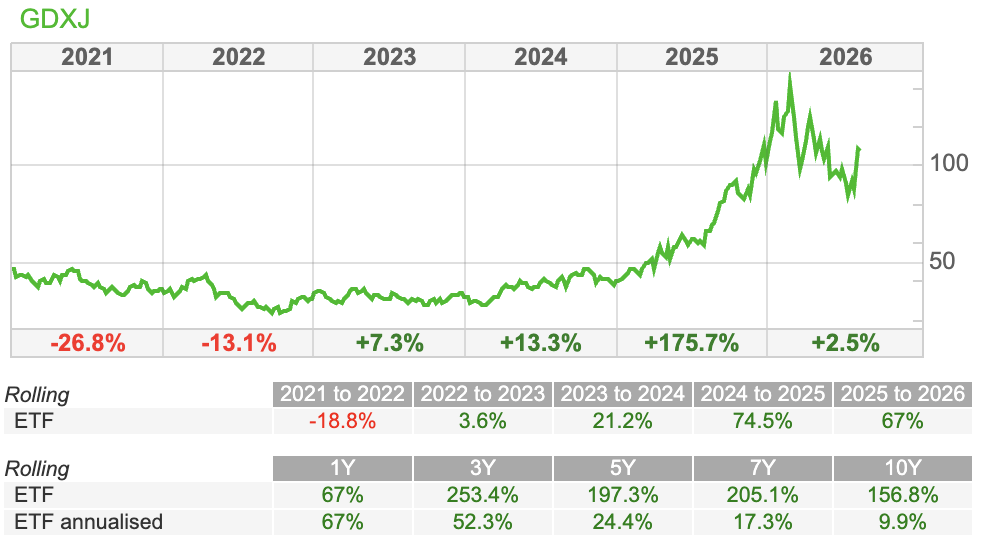
There are a couple of reasons to take a second look: 1) the precious metals sector (VanEck Junior Goldminers’ ETF ticker GDXJ in US $ or GJGB in £) 5 bagged peak-to-trough from early 2024 to Q1 2026, but has now given back some of those gains with the gold price down c. 20% from peak. 2) David Stephenson pointed out last week that according to JPM estimates gold miners are pricing in a long-term gold price of only ~$3,200-3,800/oz – between 15% and 30% below the current spot price $4,400.
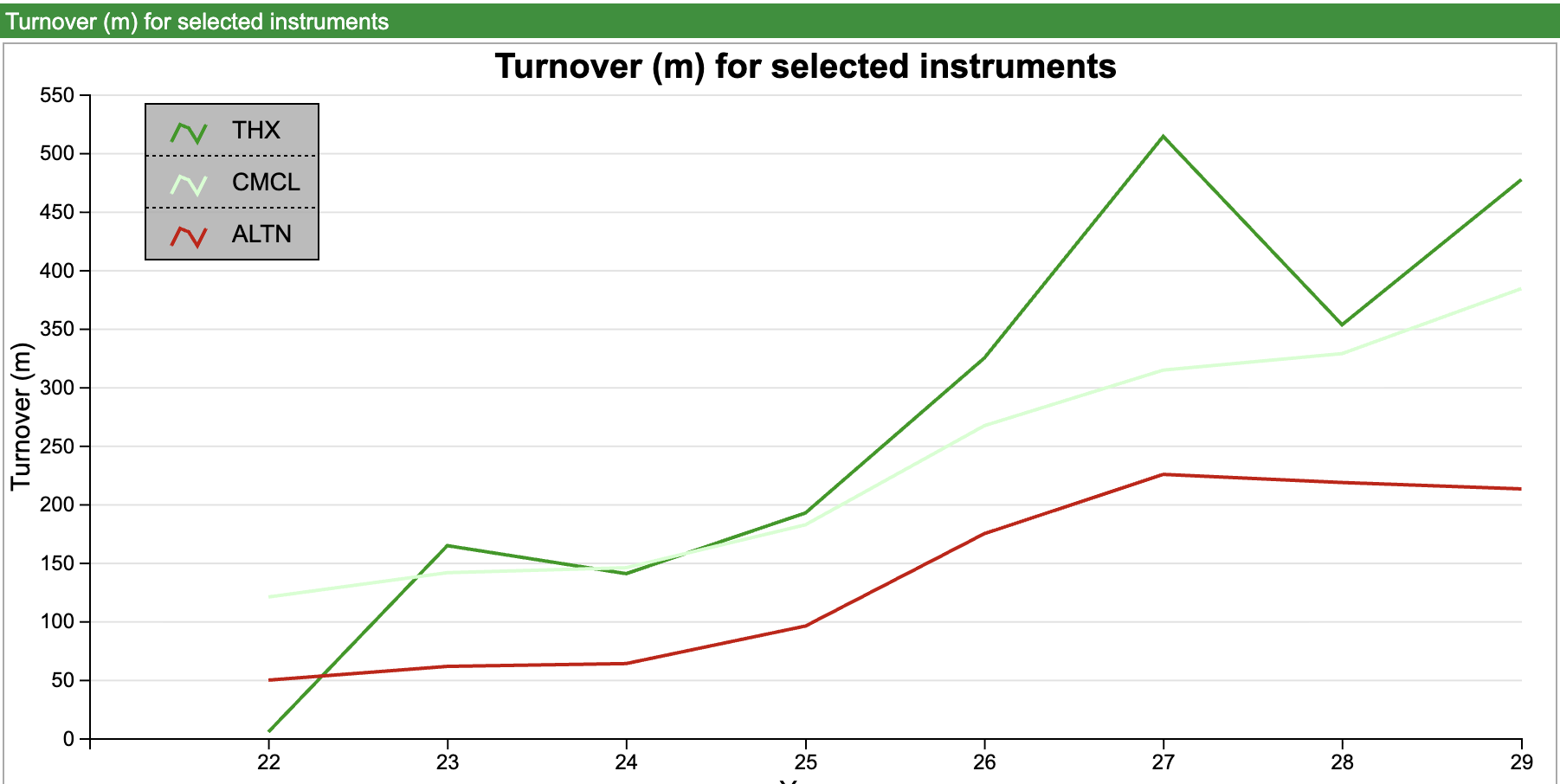
Below I have used ShareScope’s “Financial Charts” feature to compare revenue growth between THX, CMCL and ALTN, including analyst forecast revenues out to 2029F.
Looking in more detail at the investment case, first CMCL, then THX and ALTN.
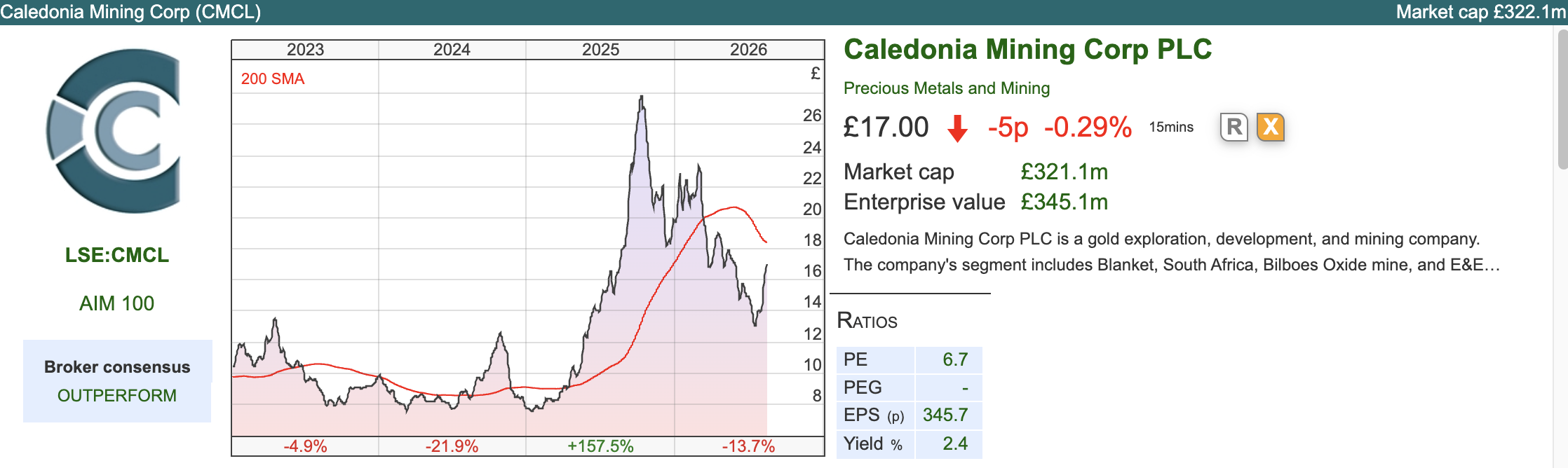
Caledonia Mining: Caledonia owns 64% of the Blanket Mine (producing 75K ounces per annum) in Matabeleland, Zimbabwe. Management are hoping to raise $500m to develop a new mine 80KM north of Bulawayo : Bilboes Gold Project with onsite activity expected to start in Oct this year. At Q1 they said proven and probable reserves were 1.75m ounces, so $7.6bn at the current spot price. That’s a headline figure, Cavendish estimate the risked NPV of CMCL’s new Bilboes project is $1.1bn or £36 per share, around 2.5x the £14 per share of the NPV of the 64% stake in Blanket mine.
CMCL reported revenue +16% Q2 v Q2 last year to $76m, as the average gold price achieved was $4,259 (versus spot price currently $4,400). That’s up by a third versus the same quarter last year, but down on Q1. Cash from operating activities was flat at $28m, and the group held $168m of net cash at the end of June – helped by proceeds from a $150m convertible senior note issued in January this year.
That 7 year convertible pays a coupon of 5.9% and matures in 2033 and counts towards the $500m they hope to raise to develop Bilboes. The strike price for the convertible is $40.51 (or £30 per share at the current FX rate). Caledonia (not the investor) has the right to redeem the bonds early, but only if the shares trade at a 30% premium to that $40.51 (£30) per share. There’s a second leg to the structure, with management using $14m of the $150m raised to buy a “capped call option”, meaning existing shareholders suffer no dilution unless the stock gains more than 75% from its offering price. To protect against a falling gold price, management have bought put options to sell gold 3koz per month at $3,500 per ounce from 2026 to 2028.
Sector comparisons: Last week a couple of other junior gold miners reported. Thor Explorations which operates the Segilola Gold mine in Nigeria (producing around 80k ounces a year, but reserves approaching depletion) and AltynGold which operates the Sekisovskoye gold mine (c. 3.7m ounces) and hoping to start a new project at Teren Sai (c. 1.3m ounces), both in Kazakhstan.
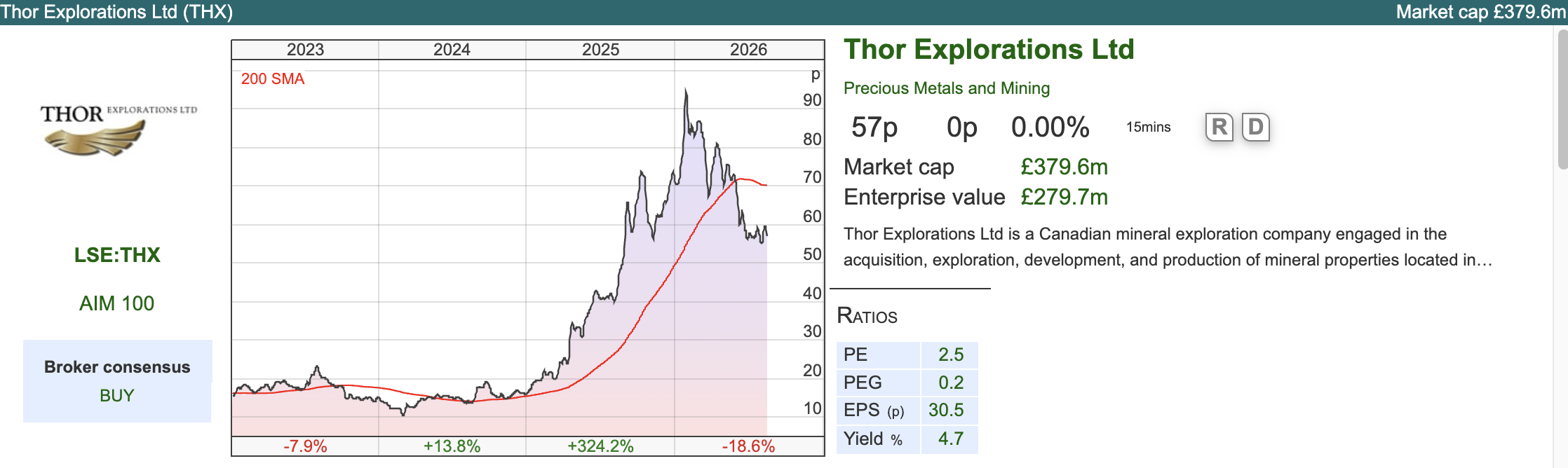
The Segilola mine in Nigeria, which Thor owns 100% of, is an operational marvel: producing gold at high grades (c. 4.0 g/t) with rock-bottom All-In Sustaining Costs (AISC) of US$1,000 to US$1,200 per oz. Segilola has been operating since 2021, and only has a few years left, so management are hoping to develop the Douta (Senegal) 1.8m oz resources – as a reminder “resources” is a technical term for “what is in the ground” whereas “reserves” is “what can be dug up out of the ground for a profit”. Douta has a much lower grade though, c. 1.03 g/t, so the economics of the Senegalese mine are likely to be less attractive than Segilola.
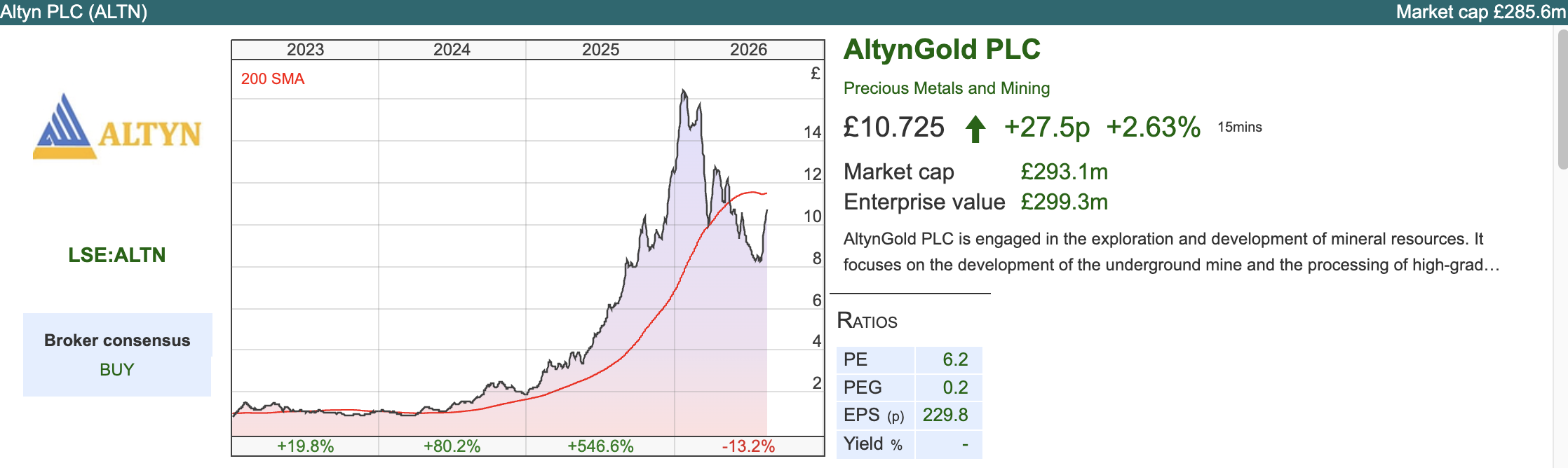
ALTN looks very good value on an EV/reserves basis of $81 per ounce, but it is controlled and 60% owned by the Kazakh Assaubayev family. I’ll leave readers to google the details of the court case between Polyus Gold and Kazakh Gold, previously owned by the Assaubayev family. Tom Burgis book Kleptomania about Kazakh based ENRC also reveals why Central Asian governance has gained a poor reputation: the lesson is minority shareholders in London are vulnerable when foreign oligarchs maintain majority control and executive roles.
Valuation: CMCL shares are trading on a PER of 9x. Cavendish suggest that investors should give greater weight to Cavendish’s 2029F EPS forecast of £19. That is, their 2029F EPS forecast is above CMCL’s current share price of £17. Thor trades on 4x PER despite reporting a Cash RoCI of 60%, reflecting that their mine is coming to the end of its useful life, while Altyn also trades below 5x, with a Cash RoCI of 20% perhaps reflecting worries over governance and ownership.
I have used the “restrict subsector” button in ShareScope to create the comparison table below. Clearly this should serve as a starting point – the next step might be to use an LLM to better understand and compare the reserves of each group, and risks associated in developing new mines.
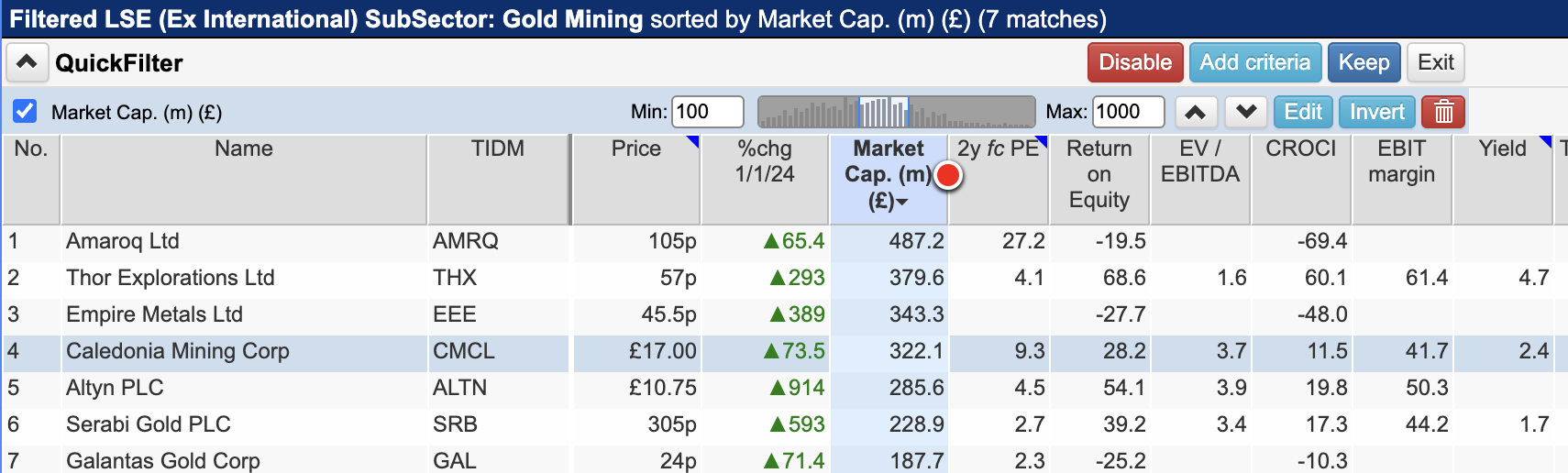
Opinion: This is going to sound absurd, with Cavendish’s price target of £42.60, but I don’t find the 3x upside at CMCL is attractive enough. CMCL could achieve Cavendish’s £19 EPS Dec 2029F forecast, and the shares could then realistically trade on 5-10x PER that multiple; suggesting Cavendish’s Target Price is far too cautious.
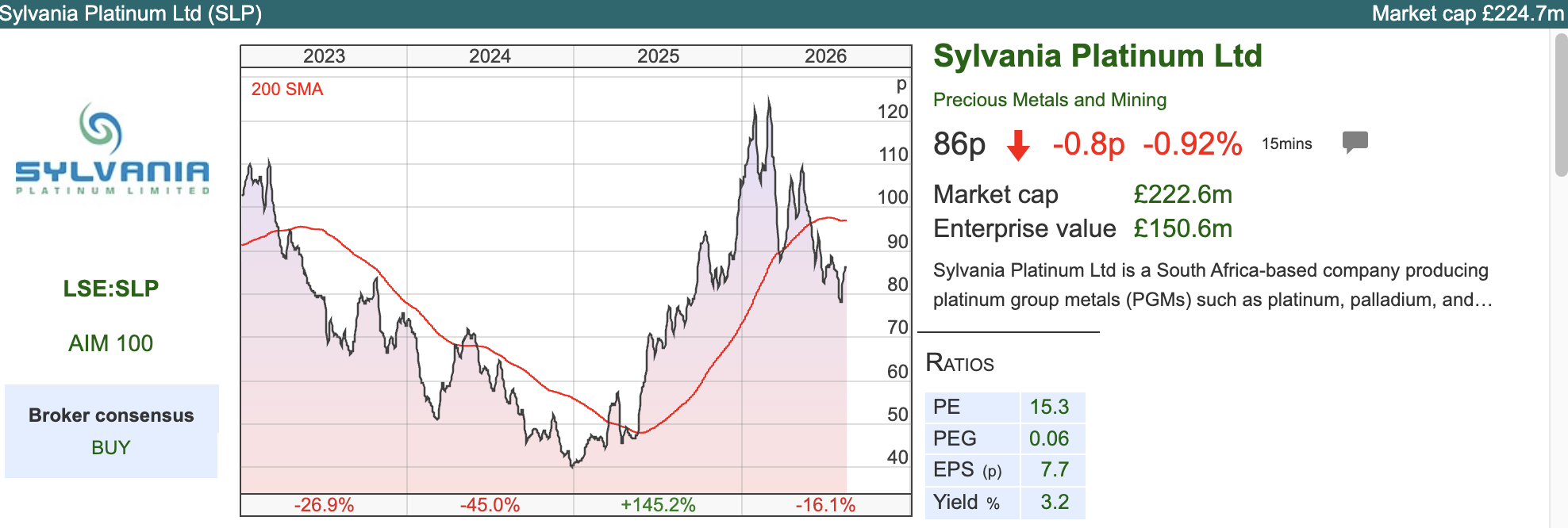
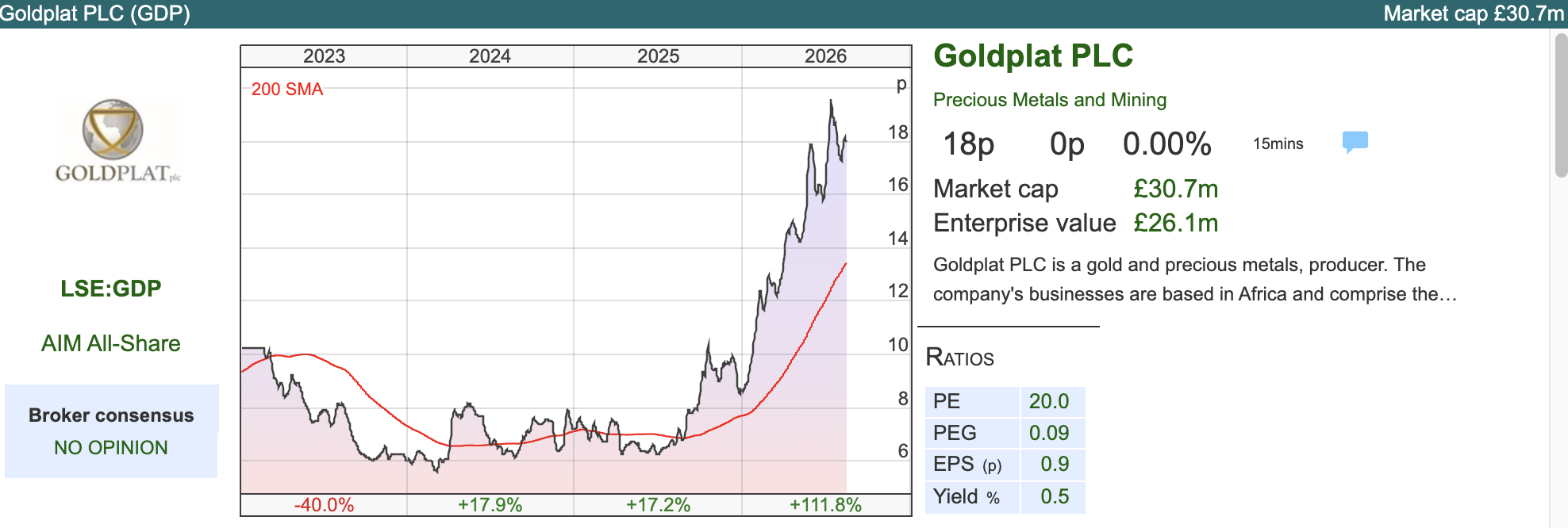
For me to invest in the gold mining sector I need to see more upside: by way of example I bought Sylvania Platinum at an average price of 8p per share and more recently Goldplats at 6p per share.
Besides which, SLP and GDP are not miners, instead they have processes to extract precious metals from the waste products and tailings of the mining industry, so they have lower sunk costs. Not quite “picks and shovels” businesses, but superior risk/reward profile to holes in the ground, in my view.
Both Thor and AltynGold could see substantial upside from the current valuation – but several things have to go to plan. I won’t give an opinion on the one I prefer, instead I’m flagging the whole sector. Many authors on Substack believe that house builders are the most hated sector in the UK – but when everyone has the same insight, it’s no longer contrarian. In my view, the gold miners could be an interesting place for true contrarians to prospect for value.
Seeing Machines FY Jun Trading Update
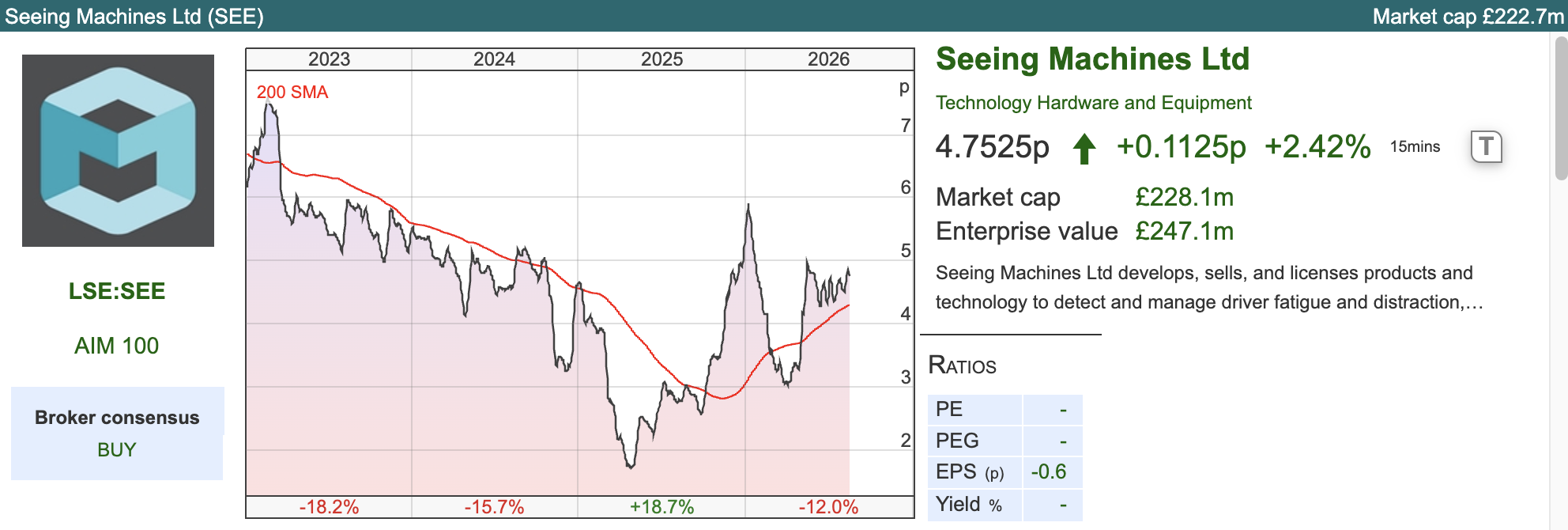
This Australian headquartered, driver operator monitoring group, announced a FY Jun trading update, with adj revenue was up +45% to $76m. Management quote an adjusted revenue figure linked to royalty payments. Under IFRS accounting standards, the royalty payments are recognised upfront when cash is received at the start of production. Management’s adjustment instead recognises revenue progressively as it is invoiced, which is a more conservative approach.
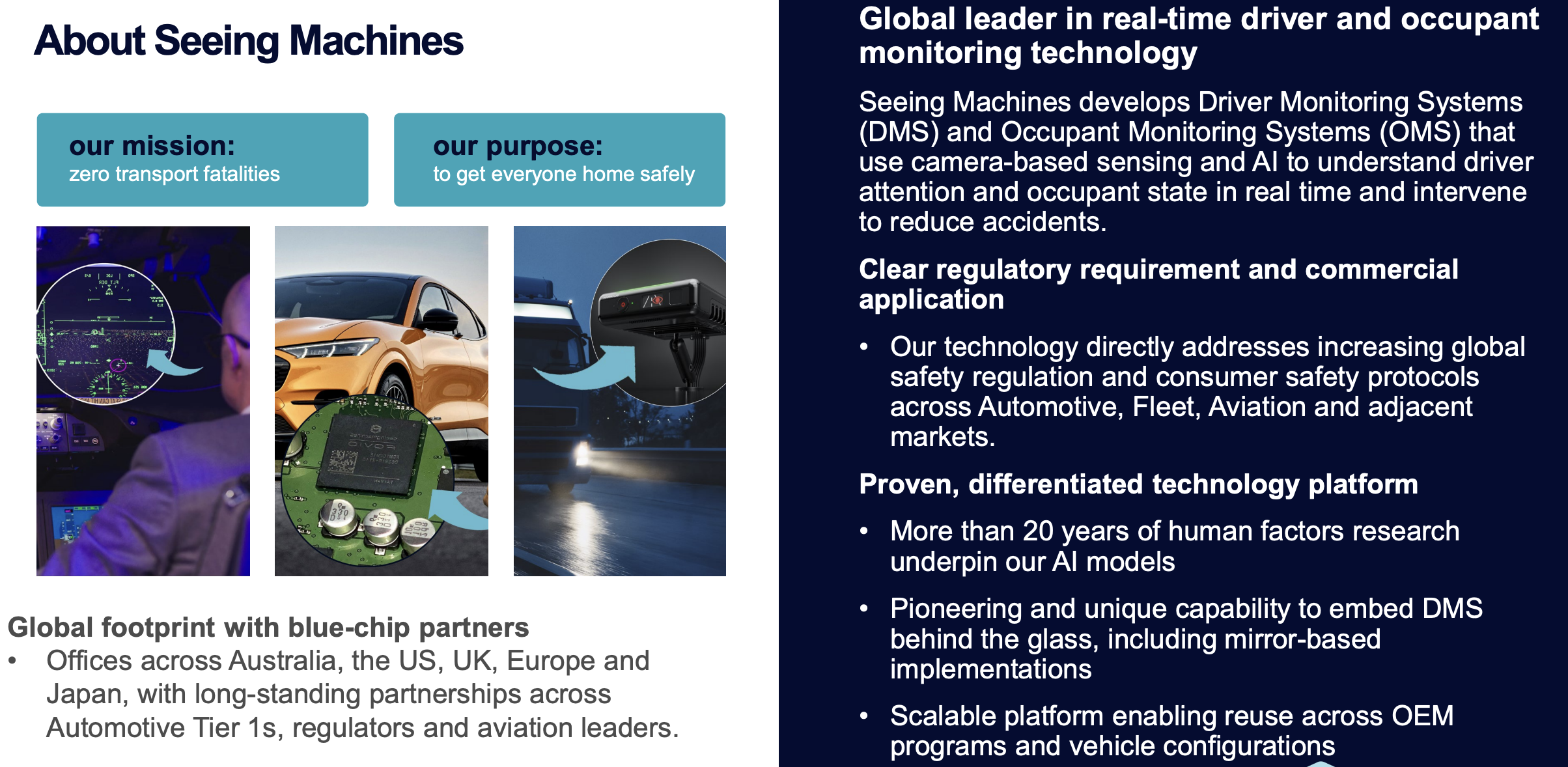
Management’s own description of what they do is full of buzzwords. I know this company from my financial PR days a decade ago and it’s always been a “jam tomorrow” story stock, having been founded in 2000. SEE place small cameras to track when drivers and machine operators become drowsy or distracted. Their technology tracks an operator’s pupil movement, gaze direction, head position, and blink frequency in real time—working through sunglasses and nighttime conditions. If a driver falls asleep or looks down at a phone, the system triggers real-time alerts: vibrating seats, audio warnings. The market is potentially huge: driver fatigue plays a role in 1:10 auto accidents and 1.2 million are killed in road traffic accidents globally. SEE’s Guardian product reduces fatigue events by 90%.
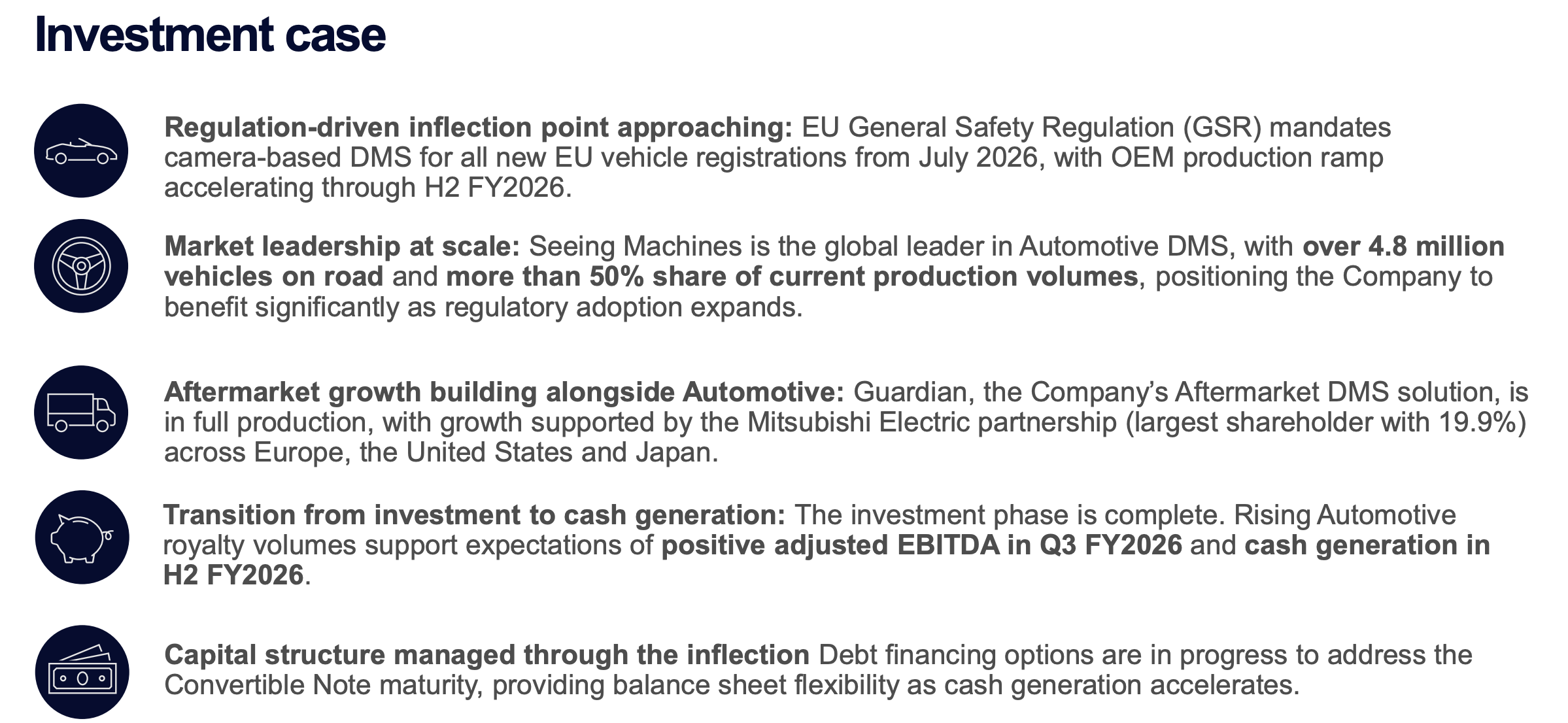
They say adj EBITDA was $10.7-$11.7m positive in H2, but still a FY adj EBITDA loss of $2-3m. Naturally they don’t mention profits, but in H1 their statutory Loss Before Tax was $22m (so $8m of further costs “below the line” to get from an adj EBITDA loss of $14m in H1). The group had net cash of $4m at the end of June.
Valuation: The shares are trading on 50x PER Jun 2027F, which is eye watering for AIM shares in this market. However, if you believe the forecast growth then that drops to a PER 14x Jun 2028F and an EV/EBITDA below 10x. The price to sales ratio is 2.3x the same year.
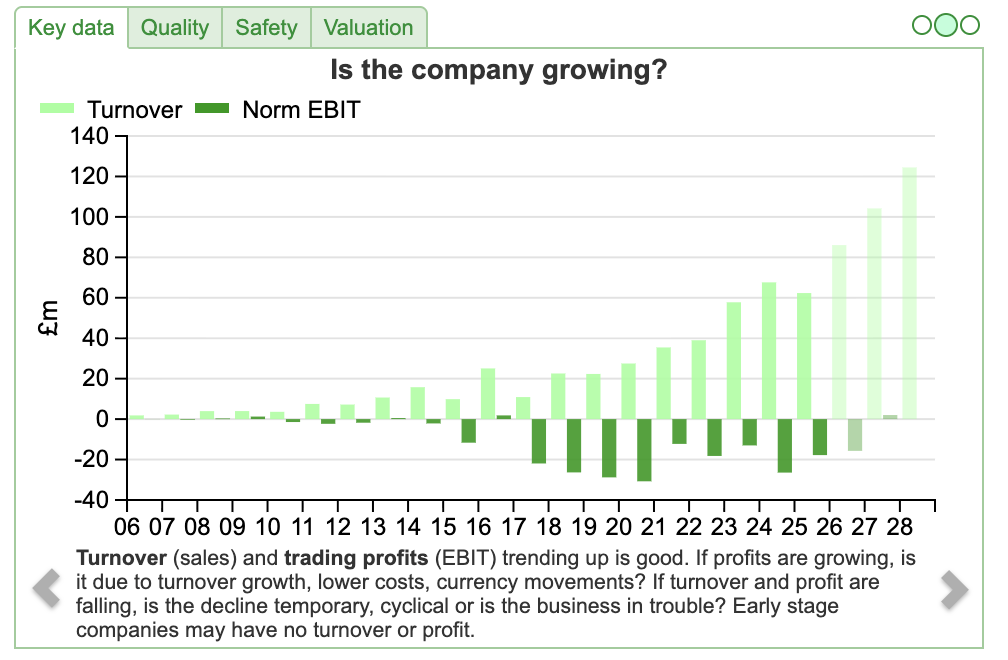
Opinion: Management claim that the positive adj EBITDA in H2 demonstrates operating leverage in the business. Using Sharescope to track the long term performance from 2016 reveals: revenue is up by 3.5x, number of shares has increased 4.5x and the group has failed to record a statutory profit. Not much evidence of operational gearing from that longer term history.
My fear is that its taken management 26 years to achieve positive EBITDA in H2, yet they’ll have to compete with various deep funded AI start-ups who want to automate the driving and machine operating process completely. I suppose there are areas which can’t be automated for sociological reasons (London Underground drivers). My scepticism 10 years ago feels entirely justified – possibly now worth a second look, with unfatigued eyes?
Bruce Packard
@bruce_packard
Notes
Bruce owns shares in GDP, SLP and BGEO
This article is for educational purposes only. It is not a recommendation to buy or sell shares or other investments. Do your own research before buying or selling any investment or seek professional financial advice.

Awesome Bruce. Thank you for sharing.