
Michael Taylor follows up his US market bubble analysis by focusing on the practical steps investors can take to protect themselves if volatility strikes. From position sizing and cash management to trimming winners and avoiding emotional decisions, he explains how traders can stay prepared without trying to call the top.

In my last article, we look at the evidence for a US bubble and various sources.
You can read it here if you haven’t already.
But you might be asking.. If I’m only a UK stock trader/investor, then why does it matter to me?
And that’s a fair question.
When risk-off arrives, people sell what they can sell. AIM stocks become liquidity food in a panic. Look at the charts of UK small caps in March 2020, or in autumn 2022 around the Truss mini-budget, or during the August 2024 yen carry-trade unwind.
Stocks that had absolutely nothing to do with the trigger event got hammered because people were spooked and wanted to raise cash.
But how do you protect yourself?
This is the bit that actually matters. Whether the US is in a bubble or not, you should be running your portfolio so that the answer doesn’t bankrupt you.
A few practical things I’d suggest:
Position size like the bear case is real
Stress-test your holdings. How would you feel if all of your stops were hit in one day? People often position size whilst thinking the worst won’t happen. What if it does? How would you feel?
Are you mentally and financially ready for that? If not, the position is too big.
Position sizing is not glamorous and it’s boring. But it’s the only thing standing between you and ruin when you’re wrong.
Cash is a position
People often assume they need to be fully invested, and if they’re a trader then they need to be regularly making active trades. But actually, not trading is a trade itself. Buffett knows this. $344 billion in cash isn’t a filing error.
If you don’t have any dry powder, you cannot trade when the panic comes. And panic is often where the best returns are made, because prices become dislocated from reality as emotions distort prices and drive.
But it’s not just panic. Liquidity affects other traders and investors too. People want to raise cash or get margin called. One prominent share blogger said recently that he’d sold shares because he was margin called. So instead of his investment view driving his dealing, his liquidity position was driving his dealing. What happens when prices expand way beyond their average volatility? Stops will be hit, margins will be called, and positions will be exited as a result of forced closures, both emotional when people puke and because the brokers close them.
Trim winners
You don’t need to print the top. You just need to catch a decent move. Whilst averaging up into early stage 2 trends is the way to making big money in stocks, at some point those positions become large and are responsible for a big percentage of your overall P&L. That’s not a bad thing. Positions that have grown big are being allocated more responsibility precisely because they have earned it.
But at the same time, having 50% of your account in one stock leaves you vulnerable. Taking money from the table on winners can be a great idea to ensure that you’ve collected some profits and de-risked the trade, so if something bad happens it’s not as big as a hit as it would’ve been.
For example, Filtronic has been a great winner for me.
I was buying in the early 30s on the trading update in 2024, and I was all out by 180p. It has hit close to 500p recently.
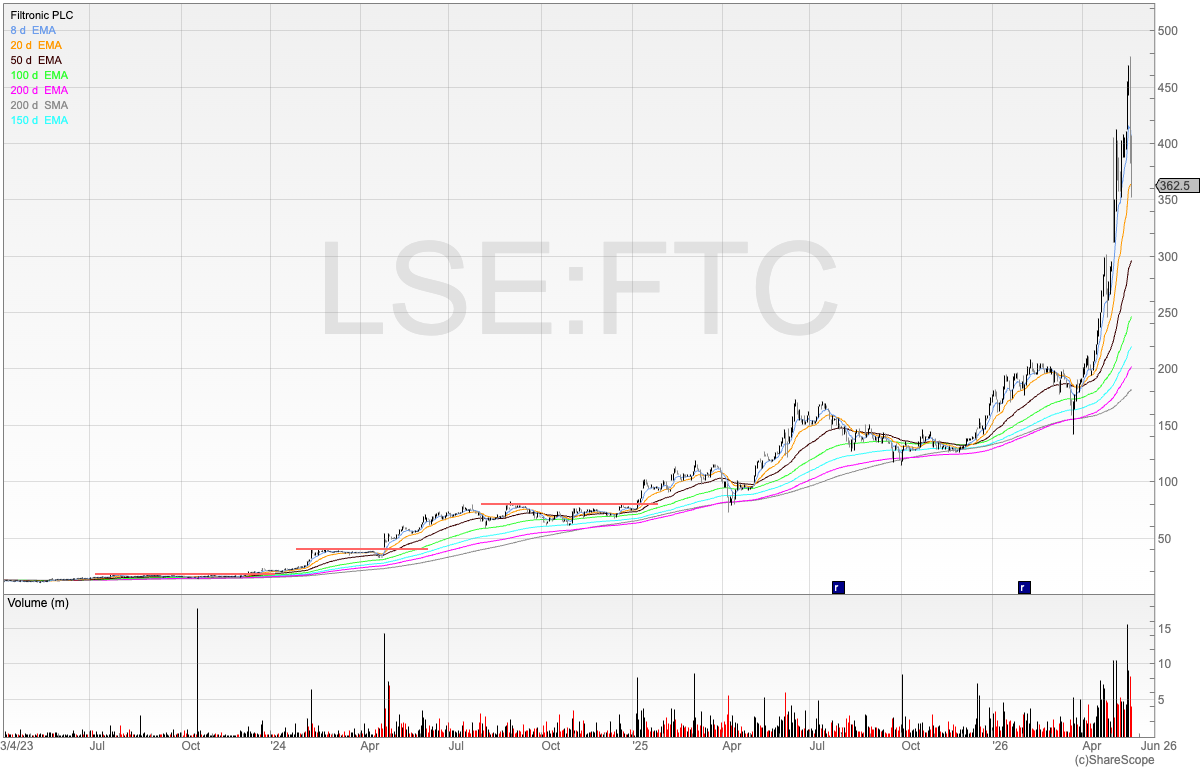
That’s a lot of profit missed out, but there is no way I’d be able to stomach that volatility.
Run a premortem
Sit down today and write out, on paper, what you would do if the S&P fell 30% next quarter. Which positions would you trim? Which would you add to? What signal would tell you this bull run is over?
Plan it now, in the cold light of day, because in the moment your judgement will be hostage to your emotions. We are all prisoners of our own psychology.
Make sure you have a premortem on every trade. Time spent doing this now will be worth it when the top is in. And nothing goes up forever.
Don’t try to time the top
These indicators have been screaming for a year and a half.
People who went short in early 2024 are missing limbs. Your job isn’t to call the peak. The job is to be positioned so you survive whichever way it breaks.
The price is always right. If the S&P and markets keep grinding higher, brilliant. You’ll make money if you’re long the right opportunities.
And if it doesn’t, you’ll wish you’d thought about position sizing back when Michael wrote his article rather than whenever the wheels eventually come off.
The NASDAQ continues to power on.
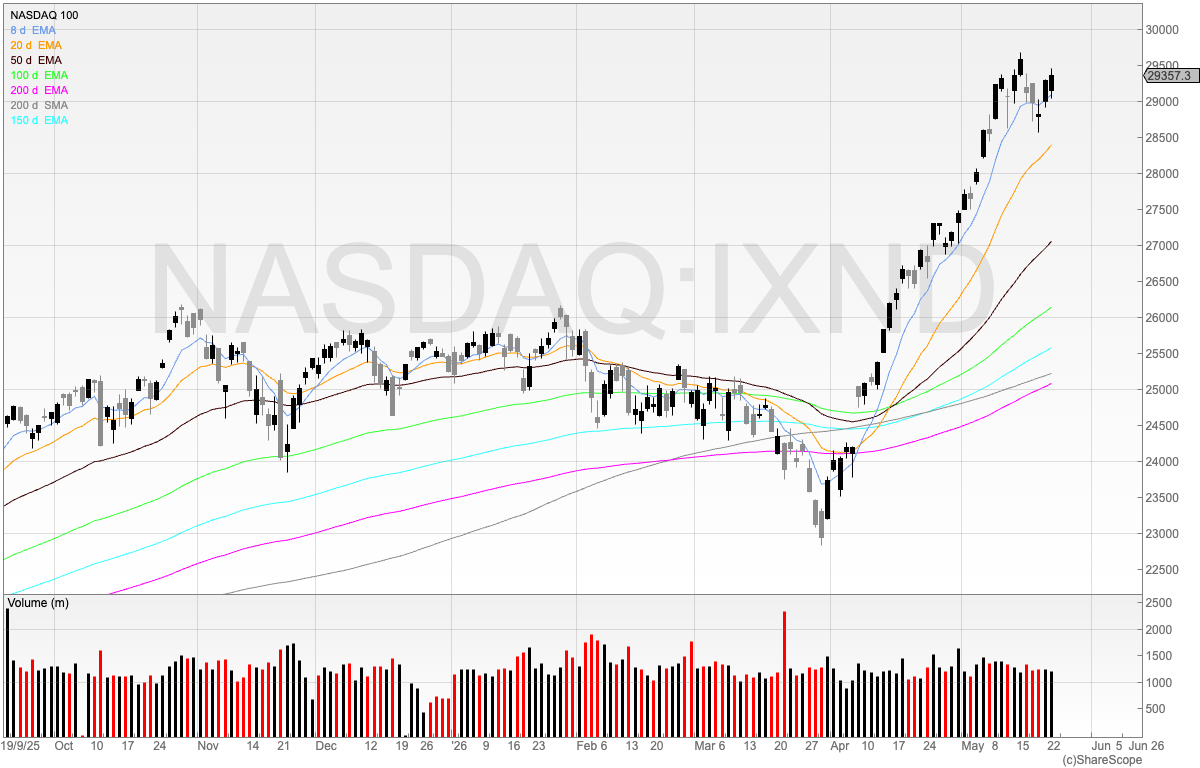
Anyone who has been resolute in their decision that AI is one big bubble has done their dough.
You can argue all you want that the market should be down and isn’t pricing in the Iran war, but it doesn’t matter. The price is always right.
That said, I believe UK stocks are offering a generational buying opportunity, as eventually the bubble will pop, and capital that is already flowing into UK stocks will likely accelerate.
Michael Taylor
Get Michael’s trade ideas: https://newsletter.buythebullmarket.com/
Free educational YouTube content: @shiftingshares including “Using Income Statements” and “Reading Balance Sheets” below:
This article is for educational purposes only. It is not a recommendation to buy or sell shares or other investments. Do your own research before buying or selling any investment or seek professional financial advice.



Good article Michael but I see no sense in your FTC sell. I built a full position from around the 100p area, and have trimmed it twice now as the volatility exceeded 7R (my personal limit). I’m still holding, and may need to trim again soon. The full sell of a winning position is leaving good money on the table for no reason. Trimming to reduce volatility while still following your stop loss will always be the positive expectation move.
The trick is knowing in advance what you’re going to do, then when it all appears on a chart, you simply take a position and manage it, x% will win and y% will not work out, hence stops and honouring them
As someone who has managed to time the market, its the lows that you can time much often and easier – Tops are hard beasts to time, especially the intermediate tops, but you can catch a few of them
I’m on record from 2013 predicting the March 2026 Intermediate top – 13 years is a mega prediction
The USA bubble tops out properly in 2034, until then, its a case of just corrections happening, all of which will be quickly recovered [within reason]