Being fully invested can feel like the obvious way to maximise returns, but today cash and bonds can offer meaningful returns without the same volatility. Michael Taylor looks at why opportunity cost matters again, and how investors can think more carefully about risk, time horizons and keeping some powder dry.
Back when the pandemic was in full swing and Furlough Freddy and Fiona were piling into the market with their savings, many people would say they had to be fully invested because otherwise they’d miss out.
This assumption, however, only works if markets go up.
It also assumes that there are no other options.
Well, today, there are lots of options.
Cash sitting in a Stocks & Shares ISA can collect 3.8% (or higher or lower depending who you’re with), and money market funds will pay close to the Bank of England’s base rate.
Bond yields can be even higher. The Tesco 6% 2029 bond currently yields 5.84% to maturity.
That means if you decide to lend money to Tesco now, until 2029, you can collect almost 6% for doing so.
It’s unlikely that Tesco would go bust, although not impossible. It has lots of options, such as issuing more shares to shareholders, a strong balance sheet, and a resilient business model that will capture customer spending from all points, whether they trade up or trade down due to recession.
I would consider lending to Tesco a low-risk investment, but then I am also not a bond expert.
However, these returns are not insignificant, when you factor in that a global ETF can be expected to generate 8-10% returns over the long run.
Suddenly, getting a highly likely and less volatile payout over a volatile return that sees significant variations in the YTD P&L seems a lot more attractive.
Here is the performance data for the FTSE All-World from the last few years.
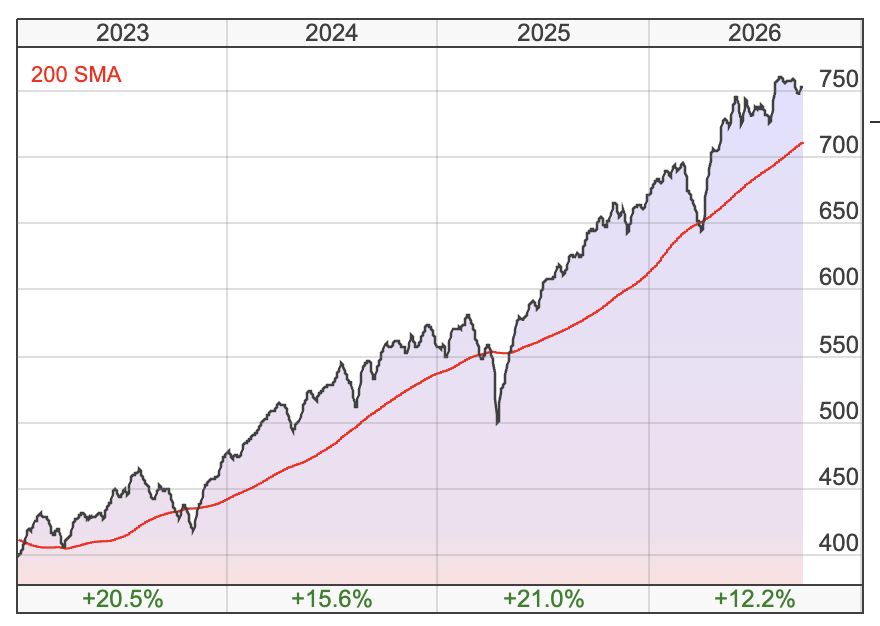
It looks attractive and like you can’t lose, but here is the chart.
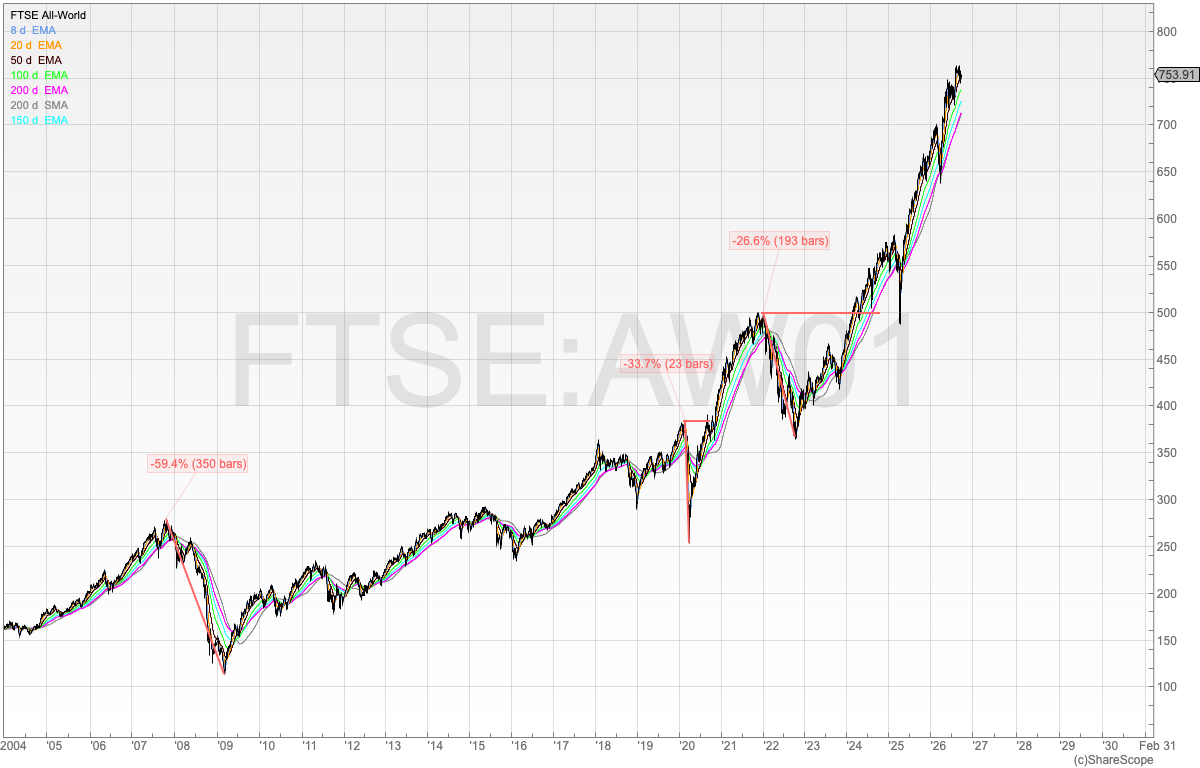
There have been some significant drawdowns, over extended periods of time, even in what some would consider (myself included) a well-diversified asset.
This ultimately has an effect on peoples’ perceptions of risk and this also evolves as they age.
When you’re young, you can afford to take on risk. Therefore it doesn’t make sense to get involved with bonds and dividend stocks (my opinion only, not financial advice).
The reason here is that you have a lifetime of compounding interest ahead of you, and the time to take on some risk is when you can afford to.
As you age, and the wealth building part of your life has taken place, it becomes more interesting to protect that wealth, especially as you don’t know when you will be drawing down.
There are, naturally, some exceptions to this, of course.
For example, if you’re a 30-year old Londoner aiming to get onto the property ladder at some point, and you’re aware you’ll need to stump up a big deposit in the next year or two, having that money in a global ETF or individual stocks carries a lot more risk.
What if you find the perfect property but the market is 20% off its highs, or you even have to sell your stocks at lows to get the money?
This is why it makes sense to allocate capital into various buckets.
- Your savings bucket
- Your investing bucket
- Your pension bucket
Your savings bucket consists of your emergency fund (I suggest six months of runway because if you lost your job tomorrow, it can still take a few months to start another, even if you found one the next day), as well as medium-term savings that you might want to access within 1-2 years.
From then on, your investing bucket consists of money you expect to be invested for a minimum of five years plus. It can be for things like a dream holiday, car purchase, private schooling. Or just longer term capital that provides you optionality on future choices.
The different between the investing bucket and the pension bucket is that your pension bucket cannot be withdrawn until you retire, so any money that goes into there needs to be money that you won’t need until you retire.
You also need to consider the fact that pensions are a political football, and whilst you can withdraw 25% tax-free at the moment, that could also be subject to change at any point under any government.
I would suggest making sure that your pension isn’t in the default fund because this is now mandated to be 5% invested into private assets, which I strongly disagree with. Assets that were not good enough to be funded on the private market may now receive money that people have worked hard for. In my opinion, pension providers have a fiduciary responsibility to provide the best returns to their beneficiaries, not investing in HS2 or some other government garbage that would never have a hope of getting funded in the real world.
But, like the 30-year-old Londoner, if you’re 80 and you’re drawing down on your money, then perhaps you might not want 100% of your money invested into growth stocks and a global ETF.
The key point here is that opportunity cost is now a real cost because you can get equity-like returns without the volatility from the bond market and general interest rates.
Personally, I prefer not to be fully invested all of the time because you never know when a company might show up in the universe that has compelling risk-to-reward. If you’re all in, then you’re boxed in and have to sell other shares in order to buy new ones. These may not always be at the opportune prices.
Markets have never been this concentrated ever, and yet the prices are still going up. It’s great when the party is in full flow, but any potential hangover could be nasty.
Personally, I think Kenny Rogers was wrong. You absolutely need to know how much risk is on the table at all points, because while there might be time for counting when the dealing is done, you may have lost a significant portion of your wealth because you weren’t aware of how much was at risk.
Michael Taylor
Get Michael’s trade ideas: https://newsletter.buythebullmarket.com/
Free educational content: @shiftingshares
This article is for educational purposes only. It is not a recommendation to buy or sell shares or other investments. Do your own research before buying or selling any investment or seek professional financial advice.
This article is for educational purposes only. It is not a recommendation to buy or sell shares or other investments. Do your own research before buying or selling any investment or seek professional financial advice.