
Headlam boasted an industry-leading position, an asset-rich balance sheet and a long record of dividends… and yet still went bust. Maynard Paton recaps what went wrong at the floor-covering distributor.
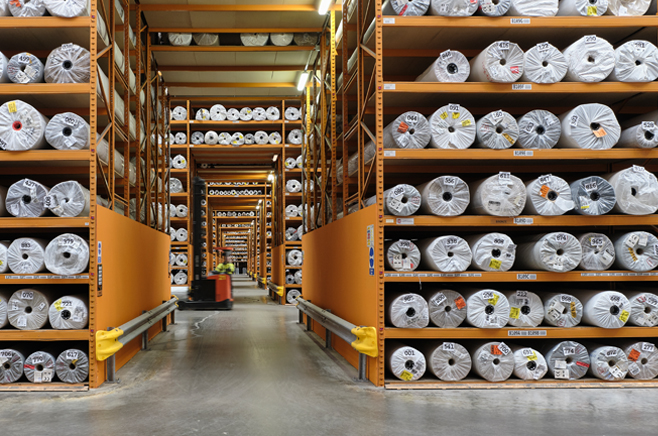
I wrote about Headlam for ShareScope during 2020 and gave a bullish verdict:
“Headlam seems to possess the industry position, balance-sheet strength and management experience to survive this [pandemic] downturn and recover thereafter. A full share-price recovery could even offer a potential 100% gain.”
The good news?
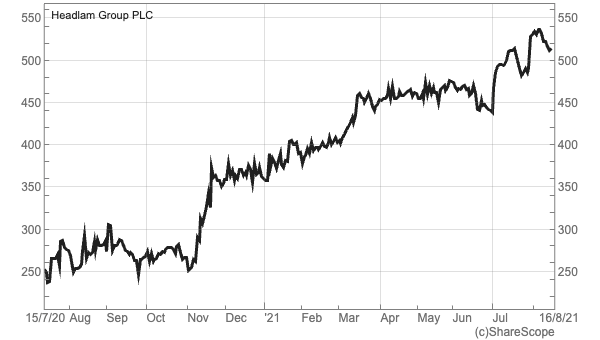
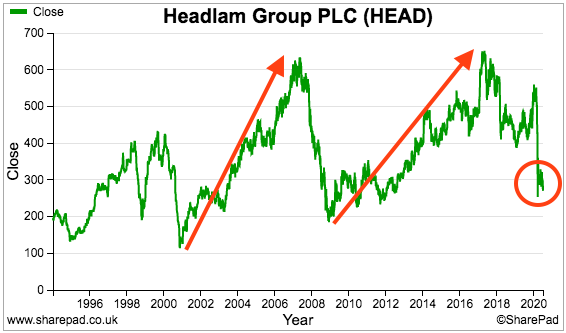
The shares went on to deliver a near-100% gain. The price reached 530p just thirteen months after my article highlighted the group’s attractions at 270p:
The bad news?
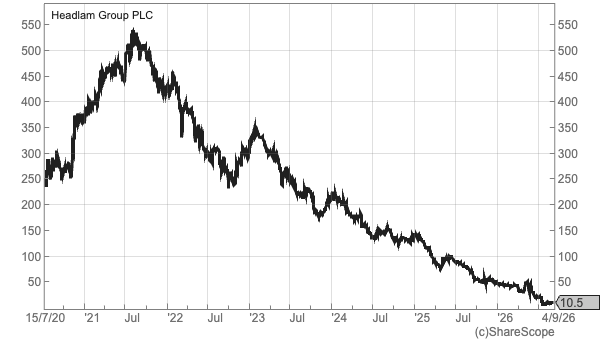
The price then slid to 10p following a catalogue of problems that culminated the other week with administrators being appointed and the shares being suspended:
Just how could “Europe’s leading floor-coverings distributor” that at the time of my 2020 review boasted…
- Industry leadership with an approximate 20% UK market share;
- Net cash of £27 million;
- A property estate valued at £80 million;
- Impressive cash generation;
- A record of paid dividends stretching back to 1992, and;
- A chief exec with almost 30 years of board service…
… deteriorate so badly to leave shareholders with nothing?
Let’s take a closer look.
Reintroducing Headlam
Headlam’s floor-covering history began during 1991 when Graham Waldron, Ian Kirkham and Tony Brewer took a joint 22% stake and implemented a buy-and-build strategy.
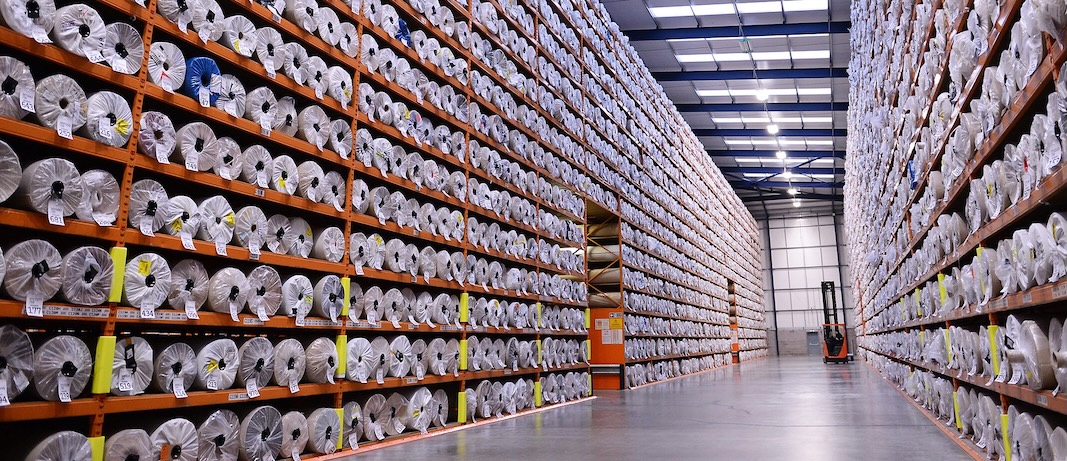
At the time of my ShareScope review, Headlam consisted of 66 subsidiaries that in aggregate purchased more than 36,000 different lines of carpet, vinyl and laminate from manufacturers in 19 countries to re-sell within the UK and parts of Europe.
The group’s 23 distribution hubs and warehouses were then handling 5.3 million annual orders placed by approximately 70,000 customer accounts:
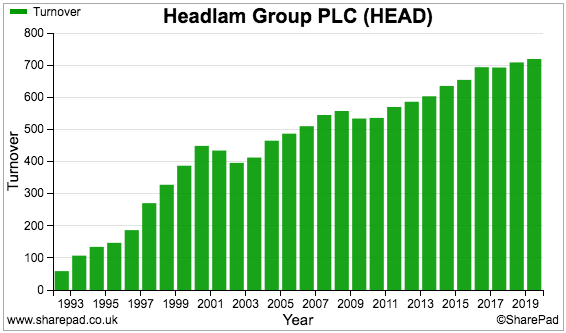
Revenue had advanced steadily over time…
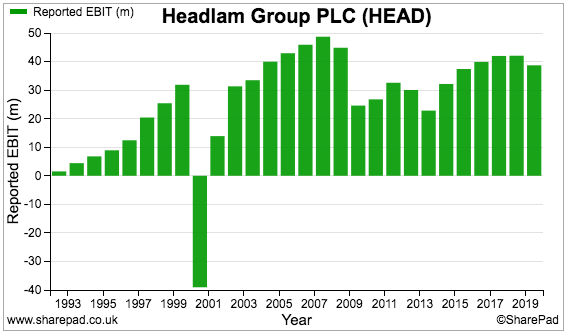
…but reported profit had not been as consistent.
Back in 2020 with Headlam then facing significant pandemic-related challenges, I believed the shares at 270p had the wherewithal to complete a hat-trick of substantial recoveries:
Within my 2020 review, the only real drawback I raised concerned acquisitions.
An initial £24 million had been used to purchase Domus — “the UK’s leading specification consultant and supplier of hard surfaces for premium construction and refurbishment projects” — during 2017 and I noted a subsequent write-off during 2019 was not promising.
Headlam’s 2018 annual report described the Domus purchase as a “perfect illustration” of a “refocused acquisition strategy” that created greater exposure to “underweight product lines and market segments“.
With the benefit of six years of hindsight, Domus was in fact an early sign of Headlam’s subsequent downfall…
…due to venturing into “underweight product lines and market segments“.
Autonomous operations and underweight positions
The Domus purchase was overseen by (now former) chief executive Steve Wilson.
Mr Wilson took the top job following the departure of Tony Brewer during 2016, and Mr Brewer’s exit can now be seen as a critical turning point in the group’s fortunes.
To quickly recap this ShareScope article, Mr Brewer — under the guidance of Graham Waldron — helped turn Headlam’s market cap from £10 million to more than £300 million between 1991 and 2016. Success was based principally upon supplying floor-coverings to independent retailers and contractors.
Neither Headlam nor Mr Brewer explained why they parted, but subsequent Headlam commentary provides some clues.
In particular, the 2018 annual report mentioned “the streamlining of processes and pricing discipline implemented since late 2016″:
“Ten efficiency initiatives currently being pursued are focused on improving operational practices and financial performance, and are collectively aimed at improving the Company’s operating margin. Whilst most of these initiatives are at an early-stage in their implementation, we have previously highlighted the initiative focused on the streamlining of processes and pricing discipline implemented since late 2016.“
I speculate Mr Brewer did not agree with implementing streamlined processes and pricing discipline.
Maybe Mr Brewer instead believed the group was better off limiting head-office interference and retaining its subsidiaries as “autonomous operations“. Mr Brewer’s (final) 2015 Headlam annual report noted:
“Each business has its own trading identity and is operated on an autonomous basis by local management teams. The autonomous operations are a key contributor to the group’s success, providing opportunity for experienced management teams to develop their individual identity, market presence and profitability of the business for which they are responsible.”
The word ‘autonomous’ was not mentioned by Mr Wilson within his 2016 annual report. However, Mr Wilson did like the word ‘efficiency’, which by the 2018 annual report was mentioned 25 times versus only seven within Mr Brewer’s 2015 edition.
Mr Wilson also used the 2018 annual report to signal his ambition to rectify “underweight positions” within certain revenue streams:
“Whilst we are a leading business in aggregate, there are a number of market segments and product categories where we hold underweight positions, and this provides scope for growth whether organically or through further strategic acquisitions.”
By 2021 Mr Wilson was showcasing his growth plans at a Capital Markets Day (CMD):
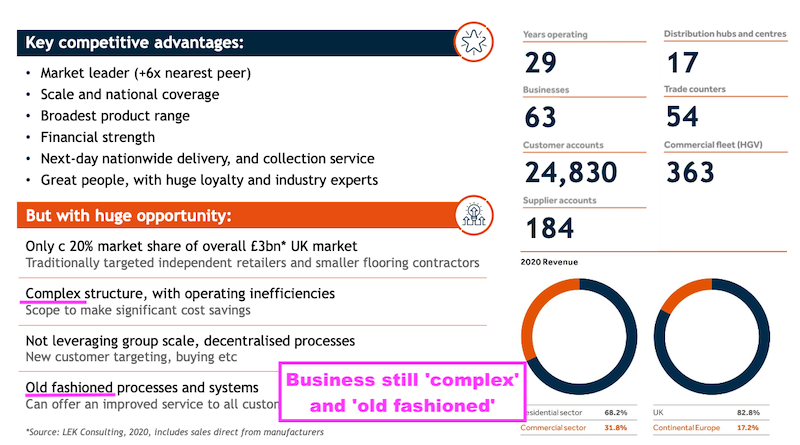
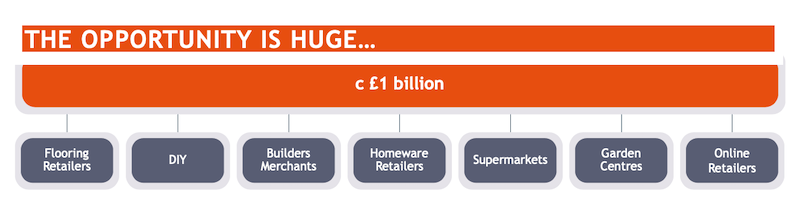
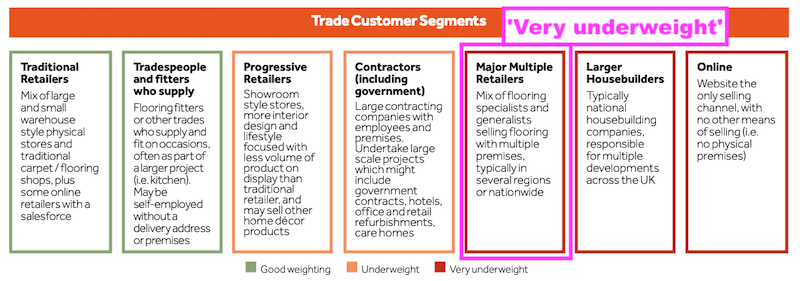
One particular “huge opportunity” was to supply floor-coverings to major retailers…
…in which Headlam’s market share was “very underweight“:
Mr Wilson never got to implement his CMD strategy because he suddenly left the business less than three months later.
Similar to Mr Brewer, Mr Wilson departed in mysterious circumstances. The associated RNS referred to the board’s “heartfelt gratitude” but ominously did not include any farewell comment from Mr Wilson.
Perhaps the board had taken a closer look at Mr Wilson’s CV. Omitted from my 2020 review was Mr Wilson’s time as a non-executive of Conviviality:
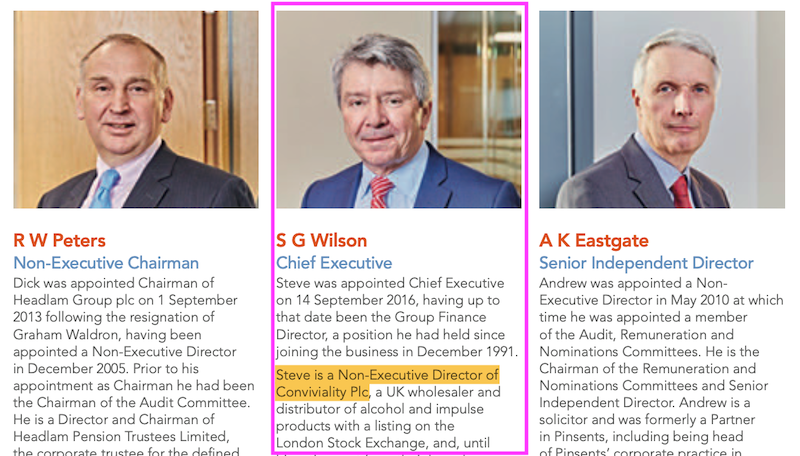
Mr Wilson was in fact the chairman of Conviviality’s audit committee for almost five years until the drinks wholesaler collapsed during 2018.
That audit-committee stint must have raised some awkward doubts about Mr Wilson’s stewardship credibility, given Conviviality went under because its finance team created a £5 million “arithmetic error” within an Ebitda forecast and overlooked a £30 million payment due to HMRC.
Management changes
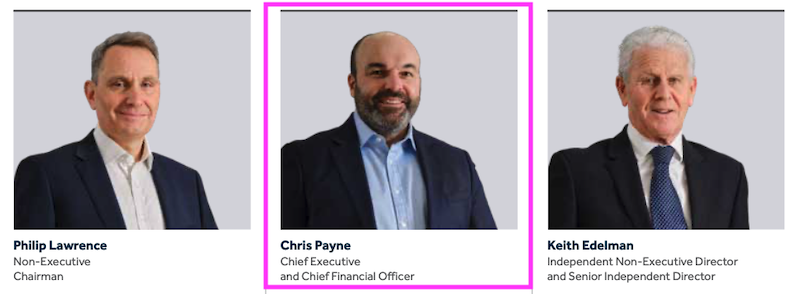
Chris Payne succeeded Mr Wilson as Headlam’s chief exec during 2021. Mr Payne joined the group as finance director during 2017 and the 2021 results described him as “a key architect of the business change strategy“:
Six years on, the aforementioned 2021 CMD now emphasises the raft of senior-management changes that had occurred at Headlam:
At the time of the CMD presentation, the main speakers had all worked at the group for just two years or less:
- Adrian Harris (UK Managing Director): joined April 2019;
- Iain Lennard (UK Sales Development Director): joined June 2020;
- Farren Murphy (Commercial Director, National Carpets): joined February 2020;
- Ian Crick (Trade Counter Programme): joined December 2019, and;
- Rob Marsh (Operations Project Manager): joined 2019.
Of those five speakers, only Mr Murphy possessed hands-on experience of buying/selling floor-coverings prior to Headlam.
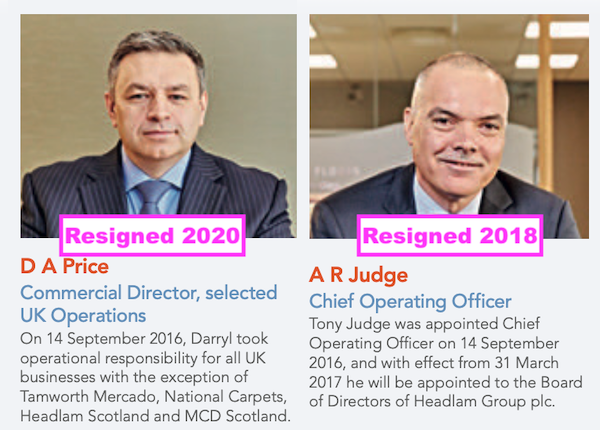
Veteran employees were in the meantime leaving to assist Mr Brewer at his Likewise venture. Those exiting included Tony Judge (joined 1992), once Headlam’s chief operating officer, and Darryl Price (joined 1994), once Headlam’s commercial director:
Complicating matters further was the absence of a permanent finance director between late 2021 and early 2023.
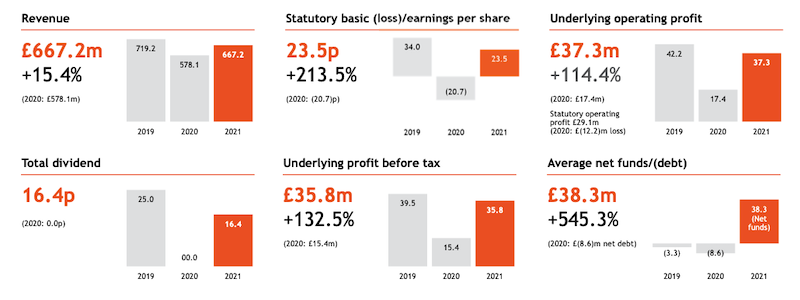
Despite all the personnel changes, Headlam appeared to be performing well. Following the Covid-blighted 2020, 2021 witnessed underlying profit more than double, the dividend reinstated and the net cash position significantly enhanced:
Buoyed by that performance alongside encouraging early signs from the CMD strategy, the board declared a £15 million special dividend and promised a £15 million buyback (subsequently conducted at an average 321p share price).
Again with the benefit of six years of hindsight, returning this additional £30 million to shareholders was a critical mistake.
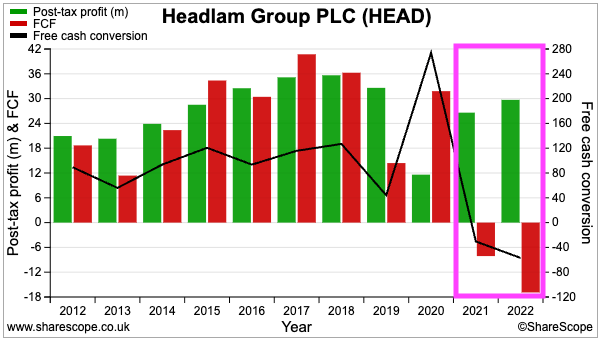
You see, due to an “investment in inventory to protect against product supply issues“, cash conversion during 2021 and also during 2022 was particularly poor:
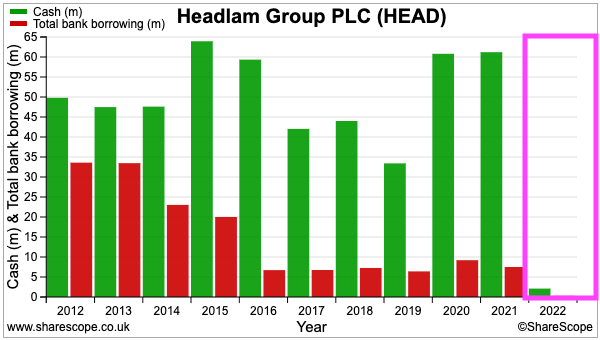
Net cash by the end of 2022 had in fact reduced to only £2 million:
Downfall
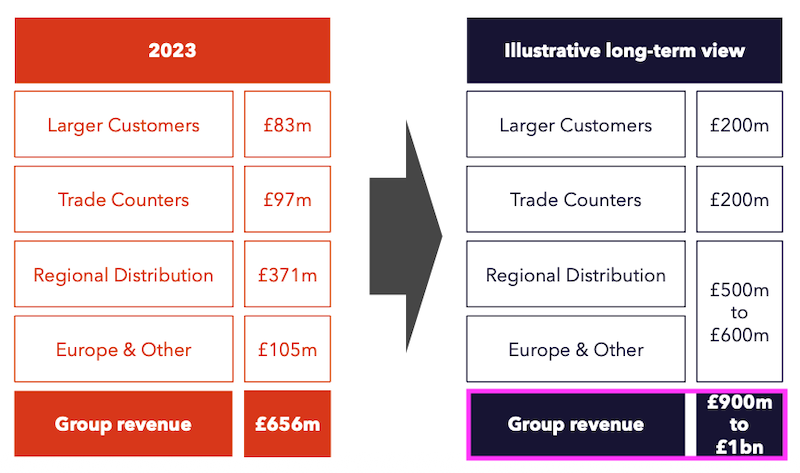
Headlam’s progress reversed significantly during 2023. That year’s powerpoint highlighted three large downward arrows…
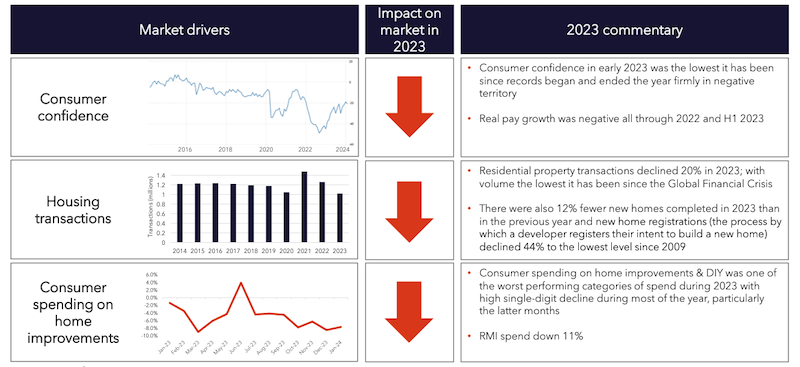
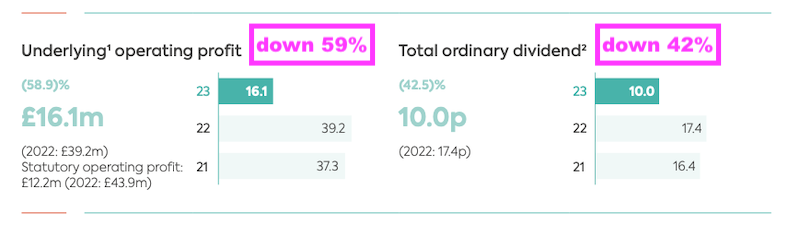
…as profit and the dividend was “impacted by macro and industry headwinds of lower residential trading volumes, lack of manufacturer-led price increases, and high operating cost inflation“:
Another year of poor cash conversion…
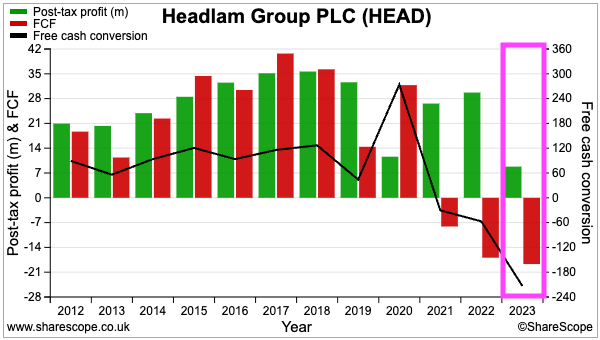
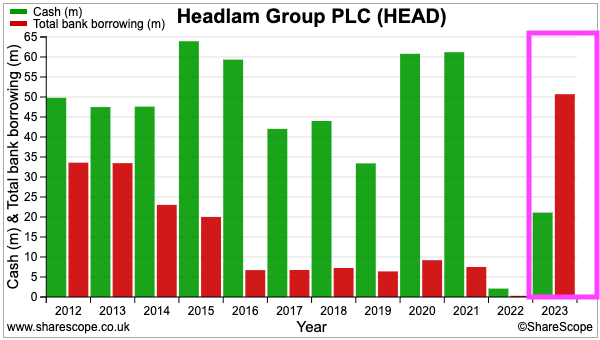
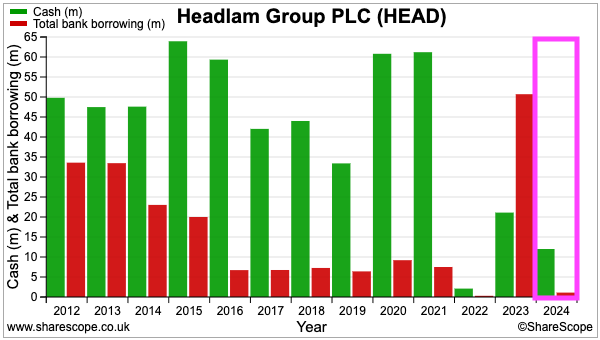
…resulted in the preceding year’s £2 million net cash transforming into net debt of £29 million:
Nonetheless, supported by sales to “underweight” major retailers gaining 26% to £83 million, the board remained unfazed about its growth ambitions:
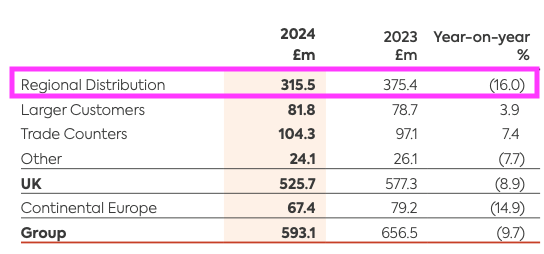
Trading went from bad to worse during 2024. “Unprecedented market conditions” reduced revenue within the Regional Distribution division — which, during Mr Brewer’s tenure, had consisted of all those “autonomous operations” serving independent retailers and contractors — by a hefty 16%:
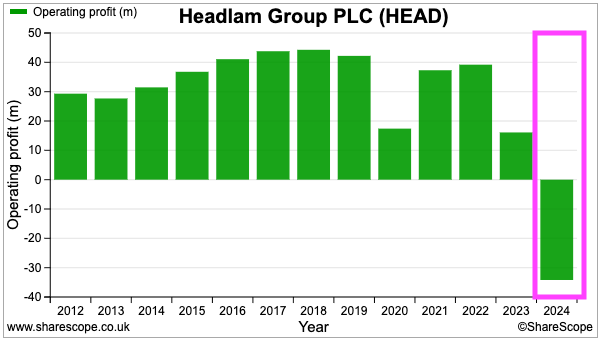
Profit therefore turned to a thumping loss:
Property disposals raising £61 million left net cash at £12 million…
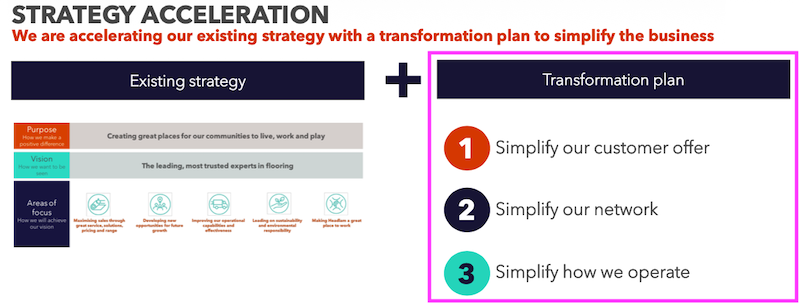
…while a “transformation plan” was bolted on to the CMD strategy to help rescue the business:
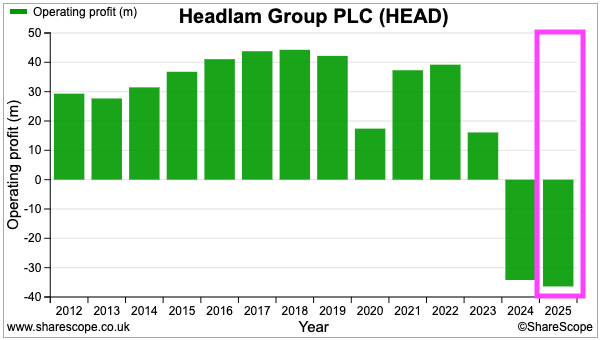
Another thumping loss for 2025…
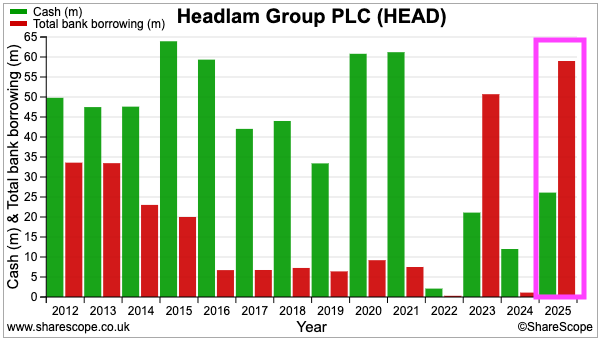
…but this time with ‘only’ £21 million received from disposals turned that £12 million net cash into net debt of £33 million:
Further losses during 2026 mixed with the debt plus a lack of further properties to sell then led to Headlam’s collapse the other week.
Chief executive Chris Payne (that “key architect of the business change strategy”) left Headlam during October 2025. Similar to the departures of Tony Brewer and Steve Wilson, Mr Payne did not make a farewell comment within the associated RNS.
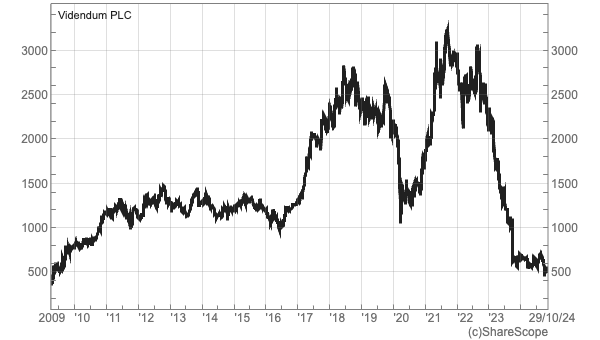
In what could be seen as rubbing salt into shareholders’ wounds, Headlam’s non-executive chairman Stephen Bird became interim executive chairman. Mr Bird’s previous executive role was leading the boom that turned to bust at Videndum:
Back to basics
Mr Bird used Headlam’s 2025 results to admit the CMD strategy and shift towards “underweight” major retailers had been a mistake.
In particular, Headlam had neglected the independent retailers and contractors that had served as the group’s foundation:
“In seeking to fill excess capacity with increased volumes from larger customers and through trade counter expansion, we moved away from our core independent retailers and contractors, the customers on which the strength of this business depends.”
Mr Bird appeared to suggest the earlier talk of “unprecedented market conditions” was actually a cover-up for those ‘core’ customers going elsewhere:
“Those [independent] customers were increasingly of the view that the Group was competing against them rather than supporting them. As a result, we lost share.“
He also confessed how smaller customers were in fact more profitable than those major retailers Messrs Wilson and Price wanted to attract:
“Furthermore, although the Group secured additional low-margin revenue, we lost more profitable residential revenue from our core customer base.”
The fundamental problem chasing major retailers for extra sales was the expensive cost-base required:
“The larger customer business that we won, whilst providing positive contribution to the fixed cost base, required us to maintain a higher level of infrastructure than would have otherwise been the case and therefore hindered the ability to implement significant reductions in the fixed cost base.“
Mr Bird’s conclusion was to return Headlam to Mr Brewer’s strategy of primarily serving independent retailers and contractors:
“Our core customer strategy refocuses the business on independent retailers and contractors whilst adjusting the cost base of the business accordingly“
Headlam’s administration has since prompted Mr Bird’s departure, which increased the number of director exits to 14 since Mr Brewer left during 2016. Total board remuneration over the same time has topped £14 million.
Conclusion
I was very lucky with my 2020 Headlam review. I studied only the group’s financials and had my “potential 100% gain” verdict validated mostly by an overly-ambitious board and its misguided CMD.
Looking back, I did not pay any attention to the achievements of Tony Brewer or his sudden departure. Nor did I alight upon the subsequent changes to his “autonomous” strategy and the growing desire to expand well beyond his favoured segment of independent retailers and contractors.
For a few years, the pandemic and its repercussions obscured cracks in Headlam’s new approach…
…but by early 2024 the game was definitely up following 2023’s dividend cut and net cash becoming significant net debt. The shares then were still close to 200p.
While administration was not an inevitable outcome two years ago, Headlam’s revolving boardroom door should have (with hindsight!) rang alarm bells to dedicated shareholders grimly holding on for a revival.
Since Mr Brewer’s departure, no less than 19 different directors have helped lead the group — most of whom thought it best to make their excuses and abandon the slowly sinking ship.
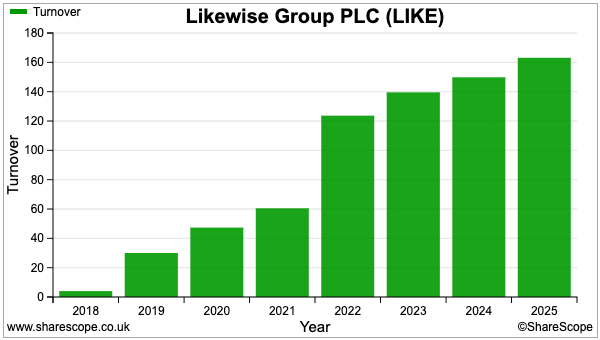
But perhaps the greatest warning that all was not well was the positive progress at Mr Brewer’s rival Likewise venture.
In contrast to Headlam blaming “macro and industry headwinds” for reduced sales, Likewise was busy lifting revenue by capturing customers that we now know had become disillusioned with Headlam’s new approach:
I guess the overriding lesson here is successful businesses are never just defined by the accounts and “streamlined processes“, but are in fact inherently established by leadership and strategy. Just be very wary of any company wanting to change course when veteran managers already serve satisfied customers.
Until next time, I wish you safe and healthy investing with ShareScope.
Maynard Paton
Disclosure: Maynard does not own shares in Headlam.
This article is for educational purposes only. It is not a recommendation to buy or sell shares or other investments. Do your own research before buying or selling any investment or seek professional financial advice.



I worked as a senior executive for Headlam from 1991 to 2023. Your most engrossing epistle is a very accurate summary of Headlam’s history and subsequent downfall.
There is just one point I would like to make with regard to Steve Wilson. Rightly or wrongly, he was just a figurehead when he became CEO. Chris Payne, the former trash collector from Biffa, was the driving force behind the CMD. He, along with his acolytes from outside the flooring industry, believed that the headlam share of independent retailers and contractors was a ‘given’, which no other competitor could threaten.
Chris Payne employed ‘buyers’ with backgrounds from Sainsbury’s for example. Never going to work out in the flooring industry. He was always more engrossed with ESG, rather than sales, margin and operating profit.
Hubris was Headlam’s downfall. Chris Payne et al believed they were too big to fail.
A very useful review, Mr Paton; which illustrates what we should look for: change of business strategy, rising Debt/ falling cash, & inexperienced directors/ new directors with past failures; & always be critically suspicious of the accounts.
Over 5o years I built up a large carpet retailer carrying some 600 rolls, cutting machines etc and so only used Headlam for ” top up” orders but i could not beleive to hearthat they had set-up trade counters to servce self-employed fitters to enable them to obtain carpets etc to sell against Headlams own retail customers,mad, obvious own goal and perhaps the final nail !