UK small caps can offer private investors an edge, with less institutional competition and greater scope for overlooked opportunities. Michael Taylor explains how disciplined stock selection, risk management and a consistent process can help tilt the odds in investors’ favour.

The game is rigged. It always has been.
But maybe not in the way you think.
The man down the pub reckons it’s rigged against him. That the City, the hedge funds, and the suits have carved everything up before he’s finished his cornflakes. So typically he will avoid the stock market because it’s ‘risky’, and instead stuff his cash into Premium Bonds which are what I would call a scam.
If you’re trading forex, then the reality is you’re trading a negative sum game. No value is created, which means someone loses for every winner, and you have fees and commissions to pay.
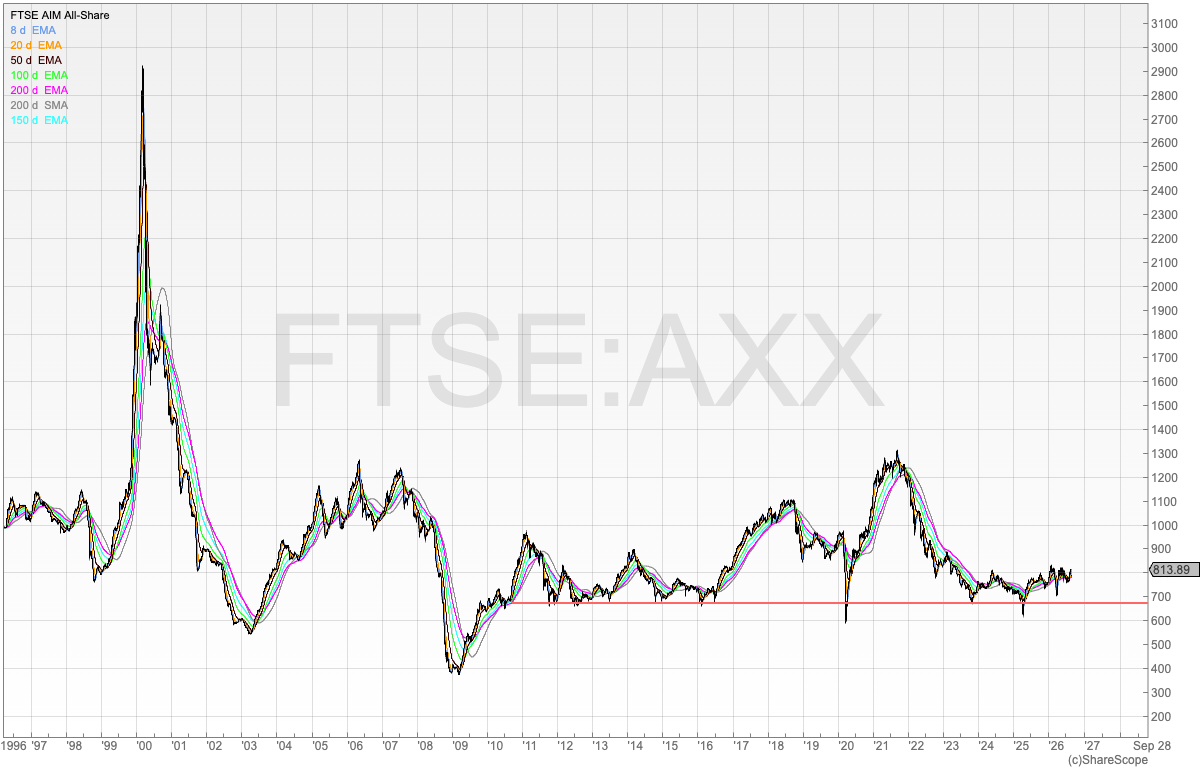
Some could even say AIM shares are a negative sum-game. And if you look at the FTSE AIM All-Share, not a single shred of value has been created single the creation of what has been billed as ‘the world’s best growth market’.
But I still believe that UK small caps is the best arena to deal in. The game might be rigged, but you can certainly rig the odds in your favour.
There is little institutional competition
Many funds will not even look at a company with a market cap of sub £100 million. That’s still a reasonably sized and potentially established company. If a fund has £1 billion in AUM, then a 2% total position size would be £20 million.
If a market cap of a company the fund would like to buy is £50 million, that’s over 40% of the company’s market cap and takeover rules would be triggered.
The fact is that bigger funds just don’t bother with the small fish and allow people like ourselves to get on with it relatively unbothered by institutions.
There are, of course, some small cap funds aimed at taking advantage of UK small caps. But there are very few and most of the secondary dealing is done by private investors dealing with their own money.
Many of these are relatively unsophisticated, with little knowledge about the companies they are dealing in, and are operating without any form of system that will allow them to generate market-beating returns over time.
Warren Buffett says it best: “It’s a huge structural advantage not to have a lot of money.”
He claimed he could compound small sums at 50% a year. Let’s be honest, he probably could. But whether you believe him or not, the logic is still true. And when he says “not a lot of money”, that is still likely to be a lot of money for you and me.
I’ll happily admit that if someone handed me £100 million tomorrow, I wouldn’t know what to do with it, because my style of trading would need to change dramatically. My edge would evaporate with the size. This edge is available because you are ‘small’.
It’s also true that nobody is really watching these stocks. If they were, private equity and US buyers wouldn’t be taking out companies with huge premiums, yet still think they’re getting a bargain.
Plenty of AIM companies have no independent analyst coverage at all and just paid-for research commissioned via the company’s own broker. Fewer eyes means more mispricing. More mispricing means opportunity.
Games Workshop traded at around £200 million market cap in 2016, a company valued the City largely ignored. Now it’s in the FTSE 100, and they love it.
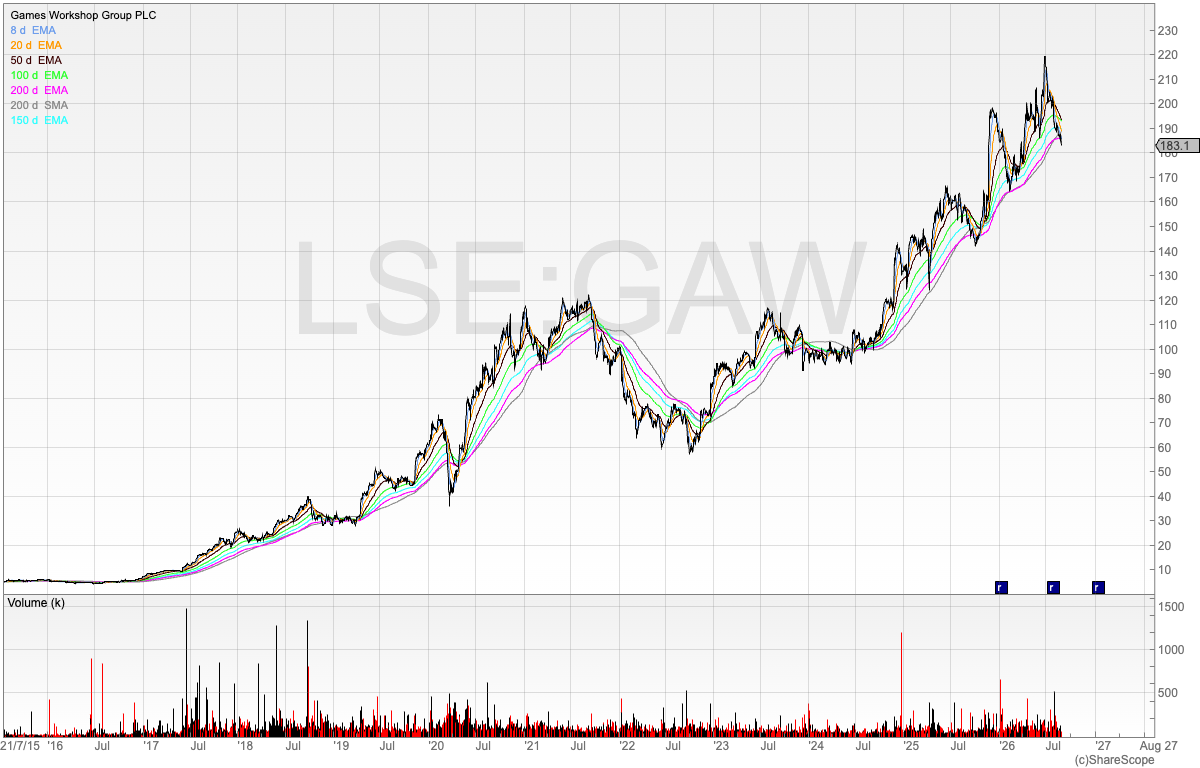
The returns on capital were sitting in plain sight for anyone with a ShareScope subscription and a functioning pair of eyes. Nobody front-ran anyone, it was just a quality business that nobody cared about.
Positive-sum or negative-sum?
People often believe that when they win, they have taken money from others who’ve lost it. Not necessarily. A buyer and a seller can be matched together, both of them thinking they’ve got a great deal. And both of them can be right.
In equities, the value comes from the businesses themselves.
Companies generate profits, pay dividends, buy back shares, and compound retained earnings. Share prices rise and the overall pie grows. Barclays’ Equity Gilt Study has tracked this for over a century and found that UK equities have returned roughly 5% a year in real terms since 1899, thrashing cash and gilts. Every long-term holder can win simultaneously, because the underlying assets create value. That is a positive-sum game.
As we mentioned earlier, forex is not. When the pound rises against the dollar, the dollar falls against the pound. No value is created anywhere. Before costs, currency trading is precisely zero sum. After the spread, the commission, and the overnight financing charges, it’s negative sum. You’re playing poker where the house rakes every pot, and your opponents include the treasury desks of global banks in a market turning over trillions of dollars a day. You are not the shark in that water. You are the plankton.
Why is FX pushed so hard on Instagram, then? Follow the money. SquaredFinancial once offered me $2,500 for every person I signed up to their platform. I declined. Plenty don’t, which is why your feed is full of rented Lamborghinis telling you to trade the London session and how simple it is.
Now, the caveat before you remortgage the house and pile into AIM: a structural edge is not a guarantee.
Most private investors take this rigged game and lose anyway, because they play it like the lottery. They buy the classic storytelling oil explorers, revenue-free jam-tomorrow outfits, and the ramp du jour. You only really have an edge if you harvest it with a process.
Here are some things to think about.
Check the cash before you believe the story
The biggest killer of UK small-cap investors is a stage 4 stock.
The AIM graveyard is full of companies that never made a profit.
They exist on a treadmill: raise money at a discount, burn it, put out excitable RNSs, raise again. Placings often transfer wealth from existing shareholders to the advisers, the directors, the Nomad, the broker, and anyone else who is paid by the company.
So before anything else, I look at the cash.
Open the balance sheet and find cash and cash equivalents. Then go to the cash flow statement and find the operating cash outflow. Work out what the monthly burn is and work it back from the company’s cash position from that specific point in time.
If a company holds £2 million and burns £750k million every month, you don’t need a CFA to work out that a discounted placing is coming.
Read the going concern note in the annual report too. Auditors write in a dry code, but “material uncertainty” is about as close as they get to firing a flare gun.
However, sometimes frauds exist. Patisserie Valerie reported healthy net cash right up until October 2018, when a £40 million black hole appeared and secret overdrafts came to light. The cash simply wasn’t there and unfortunately, investors lost everything (through no fault of their own).
Fraud beats analysis every time, which is exactly why no checklist ever replaces position sizing.
Use a checklist
Atul Gawande’s The Checklist Manifesto describes how surgeons dramatically cut complications and deaths with a simple tick-box list. Pilots follow checklists. There’re no prizes for arriving earlier, only safely.
Trading will expose every flaw you have, whether that is impatience, overconfidence, FOMO. And a checklist is armour against your own worst instincts.
Some things to think about:
Stage 4 stocks
- Stage 4 stocks: Don’t buy any share that is in Stage 4. It doesn’t matter how appealing it looks. Just avoid it.
- Cash position: How long until the begging bowl comes out? If it needs to add all, then you’re buying a placing ticking time bomb. Directors’
- Liquidity and spread: Can you actually get out? Test the RSP and check for size within the spread. There’s no point moving the price on the way in as you’ll definitely move it on the way out.
- Position size and stop: Use the chart to work out your risk/reward and use sensible position sizing and risk management. Mark Minervini has said that those who trade without a stop loss eventually stop trading. He’s right.
Write yours down, then log every trade against it in a journal. Most traders don’t log their data, and most traders lose money. I don’t believe that’s a coincidence.
For the hunting ground itself, I keep it simple: the 10% within 26-week or 52-week-high filters in ShareScope. Go to Filter → Apply filter → Library and look under “Michael”.
Strength attracts strength, and stocks at highs have no overhead of trapped sellers waiting to puke on you.
Michael Taylor
Free educational content: https://youtube.com/@shiftingshares
This article is for educational purposes only. It is not a recommendation to buy or sell shares or other investments. Do your own research before buying or selling any investment or seek professional financial advice.
This article is for educational purposes only. It is not a recommendation to buy or sell shares or other investments. Do your own research before buying or selling any investment or seek professional financial advice.