Bruce takes a look at groups facing threats and opportunities from AI disruption, with a retrospective back to Uber IPO in 2019. Companies covered G4M, SGE and AO.
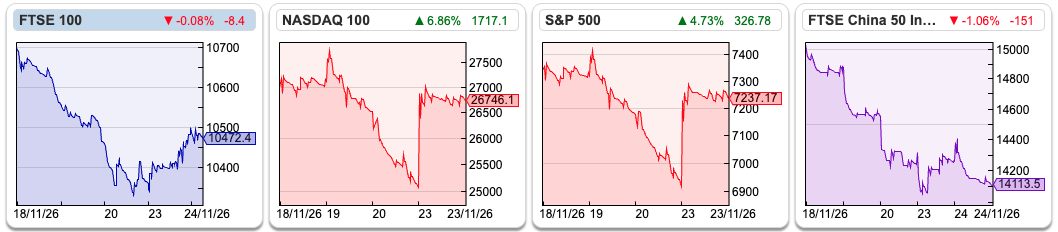
The FTSE 100 rebounded by +1% to 10,470 following Jensen Huang’s return to Nvidia, but the index was still down -2% over the last 5 trading days. The Nasdaq 100 and S&P 500 were also down around -2% over the same time period. The FTSE China 50 fared much worse, falling -6% and is now down almost -20% YTD. Copper remains below its 200 day moving average, and is down -20% from its mid September peak. As data centres account for just 3% of global copper demand, copper’s slump can’t be blamed on Nvidia newsflow, instead far more likely copper weakness has been changing expectations of further US interest rate hikes.
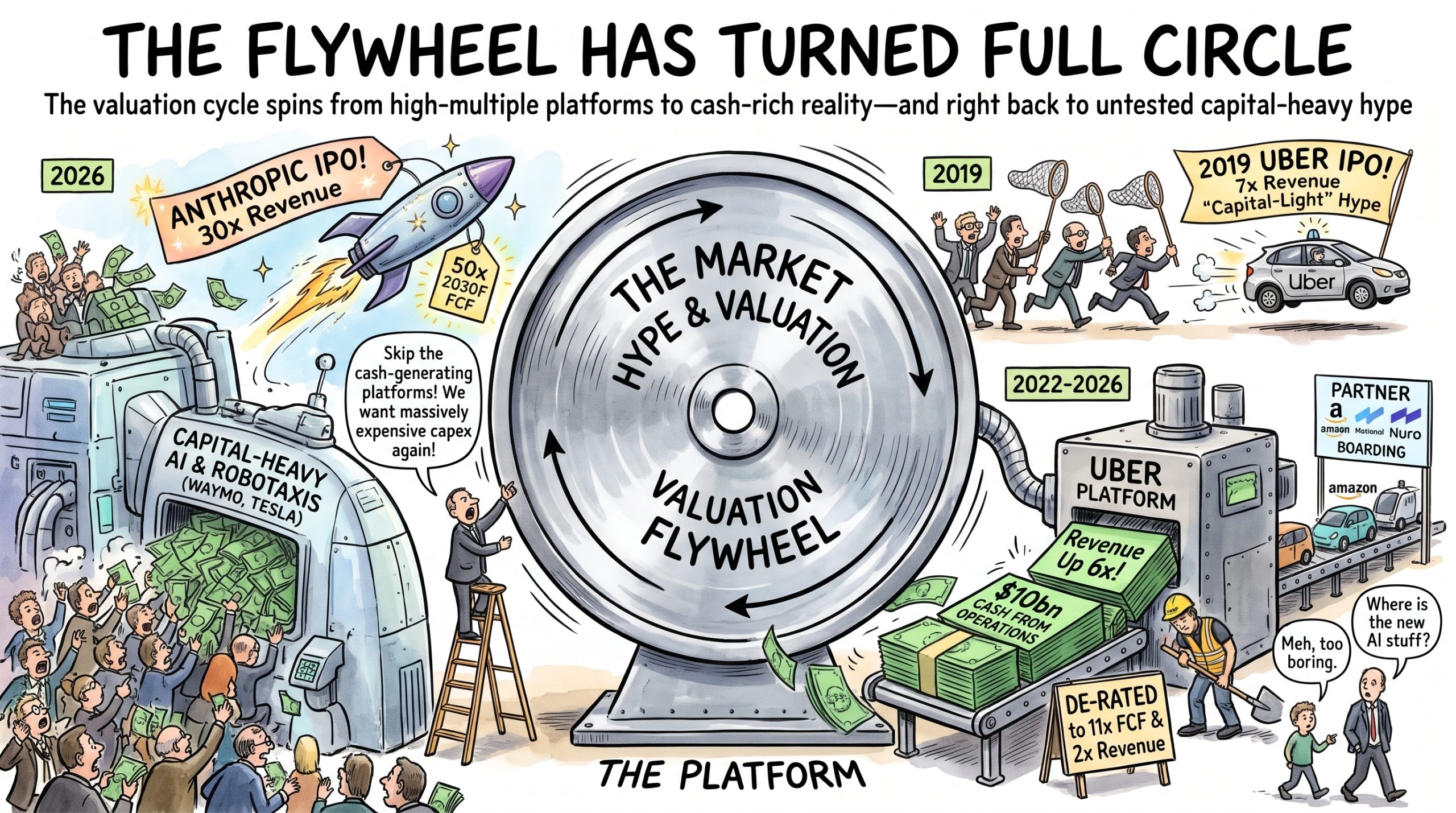
Contrast Anthropic’s IPO last week versus Uber, which came to market in 2019 at $45 per share ($82bn market cap at the time). ShareScope shows that the Uber bulls were right on fundamental performance: Uber has increased revenue by almost 6x from 2018 to 2026F. The group has also transformed from a cash-burning growth story into a global platform throwing off $10bn of cash from operations. Despite flawless execution, the shares are down -22% YTD and are now trading on just 11x forecast Dec 2027F free cashflow.
Uber management have stayed true to their capital light “platform” strategy: rather than taking on massive R&D and capex costs to develop driverless cars in-house they are partnering with other robotaxi groups. Earlier this month Uber released Q3 Sept results, with management saying they aim to have about 700 fully driverless vehicles on its platform by the end of the year, and more than 2,000 in 2027: half in the US and half internationally. For example, Amazon’s Zoox will launch on the Uber app in Las Vegas later this month, with Motional and Nuro also coming soon on Uber. For contrast, Alphabet Waymo currently has 4,000 vehicles operating across the US.
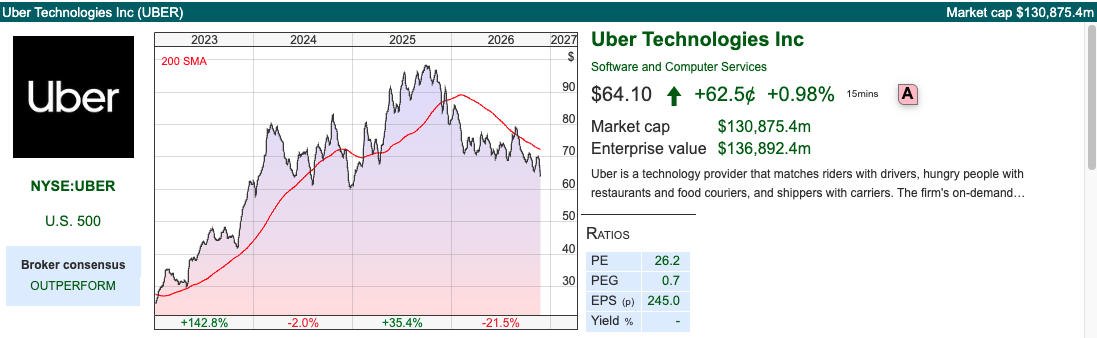
Uber’s post IPO share price performance has been has been very disappointing, with the shares falling to $20 per share in mid 2022 and are up only +42% cumulative over 7.5 years (that’s just 4.8% CAGR) underperforming vs. the Nasdaq 100 which is up almost 4x. Uber IPO’ed with a 7x revenue multiple in May 2019, versus 30x revenue multiple for Anthropic this month.
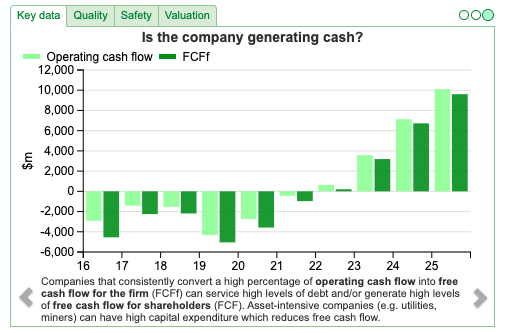
You have to enjoy the irony. Uber has delivered strong revenue growth and cashflow (ShareScope chart above), but has been “rewarded” with a valuation de-rating to 11x 2027F FCF and 2x revenue multiple, as investors prefer capital-heavy robotaxi operators (Waymo, Tesla) who intend to bypass the group’s platform. Meanwhile the market seems happy to pay ~50x 2030F FCF for Anthropic shares, on the untested assumption that capital-heavy models will capture the value and will not be commoditised either by open weight models or by capex-light applications built on top of them. The “flywheel” has turned full circle.
This week I look at three businesses facing threats and opportunities from the new world. Sage FY results show that when it comes to payroll and accounting SaaS Apocalypse fears earlier this year presented investors with a contrarian opportunity. On the other hand, both Gear4music and AO World’s reliance on Google’s paid search has exposed weakness in their model, just as management invest in automating distribution.
Gear4music H1 Sept Results inline but H2 “significantly below” warning
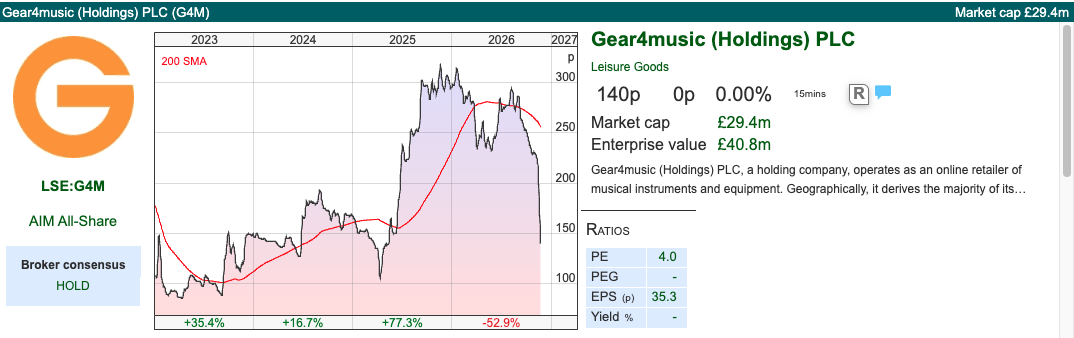
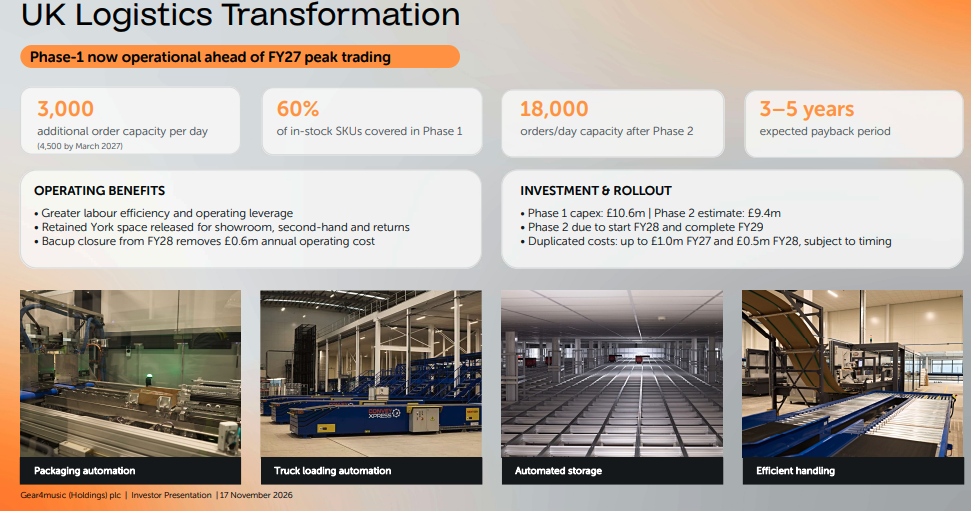
This is frustrating, but worth pondering. Gear4music, the largest UK based online retailer of musical instruments, reported total revenue +6% to £85.4m, but PBT down steeply to £1m, a -63% fall. Net bank debt rose +52%, to £24m, as they invested in a new warehouse, plus seasonal inventory build ahead of peak Christmas trading. In the slide deck, management suggest payback of 3-5 years on the investment, with Phase 2 (£9.4m capex) due to start FY Mar 2028F. For now that looks ill timed with Q3 revenue so far down -13% y-o-y, as lower paid search traffic has led to weaker trading.
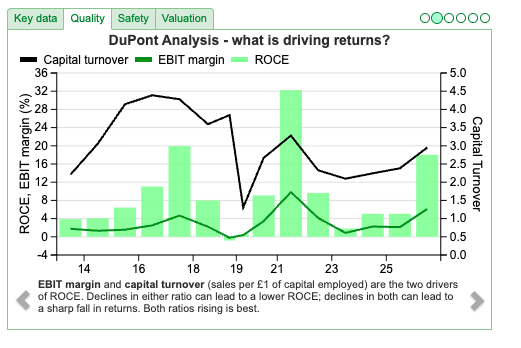
I mentioned a couple of weeks ago that Alphabet is bundling AI overviews with their core search engine, which is probably the correct decision strategically, but may cause considerable short term pain for the US tech group. The pain also seems to be felt by businesses reliant on google paid search, such as G4M (which spends 78% of their marketing budget on Google) as well as more obviously at risk groups like FUTR (down -75% in the last two years). The frustration for G4M shareholders is that it had looked like management were executing an impressive turnaround and the shares trebled in 2025 – then this has come at a difficult time as management invested £10.6m in a new automated distribution centre. The ShareScope Dupont chart below (breaking out capital turnover and margins contribution to a 32% RoCE) reveals how the model really benefitted from pandemic lockdowns. However, when demand normalised the business struggled to achieve 5%, as both margins and capital turnover fell sharply and only recovered last year.
Outlook: Management noted the drop-off in website traffic from paid search. In response they’re trying to improve their profile on LLMs which makes sense. They also mention ‘macro-economic uncertainties’ means they now expect to be “significantly below” expectations, with FY Mar 2027F EBITDA of approximately £11.5m. Progressive, the paid for research house, have cut FY Mar 2027 revenue by -9% to £182m, with a further -6% fall the following year. Their latest EPS forecasts are down -80% to 4.1p Mar 2027F and -57% to 9p Mar 2028F, NB the PER showing 4x on the header at the top is a trailing ratio.
Readacross: These sort of warnings feel obvious in retrospect, but the share price decline of almost -30% on the morning of results suggests that this was not in the price. A few months ago investors were concerned that AI would disrupt price comparison platforms like Rightmove or Moneysupermarket, but it looks like online retail that’s reliant on google’s paid search could be vulnerable. Off the top of my head: On the Beach, AO World, Marks Electrical maybe also the likes of Virgin Wines and Naked Wines?
Valuation: The shares are trading on 16x reduced Mar 2028F PER and 4x EV/EBITDA. That discrepancy between the two ratios reminds us that net bank debt is £24m, versus a market cap of £30m. There’s also £16m of lease liabilities on the balance sheet. That gives me a distinctly uncomfortable feeling.
Opinion: When I last covered G4M in April 2023 I concluded that “we can be confident that in 3 years’ time the shares won’t be at 82.5p – but trying to figure out the direction of the variance is a challenge.” This had looked like a classic turnaround story, the shares were up 3.5x but now the high level of debt mean that this looks too risky to call. Hopefully management can turn things around.
Sage FY Sept Results
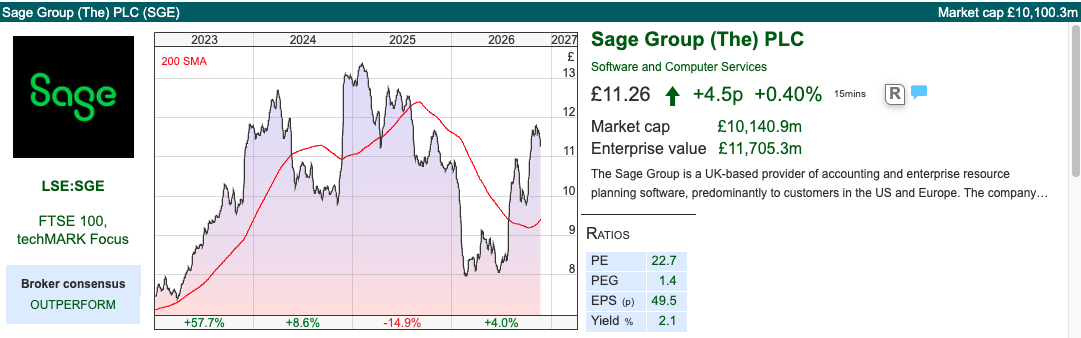
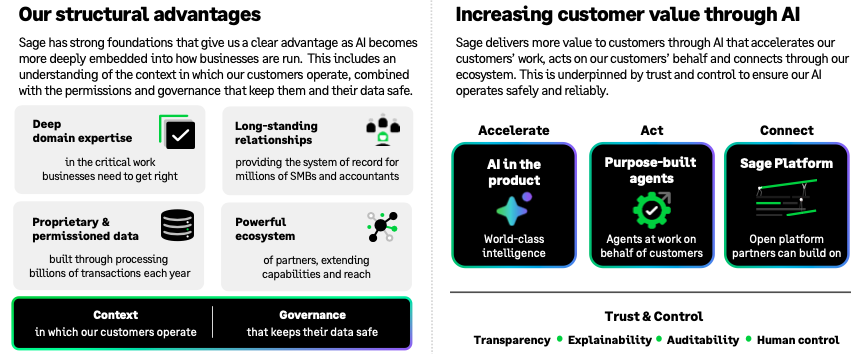
Staying with the theme of AI disruption (or lack of SaaS Apocalypse) Sage, the HR, payroll and accounting software group, reported FY Sept 2026 revenues +11%. The operating margin improved from 23.9% the previous year to 24.5% and net revenue retention was 103%. In summary, there’s no evidence that this business is being disrupted by Anthropic or anyone else. Net debt was £1.6bn, 2.0x underlying EBITDA (at the top of the management range of 1x-2x).
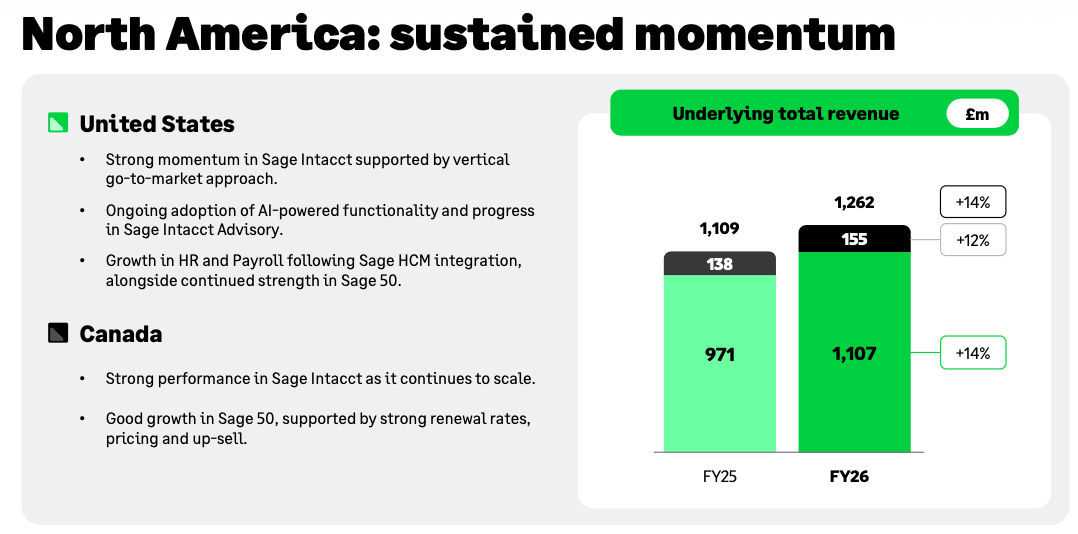
There’s also no evidence of weakness in North America (45% of revenue), which is where I would expect problems to emerge first if corporations are switching away from the software package. Revenue growth in North America was +14%, ahead of UK and Ireland +10% and Europe +7%.
Outlook: Management talk about strong momentum in FY Sept 2027F, with revenue growth “in the region of 10%”. Underlying operating margins expected to continue trending upwards. ShareScope shows mid teens EPS growth this year and next.
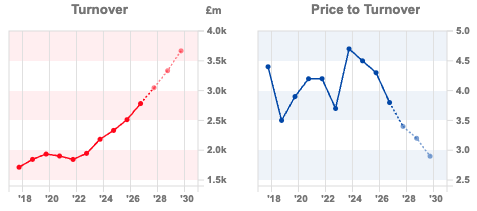
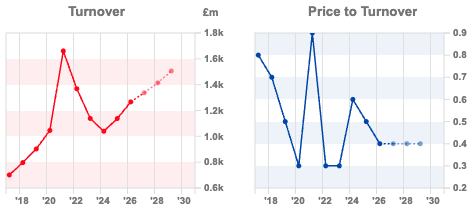
Valuation: The shares trade on 17x Sept 2028F PER and 12x EV/EBITDA. The forecast price to sales ratio is just over 3x (right at the bottom end of the historic range). I’d suggest that valuation is Quality at a Reasonable Price (QaaRP) rather than expensive as two years ago investors were prepared to pay over 4.5x turnover.
Opinion: This is a quality compounder and a top 10 holding for Terry Smith, after he switched out of Intuit earlier this year, saying “Sage has much less reliance [than Intuit] on share based compensation, a lower rating and does not have Intuit’s record of injurious acquisitions. ROIC: 18%, FCF yield: 6.0%.”
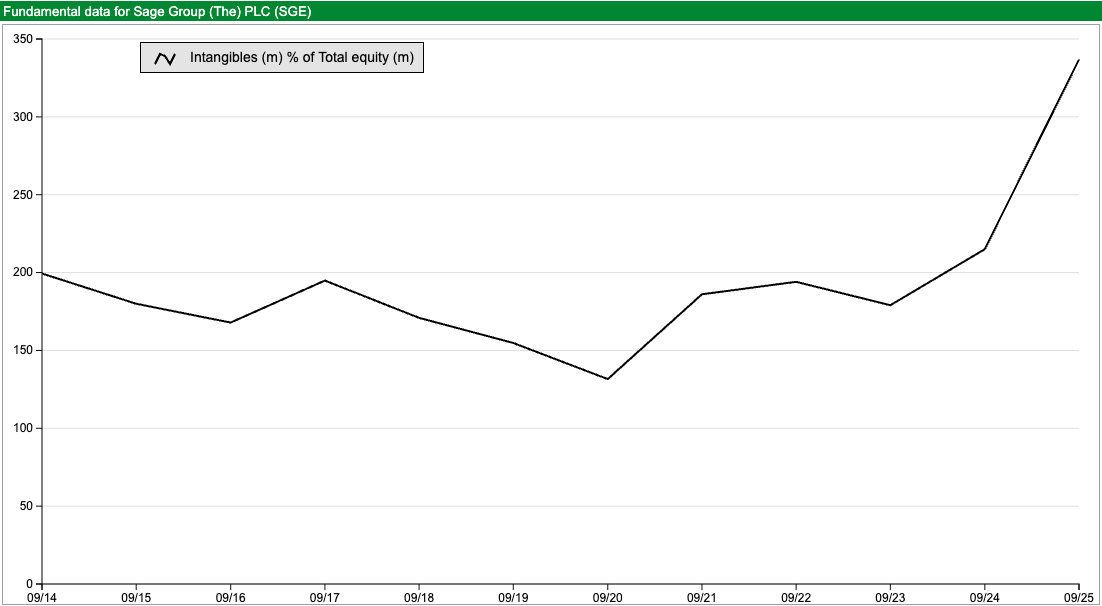
This Phil Oakley article from 2016 (when Sage traded on 26x cashflow, versus 16x today) is a reminder that the group has faced disruption risk before. Back then the fear was that cloud native rivals would eat Sage’s lunch, at the time the software was desktop based. That did require a multi-year investment phase, which held back margins. So rather than existential risk, today’s valuation might be anticipating more money being ploughed back into R&D or acquisitions to protect the moat. Sage expenses IT development spend through the p&l (that is excellent earnings quality) but there’s £2.3bn of goodwill on the face of the balance sheet from previous acquisitions, versus net assets of just £407m.
A second theme is that SaaS products that are fundamental to how businesses operate are at less risk of disruption from LLMs. That said, both MONY (share price +40% from 145p Feb low) and YOU (+68% from 153p March low) which investors had worried about are both up strongly from their lows earlier this year. Ironically, the LLM disruption has most obviously hurt G4M and FUTR, whose business models rely on google’s paid search for customers or affiliate marketing.
A final observation on ActiveOps, – the decision intelligence software group which also reported this week, which is down -66% YTD as another unexpected victim of Claude’s disruption. Enterprise systems of record like SAGE, SAP, Workday are probably less likely to see development taken in house than AOM’s “decision support” product suite. Thus we’re beginning to see a more nuanced view of where the threats and opportunities from AI are.
AO World H1 Sept Results
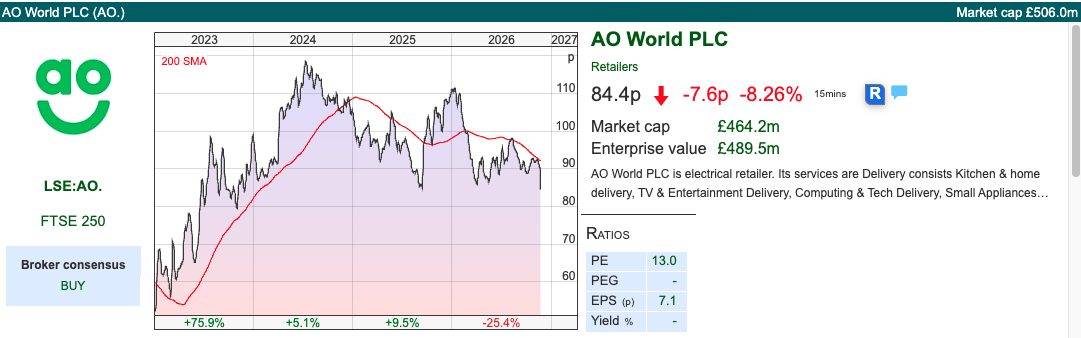
This “white goods” electrical retailer (fridges, dishwashers, washing machines etc) reported H1 Sept revenue + 6% to £6.18m and PBT +20% to £21.5m. Gross cash was £93.9m, with less than £2m of borrowing. However, despite not having a high street presence, the balance sheet carries significant warehouse lease liabilities deducting those also from cash leaves net funds of £20.8m. That’s an increase of £6m versus Sept 2025.
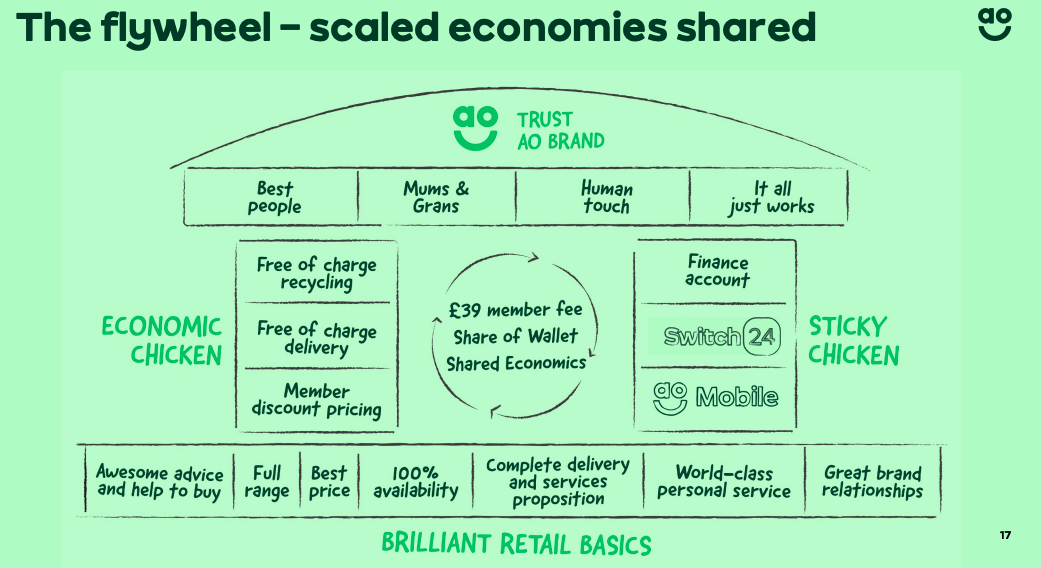
Outlook: Management say that “trading conditions are challenging”. They give a PBT range of £48 – £54m for FY Mar 2027F and FCF range £50m-£60m. ShareScope forecasts tab show PBT of £54m, so the consensus is top of management’s range. At the trading statement at the end of Sept management said they were firmly on a path to a 5% PBT margin, a couple of months later in November this has become a “medium term target”.
Paid search: Advertising and marketing costs (most of which will go to google paid search) rose +12% to £27m. That’s around double the top line growth rate, and equates to 4.4% of revenue. Management say that this is because of subdued market growth, inflation and competition. I think the read across from G4M though is that AO are seeing less “bang for their buck”, having to spend more on Pay Per Click (PPC) just to stand still. Rather than bidding up keywords, AO management are paying more for customers who click through on adverts.
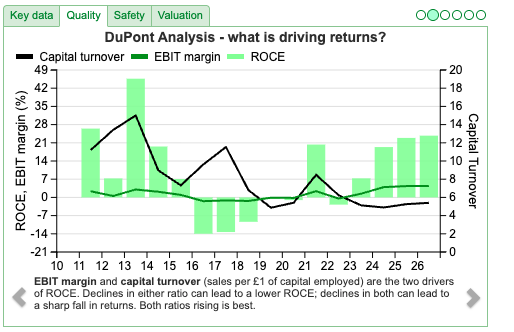
Valuation: The shares are trading on a PER of 12x Mar 2028F and EV/EBITDA of 4.6x the same year. Looking at ShareScope’s Dupont analysis below, shows that the impressive capital turnover (rhs) has allowed management to deliver 24% RoCE (green bar, lhs), despite an EBIT margin below 5% (green line, lhs). However, that doesn’t leave much room for error if sales disappoint by only a tiny amount, high capital turnover amplifies RoCE swings.
Opinion: This is an avoid for me. I dislike online retail, as I’m sceptical that these businesses have pricing power. The internet has made it easier to compare prices, so retailers responded by bundling extended warranties and hire purchase deals. These financial add-ons fall under the FCA “consumer duty” legislation. I’m unaware of any problems at the moment, but shareholders should be cautious that if online retailers become too greedy, there’s potential mis-selling risk, as we’ve seen in the second hand car dealerships. The near term risk is that paid search has become less effective marketing; longer term we may see autonomous agents compare and contrast white goods, and financing and insurance cover, eating into the margin of online retailers, which struggle to achieve a 5% margin even now. Avoid.
Bruce Packard
https://bruce126846.substack.com/
This article is for educational purposes only. It is not a recommendation to buy or sell shares or other investments. Do your own research before buying or selling any investment or seek professional financial advice.




Bi-Weekly Market Commentary | 25/11/2026 | UBER,G4M, SGE, AO | The flywheel has turned full circle
Bruce takes a look at groups facing threats and opportunities from AI disruption, with a retrospective back to Uber IPO in 2019. Companies covered G4M, SGE and AO.
The FTSE 100 rebounded by +1% to 10,470 following Jensen Huang’s return to Nvidia, but the index was still down -2% over the last 5 trading days. The Nasdaq 100 and S&P 500 were also down around -2% over the same time period. The FTSE China 50 fared much worse, falling -6% and is now down almost -20% YTD. Copper remains below its 200 day moving average, and is down -20% from its mid September peak. As data centres account for just 3% of global copper demand, copper’s slump can’t be blamed on Nvidia newsflow, instead far more likely copper weakness has been changing expectations of further US interest rate hikes.
Contrast Anthropic’s IPO last week versus Uber, which came to market in 2019 at $45 per share ($82bn market cap at the time). ShareScope shows that the Uber bulls were right on fundamental performance: Uber has increased revenue by almost 6x from 2018 to 2026F. The group has also transformed from a cash-burning growth story into a global platform throwing off $10bn of cash from operations. Despite flawless execution, the shares are down -22% YTD and are now trading on just 11x forecast Dec 2027F free cashflow.
Uber management have stayed true to their capital light “platform” strategy: rather than taking on massive R&D and capex costs to develop driverless cars in-house they are partnering with other robotaxi groups. Earlier this month Uber released Q3 Sept results, with management saying they aim to have about 700 fully driverless vehicles on its platform by the end of the year, and more than 2,000 in 2027: half in the US and half internationally. For example, Amazon’s Zoox will launch on the Uber app in Las Vegas later this month, with Motional and Nuro also coming soon on Uber. For contrast, Alphabet Waymo currently has 4,000 vehicles operating across the US.
Uber’s post IPO share price performance has been has been very disappointing, with the shares falling to $20 per share in mid 2022 and are up only +42% cumulative over 7.5 years (that’s just 4.8% CAGR) underperforming vs. the Nasdaq 100 which is up almost 4x. Uber IPO’ed with a 7x revenue multiple in May 2019, versus 30x revenue multiple for Anthropic this month.
You have to enjoy the irony. Uber has delivered strong revenue growth and cashflow (ShareScope chart above), but has been “rewarded” with a valuation de-rating to 11x 2027F FCF and 2x revenue multiple, as investors prefer capital-heavy robotaxi operators (Waymo, Tesla) who intend to bypass the group’s platform. Meanwhile the market seems happy to pay ~50x 2030F FCF for Anthropic shares, on the untested assumption that capital-heavy models will capture the value and will not be commoditised either by open weight models or by capex-light applications built on top of them. The “flywheel” has turned full circle.
This week I look at three businesses facing threats and opportunities from the new world. Sage FY results show that when it comes to payroll and accounting SaaS Apocalypse fears earlier this year presented investors with a contrarian opportunity. On the other hand, both Gear4music and AO World’s reliance on Google’s paid search has exposed weakness in their model, just as management invest in automating distribution.
Gear4music H1 Sept Results inline but H2 “significantly below” warning
This is frustrating, but worth pondering. Gear4music, the largest UK based online retailer of musical instruments, reported total revenue +6% to £85.4m, but PBT down steeply to £1m, a -63% fall. Net bank debt rose +52%, to £24m, as they invested in a new warehouse, plus seasonal inventory build ahead of peak Christmas trading. In the slide deck, management suggest payback of 3-5 years on the investment, with Phase 2 (£9.4m capex) due to start FY Mar 2028F. For now that looks ill timed with Q3 revenue so far down -13% y-o-y, as lower paid search traffic has led to weaker trading.
I mentioned a couple of weeks ago that Alphabet is bundling AI overviews with their core search engine, which is probably the correct decision strategically, but may cause considerable short term pain for the US tech group. The pain also seems to be felt by businesses reliant on google paid search, such as G4M (which spends 78% of their marketing budget on Google) as well as more obviously at risk groups like FUTR (down -75% in the last two years). The frustration for G4M shareholders is that it had looked like management were executing an impressive turnaround and the shares trebled in 2025 – then this has come at a difficult time as management invested £10.6m in a new automated distribution centre. The ShareScope Dupont chart below (breaking out capital turnover and margins contribution to a 32% RoCE) reveals how the model really benefitted from pandemic lockdowns. However, when demand normalised the business struggled to achieve 5%, as both margins and capital turnover fell sharply and only recovered last year.
Outlook: Management noted the drop-off in website traffic from paid search. In response they’re trying to improve their profile on LLMs which makes sense. They also mention ‘macro-economic uncertainties’ means they now expect to be “significantly below” expectations, with FY Mar 2027F EBITDA of approximately £11.5m. Progressive, the paid for research house, have cut FY Mar 2027 revenue by -9% to £182m, with a further -6% fall the following year. Their latest EPS forecasts are down -80% to 4.1p Mar 2027F and -57% to 9p Mar 2028F, NB the PER showing 4x on the header at the top is a trailing ratio.
Readacross: These sort of warnings feel obvious in retrospect, but the share price decline of almost -30% on the morning of results suggests that this was not in the price. A few months ago investors were concerned that AI would disrupt price comparison platforms like Rightmove or Moneysupermarket, but it looks like online retail that’s reliant on google’s paid search could be vulnerable. Off the top of my head: On the Beach, AO World, Marks Electrical maybe also the likes of Virgin Wines and Naked Wines?
Valuation: The shares are trading on 16x reduced Mar 2028F PER and 4x EV/EBITDA. That discrepancy between the two ratios reminds us that net bank debt is £24m, versus a market cap of £30m. There’s also £16m of lease liabilities on the balance sheet. That gives me a distinctly uncomfortable feeling.
Opinion: When I last covered G4M in April 2023 I concluded that “we can be confident that in 3 years’ time the shares won’t be at 82.5p – but trying to figure out the direction of the variance is a challenge.” This had looked like a classic turnaround story, the shares were up 3.5x but now the high level of debt mean that this looks too risky to call. Hopefully management can turn things around.
Sage FY Sept Results
Staying with the theme of AI disruption (or lack of SaaS Apocalypse) Sage, the HR, payroll and accounting software group, reported FY Sept 2026 revenues +11%. The operating margin improved from 23.9% the previous year to 24.5% and net revenue retention was 103%. In summary, there’s no evidence that this business is being disrupted by Anthropic or anyone else. Net debt was £1.6bn, 2.0x underlying EBITDA (at the top of the management range of 1x-2x).
There’s also no evidence of weakness in North America (45% of revenue), which is where I would expect problems to emerge first if corporations are switching away from the software package. Revenue growth in North America was +14%, ahead of UK and Ireland +10% and Europe +7%.
Outlook: Management talk about strong momentum in FY Sept 2027F, with revenue growth “in the region of 10%”. Underlying operating margins expected to continue trending upwards. ShareScope shows mid teens EPS growth this year and next.
Valuation: The shares trade on 17x Sept 2028F PER and 12x EV/EBITDA. The forecast price to sales ratio is just over 3x (right at the bottom end of the historic range). I’d suggest that valuation is Quality at a Reasonable Price (QaaRP) rather than expensive as two years ago investors were prepared to pay over 4.5x turnover.
Opinion: This is a quality compounder and a top 10 holding for Terry Smith, after he switched out of Intuit earlier this year, saying “Sage has much less reliance [than Intuit] on share based compensation, a lower rating and does not have Intuit’s record of injurious acquisitions. ROIC: 18%, FCF yield: 6.0%.”
This Phil Oakley article from 2016 (when Sage traded on 26x cashflow, versus 16x today) is a reminder that the group has faced disruption risk before. Back then the fear was that cloud native rivals would eat Sage’s lunch, at the time the software was desktop based. That did require a multi-year investment phase, which held back margins. So rather than existential risk, today’s valuation might be anticipating more money being ploughed back into R&D or acquisitions to protect the moat. Sage expenses IT development spend through the p&l (that is excellent earnings quality) but there’s £2.3bn of goodwill on the face of the balance sheet from previous acquisitions, versus net assets of just £407m.
A second theme is that SaaS products that are fundamental to how businesses operate are at less risk of disruption from LLMs. That said, both MONY (share price +40% from 145p Feb low) and YOU (+68% from 153p March low) which investors had worried about are both up strongly from their lows earlier this year. Ironically, the LLM disruption has most obviously hurt G4M and FUTR, whose business models rely on google’s paid search for customers or affiliate marketing.
A final observation on ActiveOps, – the decision intelligence software group which also reported this week, which is down -66% YTD as another unexpected victim of Claude’s disruption. Enterprise systems of record like SAGE, SAP, Workday are probably less likely to see development taken in house than AOM’s “decision support” product suite. Thus we’re beginning to see a more nuanced view of where the threats and opportunities from AI are.
AO World H1 Sept Results
This “white goods” electrical retailer (fridges, dishwashers, washing machines etc) reported H1 Sept revenue + 6% to £6.18m and PBT +20% to £21.5m. Gross cash was £93.9m, with less than £2m of borrowing. However, despite not having a high street presence, the balance sheet carries significant warehouse lease liabilities deducting those also from cash leaves net funds of £20.8m. That’s an increase of £6m versus Sept 2025.
Outlook: Management say that “trading conditions are challenging”. They give a PBT range of £48 – £54m for FY Mar 2027F and FCF range £50m-£60m. ShareScope forecasts tab show PBT of £54m, so the consensus is top of management’s range. At the trading statement at the end of Sept management said they were firmly on a path to a 5% PBT margin, a couple of months later in November this has become a “medium term target”.
Paid search: Advertising and marketing costs (most of which will go to google paid search) rose +12% to £27m. That’s around double the top line growth rate, and equates to 4.4% of revenue. Management say that this is because of subdued market growth, inflation and competition. I think the read across from G4M though is that AO are seeing less “bang for their buck”, having to spend more on Pay Per Click (PPC) just to stand still. Rather than bidding up keywords, AO management are paying more for customers who click through on adverts.
Valuation: The shares are trading on a PER of 12x Mar 2028F and EV/EBITDA of 4.6x the same year. Looking at ShareScope’s Dupont analysis below, shows that the impressive capital turnover (rhs) has allowed management to deliver 24% RoCE (green bar, lhs), despite an EBIT margin below 5% (green line, lhs). However, that doesn’t leave much room for error if sales disappoint by only a tiny amount, high capital turnover amplifies RoCE swings.
Opinion: This is an avoid for me. I dislike online retail, as I’m sceptical that these businesses have pricing power. The internet has made it easier to compare prices, so retailers responded by bundling extended warranties and hire purchase deals. These financial add-ons fall under the FCA “consumer duty” legislation. I’m unaware of any problems at the moment, but shareholders should be cautious that if online retailers become too greedy, there’s potential mis-selling risk, as we’ve seen in the second hand car dealerships. The near term risk is that paid search has become less effective marketing; longer term we may see autonomous agents compare and contrast white goods, and financing and insurance cover, eating into the margin of online retailers, which struggle to achieve a 5% margin even now. Avoid.
Bruce Packard
https://bruce126846.substack.com/
This article is for educational purposes only. It is not a recommendation to buy or sell shares or other investments. Do your own research before buying or selling any investment or seek professional financial advice.