A look at how behaviour after buying can increase or hurt returns, based on Lee Freeman-Shor’s new book. Companies covered OTB, 4BB, FNX026
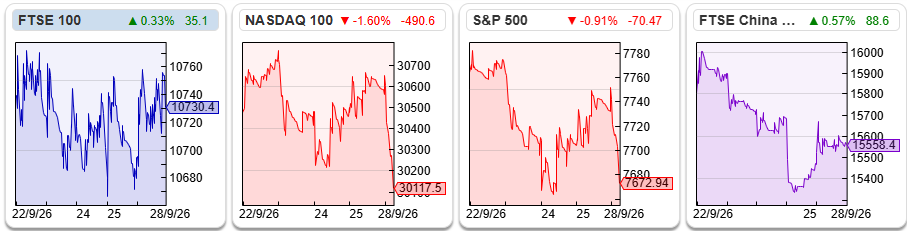
The FTSE100 was flat on the previous 5 trading days at 10,730. UK housebuilders did enjoy a bounce following supportive newsflow coming from the Labour Party Conference, Barratt Redrow up +14%, Persimmon +16%, Taylor Wimpey +12%, Bellway +12%, while smaller, affordable housing specialist MJ Gleeson did even better up +18%. In the US, the Nasdaq100 and S&P 500 were down around -1%. US Natural Gas (NG1) was up +10% while was flat. There doesn’t seem much progress on re-opening the Straits of Hormuz, after Trump rejected a deal from Iran
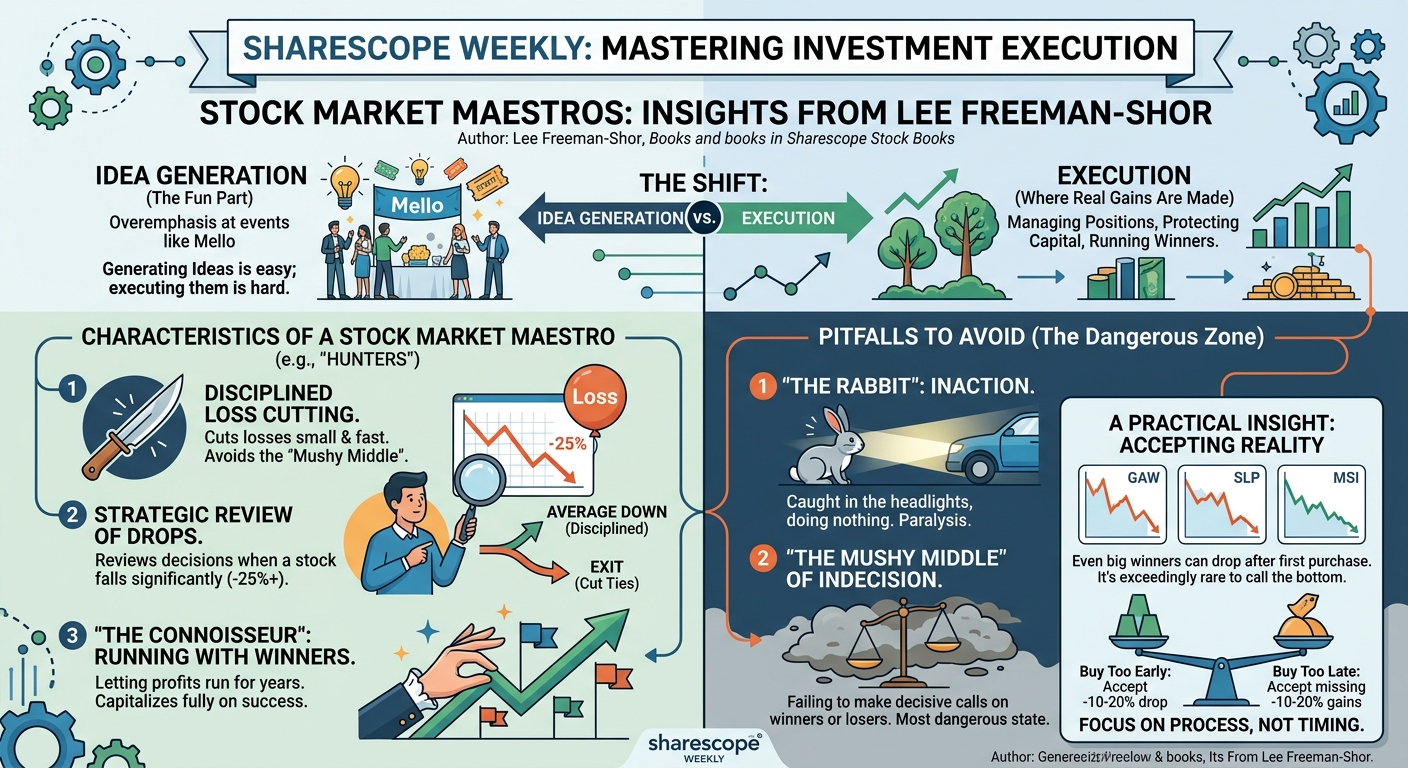
Lee Freeman-Shor author of The Art of Execution, has another book out – this time looking at the investment personalities who are good at execution. In Stock Market Maestros, he builds on his original thesis, that ideas on what to buy/sell are relatively unimportant part of investing. Instead its how much money you make when things go right, and how you protect yourself when a share price moves against you.
Some people are very disciplined at cutting their losses (“assassins” in his terminology) with small loses, others are good at reviewing their decisions when a stock falls -25% or more and deciding whether to average down. Oddly even the investors who are good at averaging down, “hunters” he calls them, can’t put their finger on what they’re doing. One common behaviour is to have a planned formed in your mind beforehand, rather than reacting to unexpected events. The dangerous zone is the mushy middle of indecision – “rabbits” caught in the headlights.
Freeman-Shor finds different investors, with different styles but verified track records and tries to flesh out their thinking. I’m only a quarter of the way in, but I do think we focus too much on “idea generation” because that’s the fun part of investing. The real gains are to be made running with winners for years: a “connoisseur” and when shares fall avoid being a “rabbit” doing nothing.
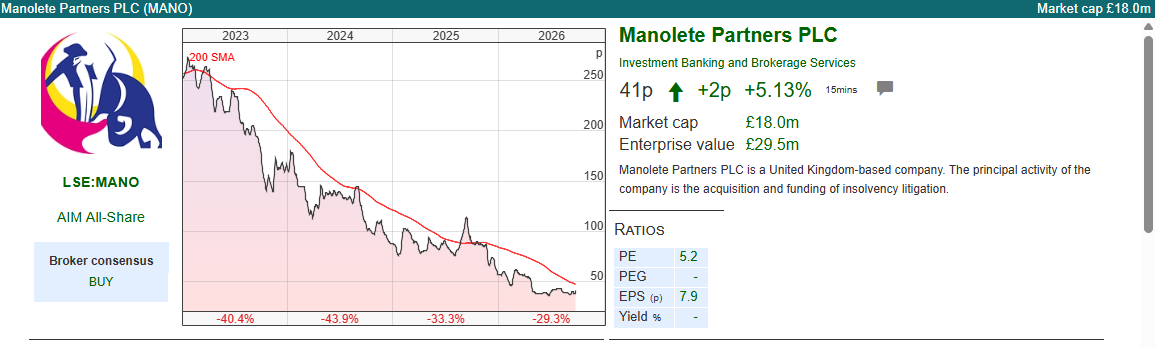
Bizarrely many of my really big winners drop like a stone after my first purchase: GAW, SLP and MSI to name three. I try not to buy too early, but it keeps happening and often my biggest regret is not averaging down more aggressively. FDEV, IPX and CML are more recent examples that I have high hopes for, and now MANO, which I pitched last week on Mello Monday. My average price was just over 60p versus 40p currently, so I’m long and wrong (so far). I posted the full pitch on Substack here.
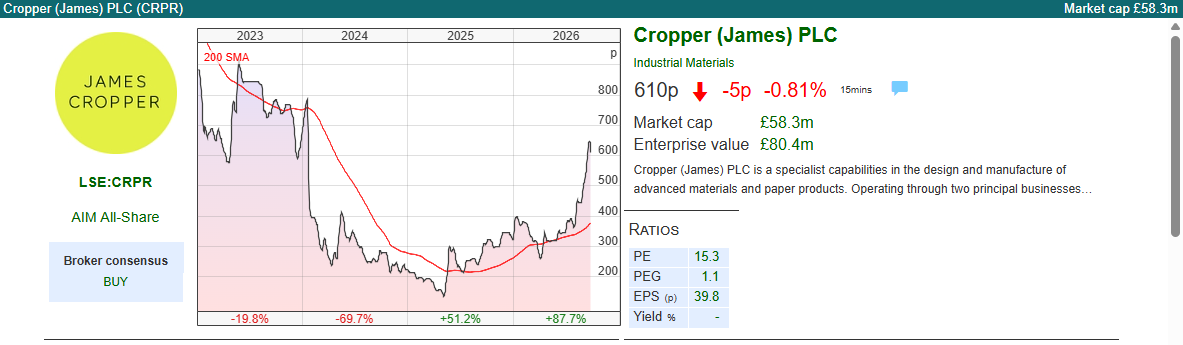
My conclusion from reading Freeman-Shor’s book though is to recognise that it is exceedingly rare to call the bottom of a stock, hence we have to accept we will either be too early or consciously waiting for the bowl and missing considerable upside. At the same Mello Event, Cockney Rebel pitched James Cropper, which has quadrupled since May 2025 – I respect his process but he’s obviously wired a completely different way to me. He’s not trying to call the turn and instead waiting for the chart to tell him the turnaround is underway with an obvious bowl. There’s no right answer, temperament and time horizon are obvious factors. I think it will be fascinating to revisit both MANO and CRPR in a year or two.
This week I look at On The Beach, which has recovered well since withdrawing guidance in March as holiday booking dropped precariously and Fonix, the mobile phone Direct Carrier Billings (DCB) payments group. I end with 4basebio, the cash-burning DNA therapy group which has been very disappointing since peaking at over £18 per share in June 2024, but with the share price now moving up through the 200 day moving average, perhaps worth a second look.
On The Beach FY Sept 2026 Trading Update
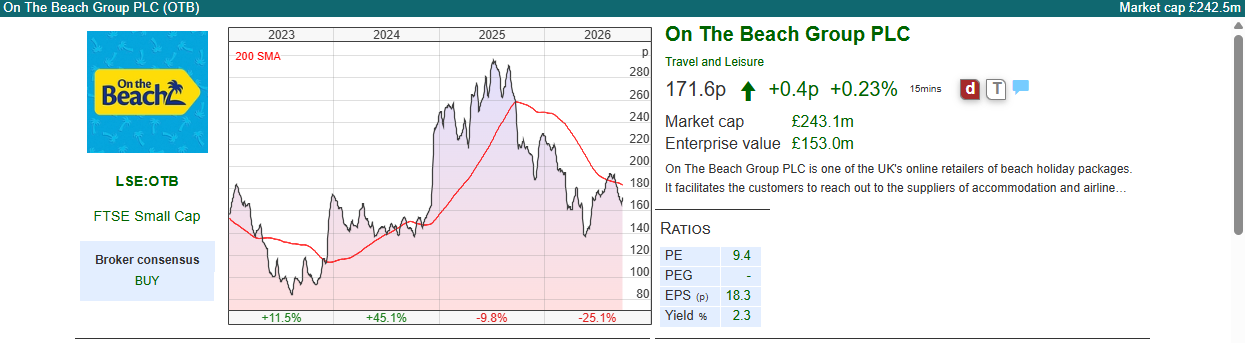
This low-cost, asset light holiday group that competes with package tour operators announced a FY Sept Trading Update. OTB are independent from airlines and hotels, allowing customers flexibly put together their own on holiday choosing their own duration, departure point, airline and hotel. Heading into this financial year, OTB had announced an ambitious full-year (FY Sept 26) adjusted profit before tax (PBT) target of £39m to £43m (FY Sept 2025 £31m, which itself was up +25% on the previous year). When Trump started bombing Iran, they saw significant slowdown in demand for holiday destinations such as Turkey, Greece, Cyprus and Egypt and withdrew guidance. They then reinstated guidance in May: FY Sept 26 adjusted PBT to £18m to £25m. Last week’s trading update now says adj PBT £22-23m, in the top half of their previous range.
That was driven by bookings growth of +9%, significantly ahead of the wider travel market. Importantly booking momentum has continued into FY Sept 2027F, having delivered total bookings in the last 8 weeks +17%. They expect to have net cash of c.£60m end of September.
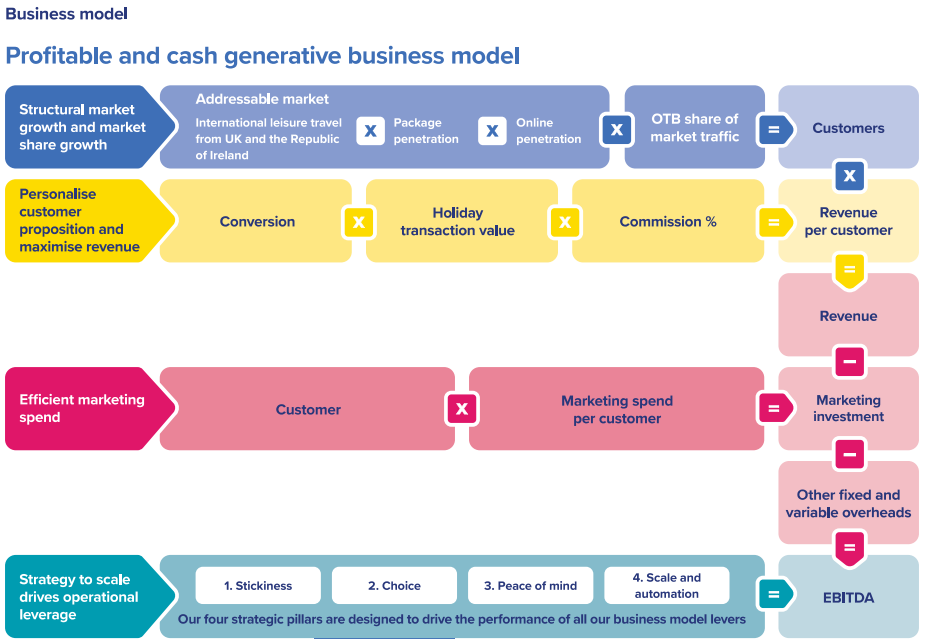
Unlike a traditional tour operator, OTB does not charter aircraft or commit to pre-purchased block allocations of hotel rooms. That means they don’t have to commit capital months in advance to secure seats and beds, exposing them to inventory risk if demand drops. Customers do pay for holidays in advance, but to meet ATOL and consumer protection standards, their customer cash is held in ring-fenced accounts.
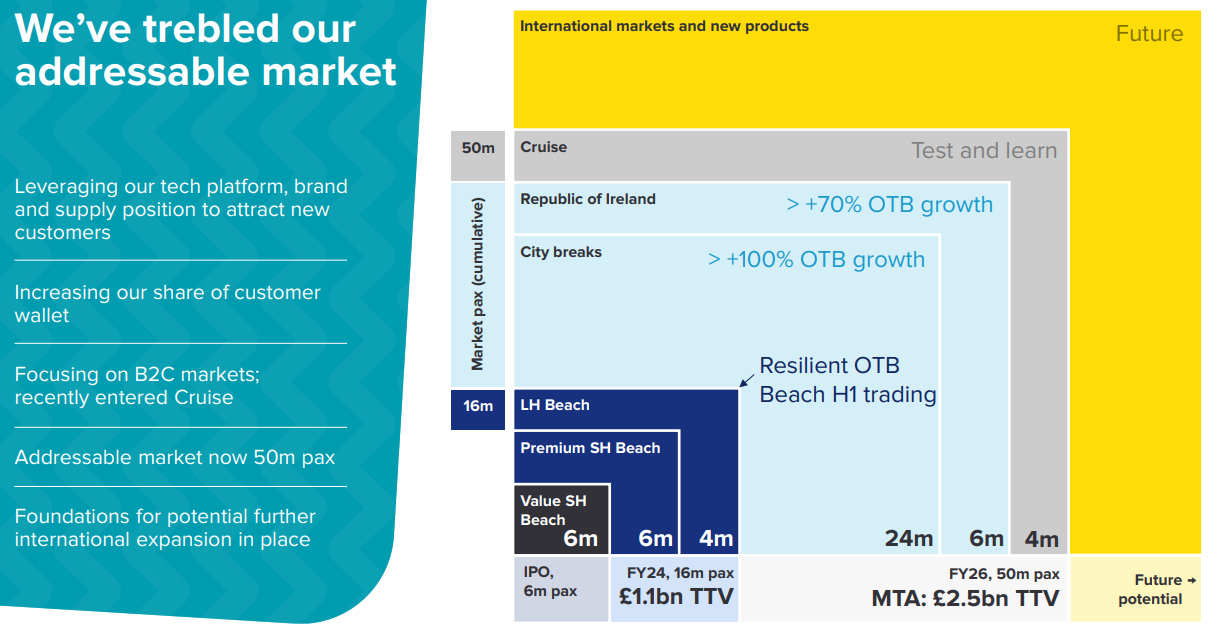
Competition with Jet2 and easyJet: Other operators in this sector have also suffered a volatile and uncertain year, with the JET2 share price -28% in the first 3 months of this year. But then recovering as summer 2026 seat capacity was +8% higher than Summer 2025 and passengers booked-to-date up +9%, driven by both package holiday and flight-only products. I’ve noticed EasyJet advertising heavily to diversify away from budget flight-only model to easyJet holidays which generated £489m revenue and £84m PBT in Q3 June. That’s almost the entire Q3 group PBT of £85m, implying easyJet’s core budget airline model needs to be fixed, when Private Equity group Apollo completes their acquisition. Although there is strong competition in the sector, OTB say that they have trebled their addressable market to 50m passengers are now expanding into areas like cruises.
Valuation: The shares are trading on a PER of just below 10x Sept 2027F and an EV/EBITDA below 4x the same year. That seems harsh given the strong track record in a difficult environment, but perhaps reflects that competition from the likes of easyJet has been increasing, and will probably continue to do so under Apollo’s ownership.

Opinion: I’ve been surprised how UK leisure has held up well in the face of rising interest rates. OTB was tipped to me at the end of June by a hedge fund at BGEO investors’ day, when we spent several hours on the bus to visit a vineyard in the Kakheti region. Any investor shrewd enough to have done well in BGEO probably also owned other shares with significant upside, so I made a mental note to keep track of OTB. Last week, I was out and about in London, and it does seem to be a K shaped recovery with Watling Street in the City absolutely full of 20-30 years old spending £8 per pint. Meanwhile anyone with a large mortgage that has repriced upwards is probably feeling financially stretched. I like the OTB business model and would imagine this could do well next year if hostilities in the Gulf end and energy costs fall.
Fonix FY June 2026 Results
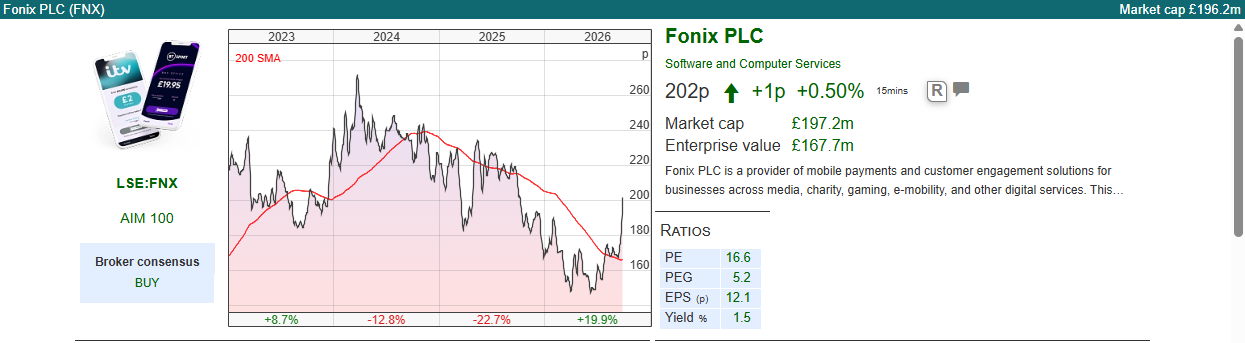
This mobile phone billings payments group prefers to quote gross profit, rather than revenue, as their topline. This is a quirk of IFRS 15, conceptually similar to media buying where groups pass through large amounts of “re-billed” media spend—TV slots, outdoor billboards, digital ad space—where the actual earnings are just the agency’s 10–15% commission. In FNX’s case payments to Mobile Networks Operators (MNOs) such as Vodafone and EE typically absorb 75% of revenue.
As it happens both revenue and gross profit were up roughly the same amount +14% and +13% respectively. It’s worth mentioning, because sometimes broker forecasts have the “top line” as gross profit, and this messes up forecasts versus historical numbers (The Mission Group TMG, is an example that springs to mind). Checking ShareScope though this isn’t a problem for Fonix.
Statutory PBT was up +8% to £15.6m. Underlying cash, which doesn’t include cash held on behalf of customers and is a better reflection of cash available to the business, fell to £9.4m (v £9.9m end of June last year). That was due to a £2.4m buyback, without which cash would have grown +19%.
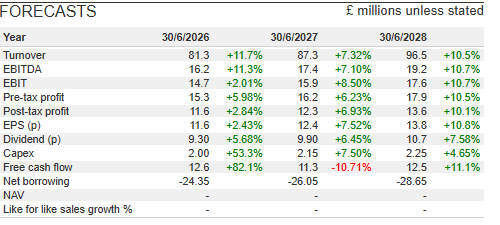
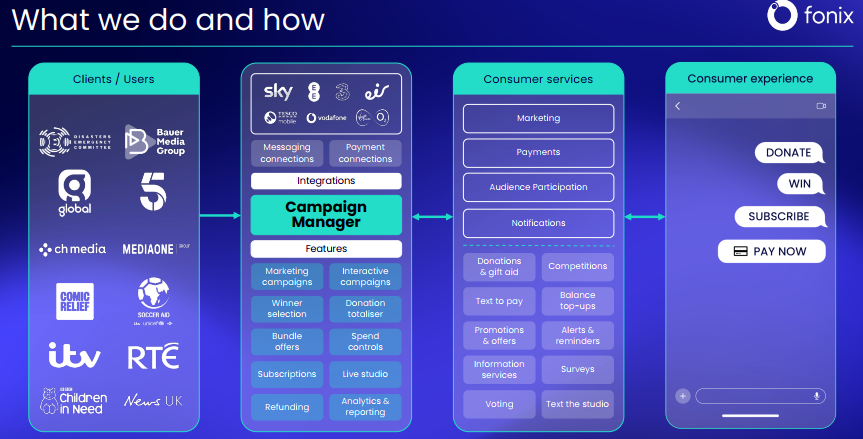
Outlook: Management say that Fonix enters FY June 2027F with real momentum. Historically they were UK centred, but more recently have been expanding into Europe. Portugal is now established, Switzerland live, France advancing, and a sixth market on the horizon. The UK (growing at +12%) is still 87% of gross profit, but Rest of Europe grew +16% so a few more years of compounding and it will be a significant part of the investment case. The outlook statement talks about increased dividends and buybacks to reflect confidence in sustained, profitable growth. That all sounds like things are going in the right direction, but Cavendish leave their numbers unchanged, having increased forecasts at the trading update in July. They are forecasting gross profit +8% and +11%, this year and next.
Valuation: The shares are trading on 16x FY June 2027F, dropping to 14.5x the following year. Cavendish are forecasting gross profit of £23m FY Jun 2027F and £25m the following year, implying a price to gross profit of 8.6x and 7.9x respectively. Given management prefer gross profit to turnover, we should probably use that for valuation, but for completeness I’ve included ShareScope’s turnover and price to turnover charts below.
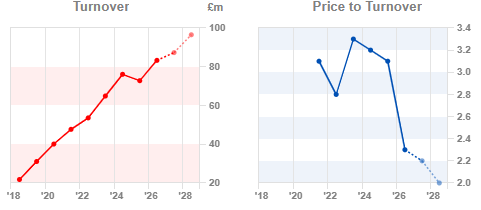
Opinion: Maynard covered the business in more detail in October 2023, when the share price was just above £2 per share, implying a forecast PER of 22x. His screen required minimum RoE and operating profit margin of 15%, plus revenue growth – FNX was the second fastest growing with revenues trebling in 5 years. This seems like another quality company that has de-rated partly because of slowing revenue growth and partly because investors have reappraised quality and growth multiples they’re prepared to pay. Chart looks good, I like it – though I don’t own any.
4basebio H1 June 2026 Results
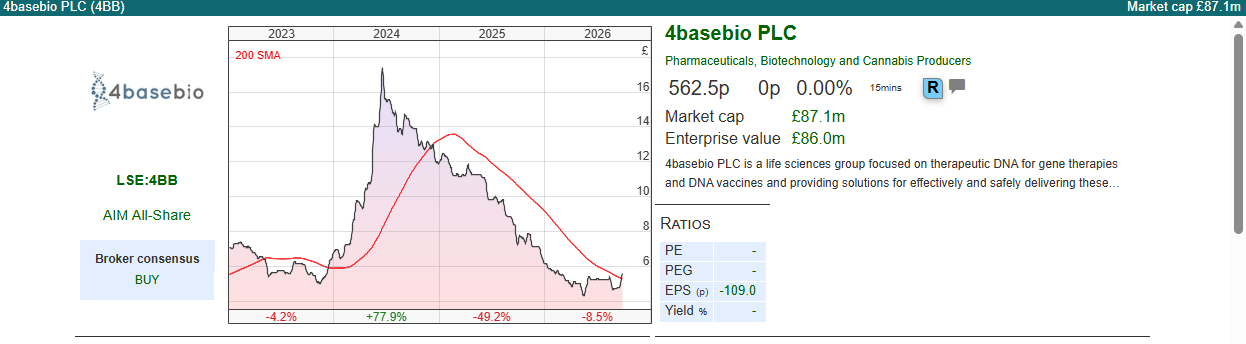
I’m flagging this cash burning DNA therapy group as the shares have just traded above the 200 day moving average. It was a 2021 vintage IPO, and quadrupled at one point. Since then the share price has been disappointing, but still has gross cash of £14m at period end following €7 million drawdown of a loan, providing a cash runway into late 2027. Annoyingly management don’t say what net debt is, but the important part is that they have cash that will last another 12 months and the forward indicators seem to be much better than the recent past.
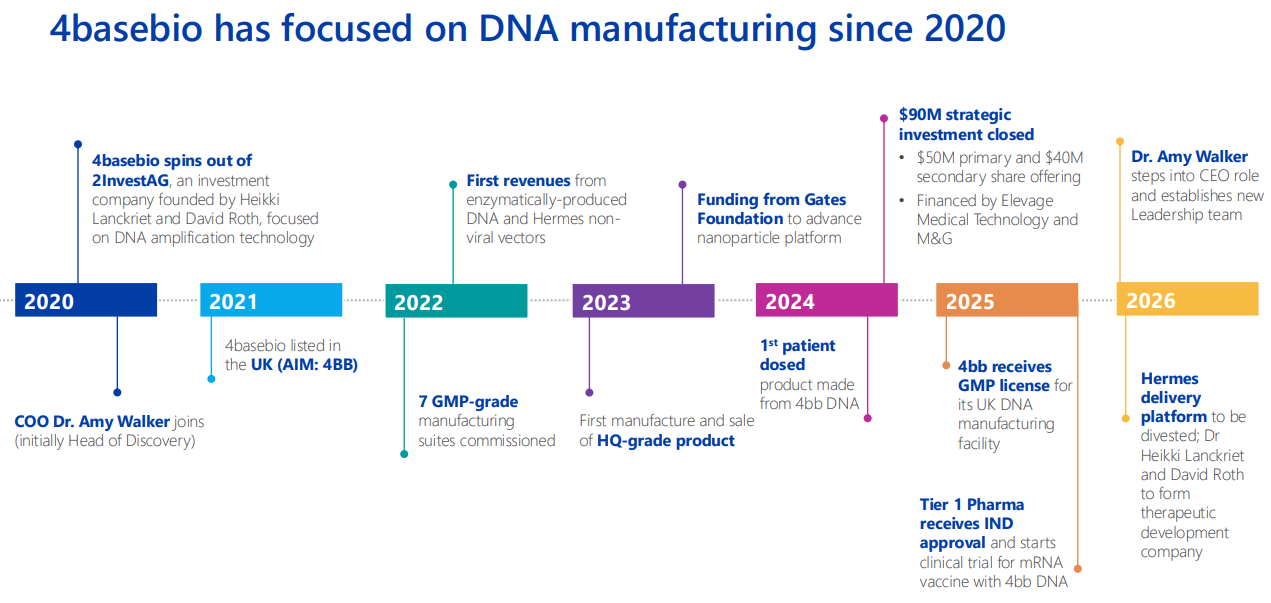
Revenues were just £262K, down -88% versus the previous year. Instead the highlighted bullet points on page one emphasise sales orders of £1.2m and a new business pipeline of £63m. Naturally the group is loss making, net cash outflows from operations were £8.4m in H1.
Outlook: There’s plenty of upbeat commentary, but Cavendish, the broker, only have forecasts out to the end of this year (FY Dec 2026F). What caught my eye was that on page 8 of the 13 page Cavendish note they show a chart with revenue build scenarios out to 2035 with 4 scenarios. The most bullish shows revenues of €109m and the least optimistic shows revenues of €88m. Take that with a pinch of salt of course, and also the broker’s £18 price target. My impression is that Cavendish do cover some speculative companies, where there might just be something valuable (Ilika strikes me as another example).
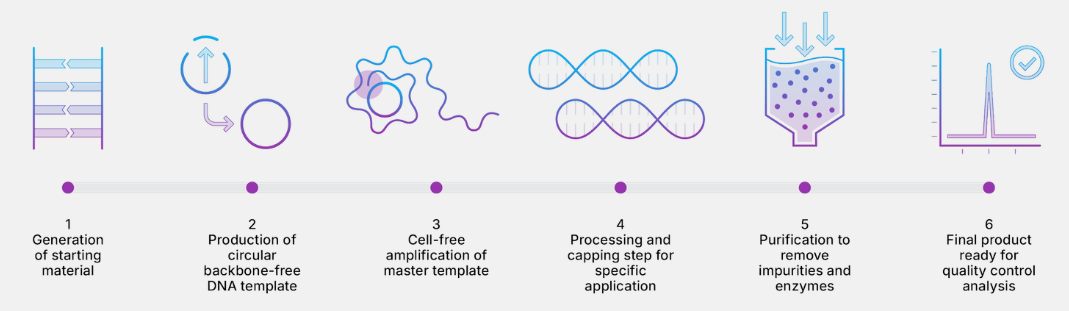
Explanation: To deliver a therapeutic gene into a human cell, two problems must be solved: i) making the DNA payload and ii) building the delivery vehicle to get it inside. Normally DNA is grown inside E. coli bacteria in massive fermenters, which can include unwanted bacterial backbones, antibiotic-resistance genes, and endotoxins that must be filtered out. 4basebio instead uses Synthetic Enzymatic DNA: A completely cell-free, hostless process, which eliminates bacterial contamination and improves safety. 4BB have also improved the process ii) for delivering their DNA with something they call Hermes, which is a non viral delivery platform.
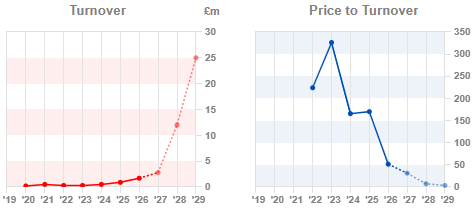
Valuation: Expensive on any normal valuation ratio, but I think the hope is that once they’ve proved the technology, the business scales with very little incremental capital. In that sense, this could be a better opportunity for speculative money than, for instance, hydrogen groups like ITM Power.
Opinion: Not for widows and orphans, but perhaps worth a second look? To be clear, I don’t own any. All the positivity coming from management could be explained by the likelihood that they are looking to raise more money from shareholders – so perhaps some dilution coming. In my experience though when investment cases disappoint badly and the model proves unviable, brokers tend to quietly drop coverage or publish a one page note. If the broker is publishing research notes over 10 pages long, that in itself is a signal, alongside the chart beginning to look perky. One to keep an eye on.
Bruce Packard
@bruce_packard
Notes
Bruce owns shares in Manolete
This article is for educational purposes only. It is not a recommendation to buy or sell shares or other investments. Do your own research before buying or selling any investment or seek professional financial advice.




Bi-Weekly Market Commentary | 30/09/2026 | OTB, 4BB, FNX026 | The Execution Maestros
A look at how behaviour after buying can increase or hurt returns, based on Lee Freeman-Shor’s new book. Companies covered OTB, 4BB, FNX026
The FTSE100 was flat on the previous 5 trading days at 10,730. UK housebuilders did enjoy a bounce following supportive newsflow coming from the Labour Party Conference, Barratt Redrow up +14%, Persimmon +16%, Taylor Wimpey +12%, Bellway +12%, while smaller, affordable housing specialist MJ Gleeson did even better up +18%. In the US, the Nasdaq100 and S&P 500 were down around -1%. US Natural Gas (NG1) was up +10% while was flat. There doesn’t seem much progress on re-opening the Straits of Hormuz, after Trump rejected a deal from Iran
Lee Freeman-Shor author of The Art of Execution, has another book out – this time looking at the investment personalities who are good at execution. In Stock Market Maestros, he builds on his original thesis, that ideas on what to buy/sell are relatively unimportant part of investing. Instead its how much money you make when things go right, and how you protect yourself when a share price moves against you.
Some people are very disciplined at cutting their losses (“assassins” in his terminology) with small loses, others are good at reviewing their decisions when a stock falls -25% or more and deciding whether to average down. Oddly even the investors who are good at averaging down, “hunters” he calls them, can’t put their finger on what they’re doing. One common behaviour is to have a planned formed in your mind beforehand, rather than reacting to unexpected events. The dangerous zone is the mushy middle of indecision – “rabbits” caught in the headlights.
Freeman-Shor finds different investors, with different styles but verified track records and tries to flesh out their thinking. I’m only a quarter of the way in, but I do think we focus too much on “idea generation” because that’s the fun part of investing. The real gains are to be made running with winners for years: a “connoisseur” and when shares fall avoid being a “rabbit” doing nothing.
Bizarrely many of my really big winners drop like a stone after my first purchase: GAW, SLP and MSI to name three. I try not to buy too early, but it keeps happening and often my biggest regret is not averaging down more aggressively. FDEV, IPX and CML are more recent examples that I have high hopes for, and now MANO, which I pitched last week on Mello Monday. My average price was just over 60p versus 40p currently, so I’m long and wrong (so far). I posted the full pitch on Substack here.
My conclusion from reading Freeman-Shor’s book though is to recognise that it is exceedingly rare to call the bottom of a stock, hence we have to accept we will either be too early or consciously waiting for the bowl and missing considerable upside. At the same Mello Event, Cockney Rebel pitched James Cropper, which has quadrupled since May 2025 – I respect his process but he’s obviously wired a completely different way to me. He’s not trying to call the turn and instead waiting for the chart to tell him the turnaround is underway with an obvious bowl. There’s no right answer, temperament and time horizon are obvious factors. I think it will be fascinating to revisit both MANO and CRPR in a year or two.
This week I look at On The Beach, which has recovered well since withdrawing guidance in March as holiday booking dropped precariously and Fonix, the mobile phone Direct Carrier Billings (DCB) payments group. I end with 4basebio, the cash-burning DNA therapy group which has been very disappointing since peaking at over £18 per share in June 2024, but with the share price now moving up through the 200 day moving average, perhaps worth a second look.
On The Beach FY Sept 2026 Trading Update
This low-cost, asset light holiday group that competes with package tour operators announced a FY Sept Trading Update. OTB are independent from airlines and hotels, allowing customers flexibly put together their own on holiday choosing their own duration, departure point, airline and hotel. Heading into this financial year, OTB had announced an ambitious full-year (FY Sept 26) adjusted profit before tax (PBT) target of £39m to £43m (FY Sept 2025 £31m, which itself was up +25% on the previous year). When Trump started bombing Iran, they saw significant slowdown in demand for holiday destinations such as Turkey, Greece, Cyprus and Egypt and withdrew guidance. They then reinstated guidance in May: FY Sept 26 adjusted PBT to £18m to £25m. Last week’s trading update now says adj PBT £22-23m, in the top half of their previous range.
That was driven by bookings growth of +9%, significantly ahead of the wider travel market. Importantly booking momentum has continued into FY Sept 2027F, having delivered total bookings in the last 8 weeks +17%. They expect to have net cash of c.£60m end of September.
Unlike a traditional tour operator, OTB does not charter aircraft or commit to pre-purchased block allocations of hotel rooms. That means they don’t have to commit capital months in advance to secure seats and beds, exposing them to inventory risk if demand drops. Customers do pay for holidays in advance, but to meet ATOL and consumer protection standards, their customer cash is held in ring-fenced accounts.
Competition with Jet2 and easyJet: Other operators in this sector have also suffered a volatile and uncertain year, with the JET2 share price -28% in the first 3 months of this year. But then recovering as summer 2026 seat capacity was +8% higher than Summer 2025 and passengers booked-to-date up +9%, driven by both package holiday and flight-only products. I’ve noticed EasyJet advertising heavily to diversify away from budget flight-only model to easyJet holidays which generated £489m revenue and £84m PBT in Q3 June. That’s almost the entire Q3 group PBT of £85m, implying easyJet’s core budget airline model needs to be fixed, when Private Equity group Apollo completes their acquisition. Although there is strong competition in the sector, OTB say that they have trebled their addressable market to 50m passengers are now expanding into areas like cruises.
Valuation: The shares are trading on a PER of just below 10x Sept 2027F and an EV/EBITDA below 4x the same year. That seems harsh given the strong track record in a difficult environment, but perhaps reflects that competition from the likes of easyJet has been increasing, and will probably continue to do so under Apollo’s ownership.
Opinion: I’ve been surprised how UK leisure has held up well in the face of rising interest rates. OTB was tipped to me at the end of June by a hedge fund at BGEO investors’ day, when we spent several hours on the bus to visit a vineyard in the Kakheti region. Any investor shrewd enough to have done well in BGEO probably also owned other shares with significant upside, so I made a mental note to keep track of OTB. Last week, I was out and about in London, and it does seem to be a K shaped recovery with Watling Street in the City absolutely full of 20-30 years old spending £8 per pint. Meanwhile anyone with a large mortgage that has repriced upwards is probably feeling financially stretched. I like the OTB business model and would imagine this could do well next year if hostilities in the Gulf end and energy costs fall.
Fonix FY June 2026 Results
This mobile phone billings payments group prefers to quote gross profit, rather than revenue, as their topline. This is a quirk of IFRS 15, conceptually similar to media buying where groups pass through large amounts of “re-billed” media spend—TV slots, outdoor billboards, digital ad space—where the actual earnings are just the agency’s 10–15% commission. In FNX’s case payments to Mobile Networks Operators (MNOs) such as Vodafone and EE typically absorb 75% of revenue.
As it happens both revenue and gross profit were up roughly the same amount +14% and +13% respectively. It’s worth mentioning, because sometimes broker forecasts have the “top line” as gross profit, and this messes up forecasts versus historical numbers (The Mission Group TMG, is an example that springs to mind). Checking ShareScope though this isn’t a problem for Fonix.
Statutory PBT was up +8% to £15.6m. Underlying cash, which doesn’t include cash held on behalf of customers and is a better reflection of cash available to the business, fell to £9.4m (v £9.9m end of June last year). That was due to a £2.4m buyback, without which cash would have grown +19%.
Outlook: Management say that Fonix enters FY June 2027F with real momentum. Historically they were UK centred, but more recently have been expanding into Europe. Portugal is now established, Switzerland live, France advancing, and a sixth market on the horizon. The UK (growing at +12%) is still 87% of gross profit, but Rest of Europe grew +16% so a few more years of compounding and it will be a significant part of the investment case. The outlook statement talks about increased dividends and buybacks to reflect confidence in sustained, profitable growth. That all sounds like things are going in the right direction, but Cavendish leave their numbers unchanged, having increased forecasts at the trading update in July. They are forecasting gross profit +8% and +11%, this year and next.
Valuation: The shares are trading on 16x FY June 2027F, dropping to 14.5x the following year. Cavendish are forecasting gross profit of £23m FY Jun 2027F and £25m the following year, implying a price to gross profit of 8.6x and 7.9x respectively. Given management prefer gross profit to turnover, we should probably use that for valuation, but for completeness I’ve included ShareScope’s turnover and price to turnover charts below.
Opinion: Maynard covered the business in more detail in October 2023, when the share price was just above £2 per share, implying a forecast PER of 22x. His screen required minimum RoE and operating profit margin of 15%, plus revenue growth – FNX was the second fastest growing with revenues trebling in 5 years. This seems like another quality company that has de-rated partly because of slowing revenue growth and partly because investors have reappraised quality and growth multiples they’re prepared to pay. Chart looks good, I like it – though I don’t own any.
4basebio H1 June 2026 Results
I’m flagging this cash burning DNA therapy group as the shares have just traded above the 200 day moving average. It was a 2021 vintage IPO, and quadrupled at one point. Since then the share price has been disappointing, but still has gross cash of £14m at period end following €7 million drawdown of a loan, providing a cash runway into late 2027. Annoyingly management don’t say what net debt is, but the important part is that they have cash that will last another 12 months and the forward indicators seem to be much better than the recent past.
Revenues were just £262K, down -88% versus the previous year. Instead the highlighted bullet points on page one emphasise sales orders of £1.2m and a new business pipeline of £63m. Naturally the group is loss making, net cash outflows from operations were £8.4m in H1.
Outlook: There’s plenty of upbeat commentary, but Cavendish, the broker, only have forecasts out to the end of this year (FY Dec 2026F). What caught my eye was that on page 8 of the 13 page Cavendish note they show a chart with revenue build scenarios out to 2035 with 4 scenarios. The most bullish shows revenues of €109m and the least optimistic shows revenues of €88m. Take that with a pinch of salt of course, and also the broker’s £18 price target. My impression is that Cavendish do cover some speculative companies, where there might just be something valuable (Ilika strikes me as another example).
Explanation: To deliver a therapeutic gene into a human cell, two problems must be solved: i) making the DNA payload and ii) building the delivery vehicle to get it inside. Normally DNA is grown inside E. coli bacteria in massive fermenters, which can include unwanted bacterial backbones, antibiotic-resistance genes, and endotoxins that must be filtered out. 4basebio instead uses Synthetic Enzymatic DNA: A completely cell-free, hostless process, which eliminates bacterial contamination and improves safety. 4BB have also improved the process ii) for delivering their DNA with something they call Hermes, which is a non viral delivery platform.
Valuation: Expensive on any normal valuation ratio, but I think the hope is that once they’ve proved the technology, the business scales with very little incremental capital. In that sense, this could be a better opportunity for speculative money than, for instance, hydrogen groups like ITM Power.
Opinion: Not for widows and orphans, but perhaps worth a second look? To be clear, I don’t own any. All the positivity coming from management could be explained by the likelihood that they are looking to raise more money from shareholders – so perhaps some dilution coming. In my experience though when investment cases disappoint badly and the model proves unviable, brokers tend to quietly drop coverage or publish a one page note. If the broker is publishing research notes over 10 pages long, that in itself is a signal, alongside the chart beginning to look perky. One to keep an eye on.
Bruce Packard
@bruce_packard
Notes
Bruce owns shares in Manolete
This article is for educational purposes only. It is not a recommendation to buy or sell shares or other investments. Do your own research before buying or selling any investment or seek professional financial advice.