With US regional banks underperforming the S&P500, Bruce wonders if AI agents will reduce friction in the financial services sector. Companies covered: ENSI, LIKE and AOM.
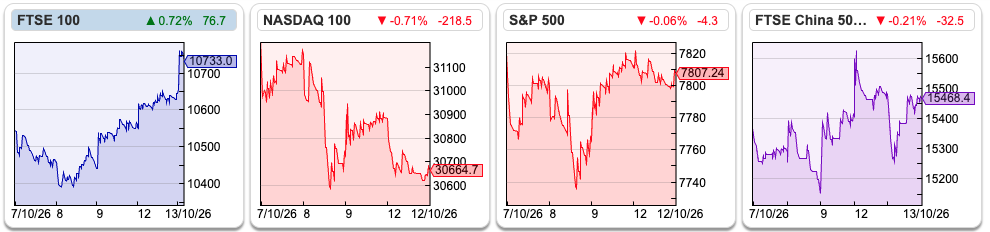
The FTSE 100 rose +1.8% to 10,733, with defensive names like Imperial Brands (tobacco) and Tesco both up +9% in the last 5 trading days. The Nasdaq100 was the second worst performing index, down -1.3%, with only the AIM 100 -1.4% performing worse. The FTSE China 50, down -11% YTD seems at odds with the strong performance of Brazil’s Bovespa index, +9% last week and +30% YTD. Normally I would expect the Brazilian stockmarket to be tied to Chinese industrial demand, however Flavio Bolsonaro’s political popularity seems to be driving the Bovespa higher. My Brazilian friends who live in Berlin are aghast that their parents back home support Bolsonaro (son); meanwhile the father and former president, Jair Bolsonaro remains in prison for attempting a coup d’etat.
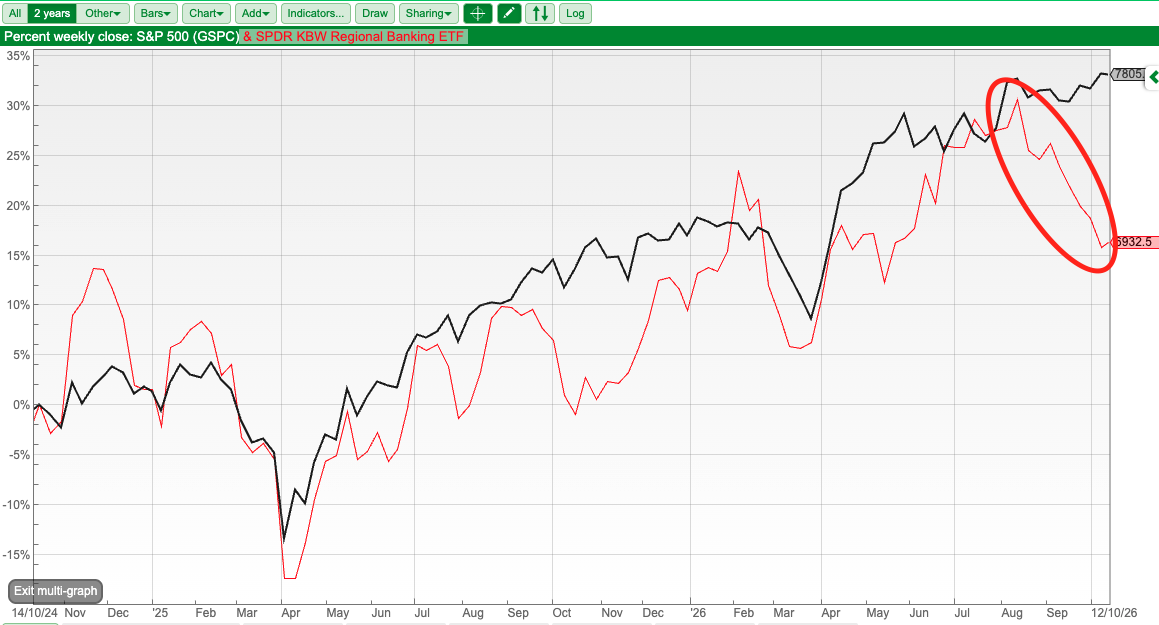
I listened to a fascinating (and only 22 minutes long!) podcast by Ben Evans. He thinks that AI may alter the investment case in business models that relied on friction and inertia. Banking is an obvious one, with very few people willing to spend their time opening new bank accounts to chase high savings deposit rates. ShareScope’s multi-graph feature shows the KBW US regional banks ETF (red) has had a tough few months (circled) versus the S&P 500 (black).
Disruption can also take a non obvious path though. When Apple released the iPhone in 2007 no one was predicting that an app would disrupt the taxi industry. Uber now has a market cap of $146bn, larger than Unilever or GSK. I have found apps like Uber and Bolt particularly useful for travelling in emerging economies likes Georgia and Ukraine. It used to be stressful to ask a foreign taxi driver to commit to a price before getting into his cab – they’d always shrug, pretend not to understand, then, when the car arrived at the destination demand 5-10x the price a local would pay. But Uber and Bolt have reduced that friction.
Ben Evans believes that “the marginal cost of arguing” is falling to zero. Presumably that’s likely to disrupt sectors that have relied on consumer inertia for their margin, whereas consumer brands that are able to maintain trust with consumers are likely to flourish. Wise strikes me as a “winner” in this world, versus traditional high street banks and insurance companies.
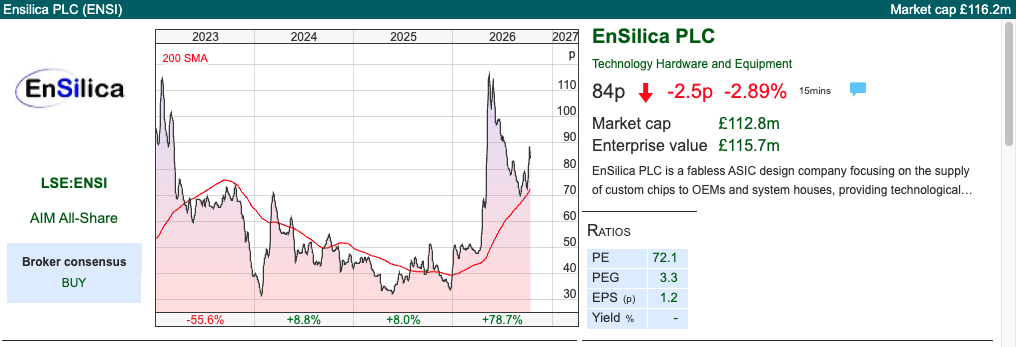
This week I look at Likewise’s acquisition of Headlam’s assets, AOM’s profit warning. I start with Ensilica, the fabless chip designer, that has enjoyed a strong (but volatile!) 2026.
Ensilica FY May 2026 Results
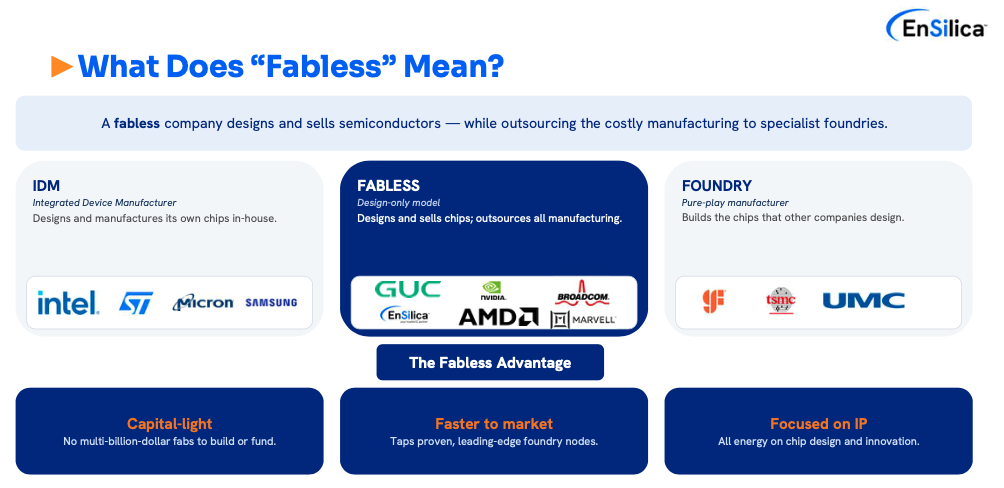
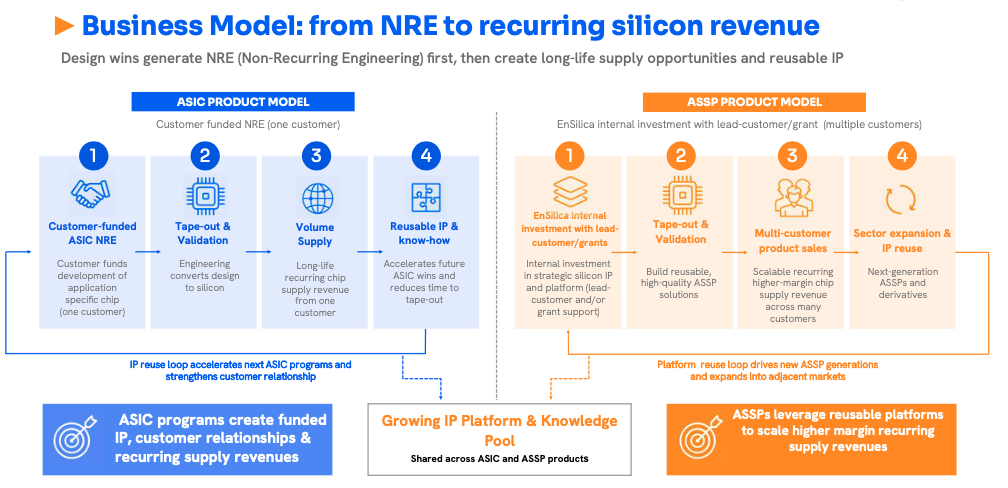
This fabless, application-specific microchip maker that specialises in RF, mmWave, mixed-signal and complex digital IC design reported revenue up +53% to £28m and statutory PBT of £2.2m versus a £3.5m FY May 2025. The growth came from Non-Recurring Engineering (NRE) design revenues, effectively they have been building custom integrated circuits, rather than “off the shelf” semi-conductors. The good news is that these chips should be hard for customers to swap out, so a good lead indicator for future revenues. Though the “Financial Highlights” table shows cash up +280% to £7.6m, that is gross cash. Net debt, tucked away on page 18-19 was £701k.
The Financial Highlights show two capital raises in 2026: i) March £10m at 47p ii) July (ie post year end) £15m at 91p. Hence funding the business is no longer a concern, but worth noting that £4.9 cash from operations includes a £1.3m R&D tax credit and the group consumed £1.4m of cash in FY May 2026. There’s £27m of intangible assets on the face of the balance sheet, versus shareholders equity of £31m. Those intangibles grew by £6.5m FY 2026, as management invested in development of customer ASICs as well as their own IP. That’s the correct accounting treatment, but if they’d expensed that cost through the p&l rather than capitalising it on their balance sheet, then the group would still be reporting significant losses.
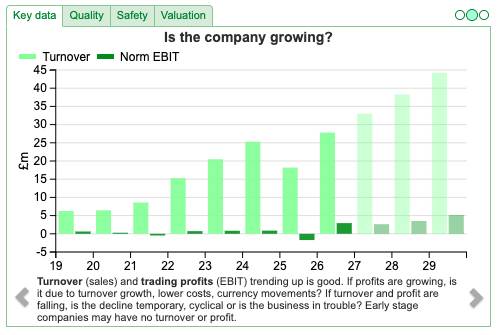
Outlook: Management say that their strong order book means that they have visibility on 80% of anticipated revenue (Allenby forecast £33m FY May 2027F and £37.5m May 2028F). That revenue visibility is not quite as reassuring as it sounds: in June 2024 OMG claimed >90% visibility of FY Sept revenues – then warned a couple of months later. CLBS did similar at their H1 Sept results in December 2024 – again warning a couple of months later. EnSilica outlook statement also mentions a medium term target of £100m in revenues and also suggests the space market is expected to grow fivefold by 2030. All very exciting, but its not unknown for management teams, particularly in the tech sector, to be overoptimistic about their future prospects (see my comments on AOM below).
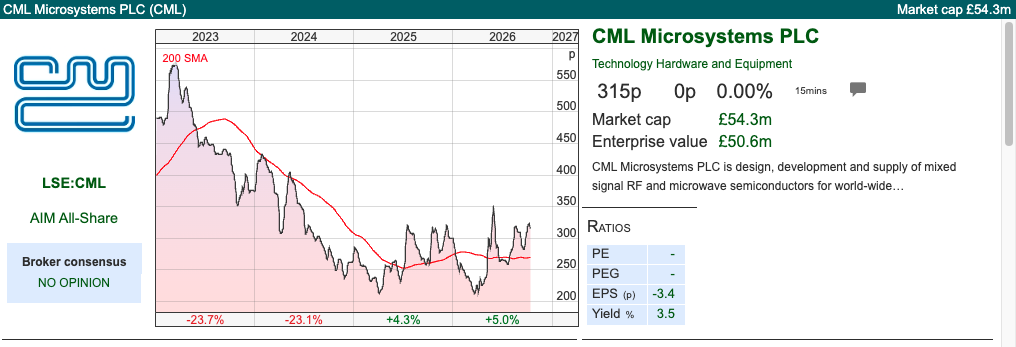
Valuation: ShareScope shows EPS growth forecast to be +22% May 2027F, rising to +35% May 2028F. Despite that impressive growth, the PER is 44x May 2028F and 2.3x revenue the same year. That’s inline with CML is on 2.1x Mar 2027F revenue, but the group is expected to be loss making due to a writedown in the current financial year. CML has delivered flat revenue between 2023 and 2026, whereas ENSI has grown revenue +35% over the same time period.
Comparison with CML Microsystems: The investment case in ENSI makes an interesting contrast with CML, also a fab-less semiconductor group. While ENSI management have delivered top line growth and emphasize future potential, CML took a £4.2m impairment on legacy R&D, as a previously planned product was deemed unviable. Capitalising R&D is the correct accounting treatment (IAS 38), but it’s hard for outsiders to assess future returns. 87% of ENSI’s shareholders’ equity is capitalised intangible assets, versus 28% for CML. If you add goodwill from prior acquisition CML’s intangible assets rise to 57% of shareholders’ equity. Given uncertain product life cycles and customer demand, and being contrarian at heart, I feel more comfortable with the turnaround story and balance sheet at CML (which I own).
Opinion: ENSI shares are up +79% YTD, gaining momentum this year after reporting Space contracts worth in excess of $50m – the customer is a leading European satellite operator developing a next-generation communications system. That’s the same area as FTC, which is up 47x since early 2019, so I can see investors might be looking to find “the next Filtronic”. ENSI looks good, though I will stick with my CML for now.
Likewise acquires Headlam assets
The history of Likewise versus Headlam suggests that management can make a huge difference. Tony Brewer was the Chief Exec of Headlam from 2000 to 2016, growing the business to over £600m in revenues and over £30m in PBT. Unlike Sir Martin Sorrell’s very public dispute with WPP, there’s little publicly available about why Brewer left or what the Boardroom disagreements were over. Rather than airing grievances in public, Brewer co-founded Likewise Group to take on Headlam. Needless to say, LIKE has been a much more successful second act than Sir Martin’s SFOR.
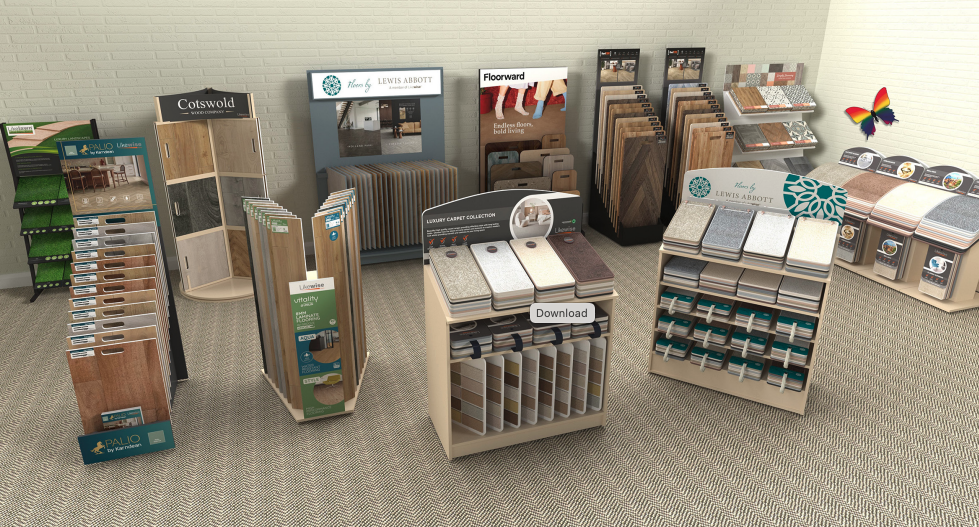
On the 1st September Headlam announced that they would suspend their listing and appoint Interpath as administrators. Then last week Likewise announced that it would acquire £15m of Headlam assets, such as the 90K sqft Thatcham Distribution Centre. They would also help the administrators sell Headlam’s remaining inventory in an orderly manor, to avoid disrupting the floor covering market.
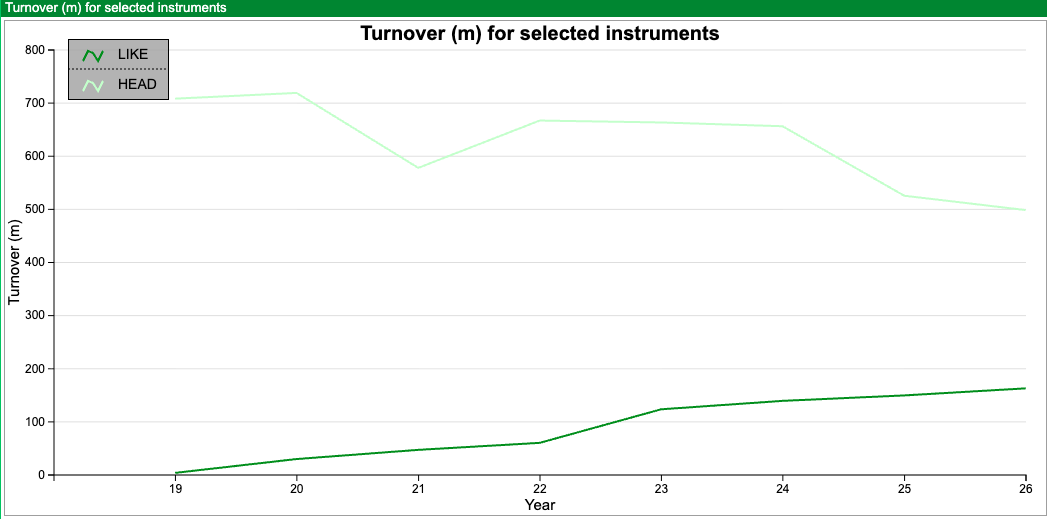
One of the interesting aspects for me, is that Likewise seems to have disrupted Headlam’s business model, from a standing start: £4m of revenue FY Dec 2018, growing rapidly but still less than £150m in FY Dec 2024. That compares to over £700m peak revenue Headlam reported in 2019 and £500m of revenue as it failed this year.
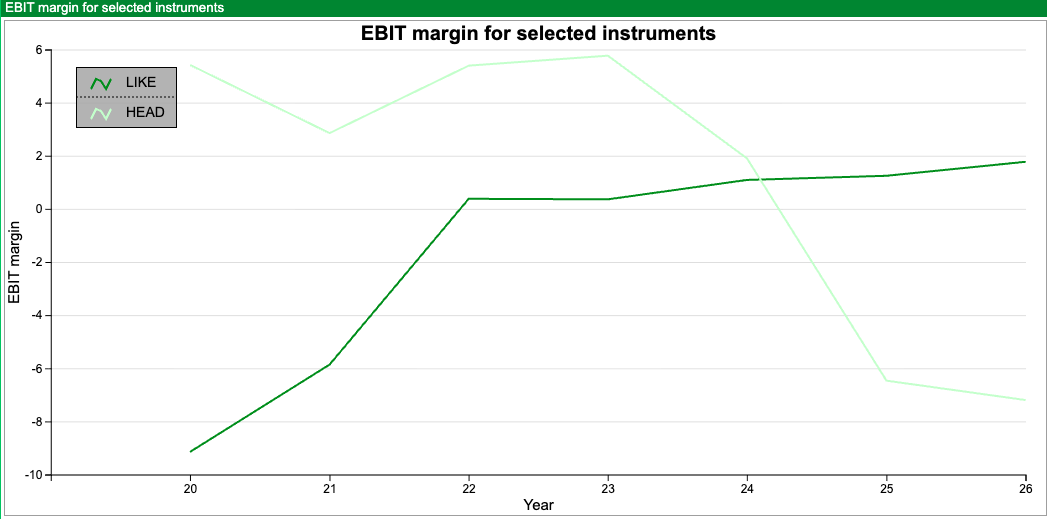
Up until FY 2025, Headlam was reporting more attractive EBIT margins, as the chart below shows. Likewise has also failed to report EBIT margins higher than 1.8%, according to ShareScope. Looking at the financial data alone, it’s hard to see the threat. Instead the numbers highlight that Likewise did not defeat Headlam by being significantly more profitable. Instead, Brewer and his management team operated as a high-volume, low-margin strategy — which exposed the fragility of Headlam’s cost base.
Outlook: LIKE reported H1 June results at the end of September, with revenue up +15% to £90m and underlying PBT up +80% to £1.3m. The outlook statement said FY Dec 2026F would now be “materially ahead of market expectations”, revenue growth accelerated in Q3 to +29%. Management are now focused on improving operating margins.
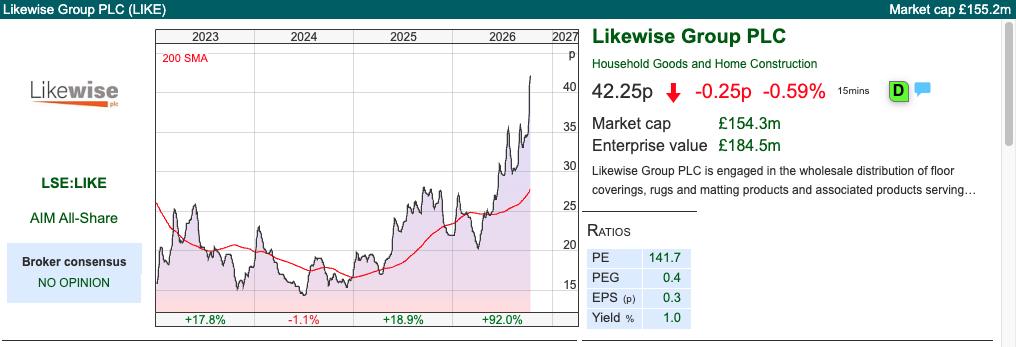
Valuation: LIKE shares are trading on over 30x PER this year and next. Presumably investors are anticipating EPS could surprise on the upside, as LIKE re-price upwards in the absence of their larger competitor.
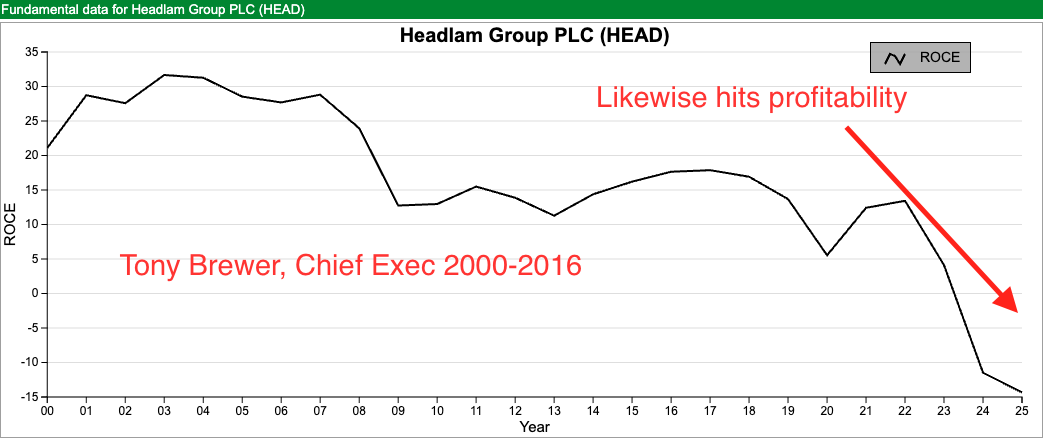
Opinion: A cautionary tale, but I’m not convinced in the investment case of LIKE. ShareScope’s backward looking quality indicators show 3 year average RoCE of less than 2% and negative CashRoCI don’t suggest that this is a business we should be paying a high multiple for. That said, perhaps Tony Brewer can re-create Headlam’s 15-30% pre-2016 RoCE at LIKE?
I remember in the early 2000’s HBOS had a “challenger bank” strategy, and management were telling investors that they would wipe Lloyds Bank (back then reporting an RoE above 30%) off the face of the Earth. Ironically HBOS, which had a balance sheet twice the size of Lloyds, nearly achieved this aim when it needed to be rescued (by Lloyds) in 2008, just not in the way HBOS management intended. LIKE shares have performed strongly this year, up +92% YTD, but as shareholder I’m wary of sectors where the competition can turn so fierce that it can ruin shareholder returns.
Active Ops FY Mar 2028F profit warning
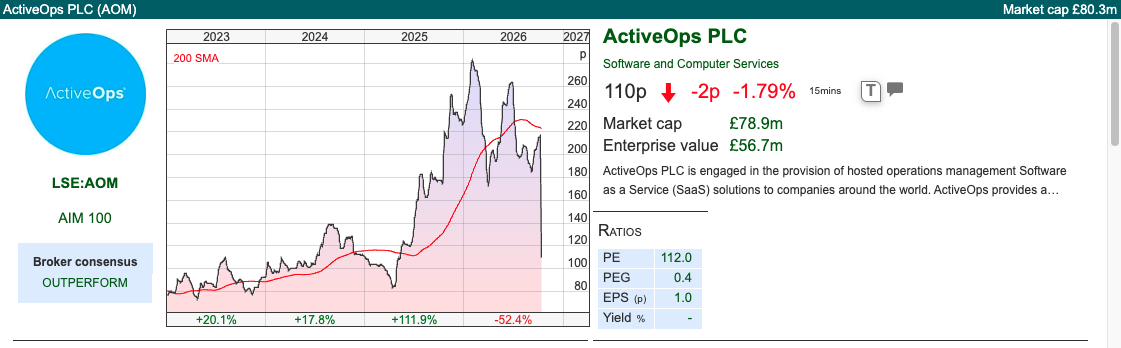
This Decision Intelligence software business reveals the problem with paying a high multiple for Annual Recurring Revenue (ARR). At the end of June, AOM were trading above 260p per share, implying price to forecast revenue of 3.5x – not expensive for a software group hoping to double revenue in the medium term. At the start of this week AOM management announced that a customer does not intend to renew their contract, reducing FY Mar 2028F revenue by c. £3.8m (or a 7% miss). This doesn’t sound like an isolated issue, because management also expect a lower level of new business activity in the first half of FY Mar 2027F and point to a previously announced lost customer paying them a £1.5m termination fee. Management warn FY Mar 2028F will be ”significantly below market expectations” comment and the shares were off -40% on Monday.
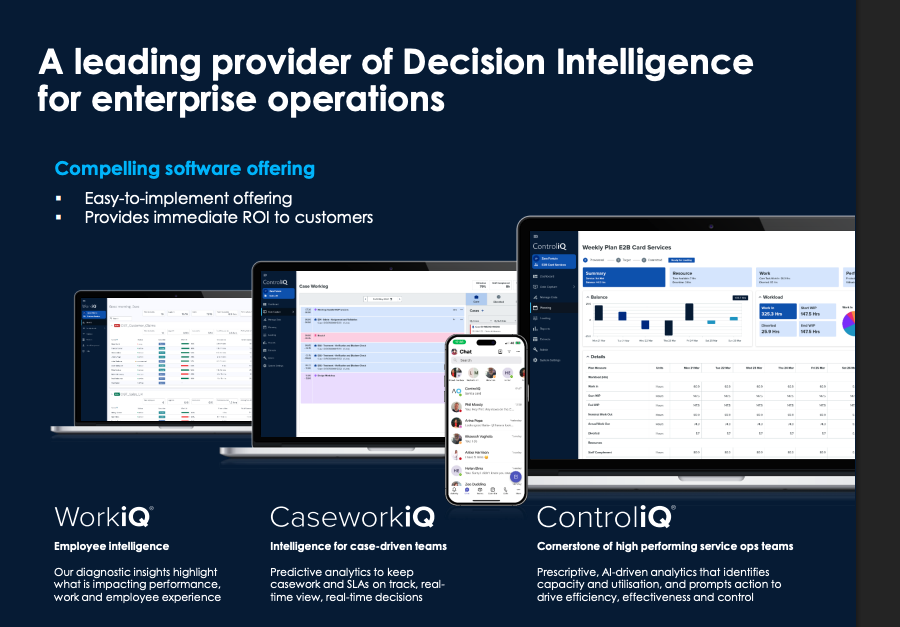
Valuation: ShareScope forecasts have updated and assume FY Mar 2028F revenue forecast is cut by -17% to £44m, which would imply a price to revenue multiple now of 1.8x that year. The new forecasts show -8% revenue decline Mar 2028F, and only a +5% rebound in Mar 2029F, at £46m that’s only £1m higher than FY Mar 2026 reported.
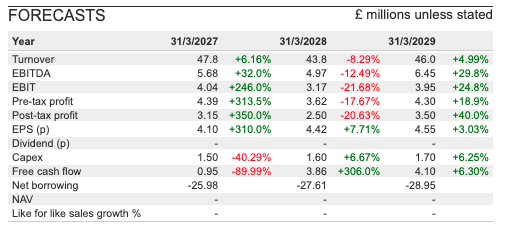
The PER for Mar 2028F is 25x, though that falls to 19x if we adjust for the net cash of £20m (or a quarter of the group’s market cap).
Opinion: Fund manager James Thorne and Paul Hill discuss the profit warning here. I bought a starter position in AOM in 2023 at 80p, but always felt like revenue growth aspirations could disappoint, so this wasn’t a high conviction idea. I should have sold a couple of months ago when I’d more than trebled my money. Enterprise software groups are hard for us to evaluate from outside, whereas most of us will have a feel for how consumer brands, leisure sector or food retailers like Tesco and Sainsbury’s are performing. Supermarkets don’t have contractually recurring revenue, but they sell essential items to households, so enjoy defensive qualities in a inflationary environment.
I will wait to hear more details when AOM management release H1 Sept results on 24th November. On a medium term view, there could well be an opportunity, like Eagle Eye (+72% YTD) and also Kooth (+59% YTD), which both lost lucrative contracts and then recovered from their lows. I’ll do nothing and hold for now, then revisit the investment case in the coming months.
Bruce Packard
@bruce_packard
Notes
Bruce owns AOM, WISE and CML
This article is for educational purposes only. It is not a recommendation to buy or sell shares or other investments. Do your own research before buying or selling any investment or seek professional financial advice.


Bi-Weekly Market Commentary | 14/10/2026 | ENSI, LIKE and AOM | The marginal cost of arguing
With US regional banks underperforming the S&P500, Bruce wonders if AI agents will reduce friction in the financial services sector. Companies covered: ENSI, LIKE and AOM.
The FTSE 100 rose +1.8% to 10,733, with defensive names like Imperial Brands (tobacco) and Tesco both up +9% in the last 5 trading days. The Nasdaq100 was the second worst performing index, down -1.3%, with only the AIM 100 -1.4% performing worse. The FTSE China 50, down -11% YTD seems at odds with the strong performance of Brazil’s Bovespa index, +9% last week and +30% YTD. Normally I would expect the Brazilian stockmarket to be tied to Chinese industrial demand, however Flavio Bolsonaro’s political popularity seems to be driving the Bovespa higher. My Brazilian friends who live in Berlin are aghast that their parents back home support Bolsonaro (son); meanwhile the father and former president, Jair Bolsonaro remains in prison for attempting a coup d’etat.
I listened to a fascinating (and only 22 minutes long!) podcast by Ben Evans. He thinks that AI may alter the investment case in business models that relied on friction and inertia. Banking is an obvious one, with very few people willing to spend their time opening new bank accounts to chase high savings deposit rates. ShareScope’s multi-graph feature shows the KBW US regional banks ETF (red) has had a tough few months (circled) versus the S&P 500 (black).
Disruption can also take a non obvious path though. When Apple released the iPhone in 2007 no one was predicting that an app would disrupt the taxi industry. Uber now has a market cap of $146bn, larger than Unilever or GSK. I have found apps like Uber and Bolt particularly useful for travelling in emerging economies likes Georgia and Ukraine. It used to be stressful to ask a foreign taxi driver to commit to a price before getting into his cab – they’d always shrug, pretend not to understand, then, when the car arrived at the destination demand 5-10x the price a local would pay. But Uber and Bolt have reduced that friction.
Ben Evans believes that “the marginal cost of arguing” is falling to zero. Presumably that’s likely to disrupt sectors that have relied on consumer inertia for their margin, whereas consumer brands that are able to maintain trust with consumers are likely to flourish. Wise strikes me as a “winner” in this world, versus traditional high street banks and insurance companies.
This week I look at Likewise’s acquisition of Headlam’s assets, AOM’s profit warning. I start with Ensilica, the fabless chip designer, that has enjoyed a strong (but volatile!) 2026.
Ensilica FY May 2026 Results
This fabless, application-specific microchip maker that specialises in RF, mmWave, mixed-signal and complex digital IC design reported revenue up +53% to £28m and statutory PBT of £2.2m versus a £3.5m FY May 2025. The growth came from Non-Recurring Engineering (NRE) design revenues, effectively they have been building custom integrated circuits, rather than “off the shelf” semi-conductors. The good news is that these chips should be hard for customers to swap out, so a good lead indicator for future revenues. Though the “Financial Highlights” table shows cash up +280% to £7.6m, that is gross cash. Net debt, tucked away on page 18-19 was £701k.
The Financial Highlights show two capital raises in 2026: i) March £10m at 47p ii) July (ie post year end) £15m at 91p. Hence funding the business is no longer a concern, but worth noting that £4.9 cash from operations includes a £1.3m R&D tax credit and the group consumed £1.4m of cash in FY May 2026. There’s £27m of intangible assets on the face of the balance sheet, versus shareholders equity of £31m. Those intangibles grew by £6.5m FY 2026, as management invested in development of customer ASICs as well as their own IP. That’s the correct accounting treatment, but if they’d expensed that cost through the p&l rather than capitalising it on their balance sheet, then the group would still be reporting significant losses.
Outlook: Management say that their strong order book means that they have visibility on 80% of anticipated revenue (Allenby forecast £33m FY May 2027F and £37.5m May 2028F). That revenue visibility is not quite as reassuring as it sounds: in June 2024 OMG claimed >90% visibility of FY Sept revenues – then warned a couple of months later. CLBS did similar at their H1 Sept results in December 2024 – again warning a couple of months later. EnSilica outlook statement also mentions a medium term target of £100m in revenues and also suggests the space market is expected to grow fivefold by 2030. All very exciting, but its not unknown for management teams, particularly in the tech sector, to be overoptimistic about their future prospects (see my comments on AOM below).
Valuation: ShareScope shows EPS growth forecast to be +22% May 2027F, rising to +35% May 2028F. Despite that impressive growth, the PER is 44x May 2028F and 2.3x revenue the same year. That’s inline with CML is on 2.1x Mar 2027F revenue, but the group is expected to be loss making due to a writedown in the current financial year. CML has delivered flat revenue between 2023 and 2026, whereas ENSI has grown revenue +35% over the same time period.
Comparison with CML Microsystems: The investment case in ENSI makes an interesting contrast with CML, also a fab-less semiconductor group. While ENSI management have delivered top line growth and emphasize future potential, CML took a £4.2m impairment on legacy R&D, as a previously planned product was deemed unviable. Capitalising R&D is the correct accounting treatment (IAS 38), but it’s hard for outsiders to assess future returns. 87% of ENSI’s shareholders’ equity is capitalised intangible assets, versus 28% for CML. If you add goodwill from prior acquisition CML’s intangible assets rise to 57% of shareholders’ equity. Given uncertain product life cycles and customer demand, and being contrarian at heart, I feel more comfortable with the turnaround story and balance sheet at CML (which I own).
Opinion: ENSI shares are up +79% YTD, gaining momentum this year after reporting Space contracts worth in excess of $50m – the customer is a leading European satellite operator developing a next-generation communications system. That’s the same area as FTC, which is up 47x since early 2019, so I can see investors might be looking to find “the next Filtronic”. ENSI looks good, though I will stick with my CML for now.
Likewise acquires Headlam assets
The history of Likewise versus Headlam suggests that management can make a huge difference. Tony Brewer was the Chief Exec of Headlam from 2000 to 2016, growing the business to over £600m in revenues and over £30m in PBT. Unlike Sir Martin Sorrell’s very public dispute with WPP, there’s little publicly available about why Brewer left or what the Boardroom disagreements were over. Rather than airing grievances in public, Brewer co-founded Likewise Group to take on Headlam. Needless to say, LIKE has been a much more successful second act than Sir Martin’s SFOR.
On the 1st September Headlam announced that they would suspend their listing and appoint Interpath as administrators. Then last week Likewise announced that it would acquire £15m of Headlam assets, such as the 90K sqft Thatcham Distribution Centre. They would also help the administrators sell Headlam’s remaining inventory in an orderly manor, to avoid disrupting the floor covering market.
One of the interesting aspects for me, is that Likewise seems to have disrupted Headlam’s business model, from a standing start: £4m of revenue FY Dec 2018, growing rapidly but still less than £150m in FY Dec 2024. That compares to over £700m peak revenue Headlam reported in 2019 and £500m of revenue as it failed this year.
Up until FY 2025, Headlam was reporting more attractive EBIT margins, as the chart below shows. Likewise has also failed to report EBIT margins higher than 1.8%, according to ShareScope. Looking at the financial data alone, it’s hard to see the threat. Instead the numbers highlight that Likewise did not defeat Headlam by being significantly more profitable. Instead, Brewer and his management team operated as a high-volume, low-margin strategy — which exposed the fragility of Headlam’s cost base.
Outlook: LIKE reported H1 June results at the end of September, with revenue up +15% to £90m and underlying PBT up +80% to £1.3m. The outlook statement said FY Dec 2026F would now be “materially ahead of market expectations”, revenue growth accelerated in Q3 to +29%. Management are now focused on improving operating margins.
Valuation: LIKE shares are trading on over 30x PER this year and next. Presumably investors are anticipating EPS could surprise on the upside, as LIKE re-price upwards in the absence of their larger competitor.
Opinion: A cautionary tale, but I’m not convinced in the investment case of LIKE. ShareScope’s backward looking quality indicators show 3 year average RoCE of less than 2% and negative CashRoCI don’t suggest that this is a business we should be paying a high multiple for. That said, perhaps Tony Brewer can re-create Headlam’s 15-30% pre-2016 RoCE at LIKE?
I remember in the early 2000’s HBOS had a “challenger bank” strategy, and management were telling investors that they would wipe Lloyds Bank (back then reporting an RoE above 30%) off the face of the Earth. Ironically HBOS, which had a balance sheet twice the size of Lloyds, nearly achieved this aim when it needed to be rescued (by Lloyds) in 2008, just not in the way HBOS management intended. LIKE shares have performed strongly this year, up +92% YTD, but as shareholder I’m wary of sectors where the competition can turn so fierce that it can ruin shareholder returns.
Active Ops FY Mar 2028F profit warning
This Decision Intelligence software business reveals the problem with paying a high multiple for Annual Recurring Revenue (ARR). At the end of June, AOM were trading above 260p per share, implying price to forecast revenue of 3.5x – not expensive for a software group hoping to double revenue in the medium term. At the start of this week AOM management announced that a customer does not intend to renew their contract, reducing FY Mar 2028F revenue by c. £3.8m (or a 7% miss). This doesn’t sound like an isolated issue, because management also expect a lower level of new business activity in the first half of FY Mar 2027F and point to a previously announced lost customer paying them a £1.5m termination fee. Management warn FY Mar 2028F will be ”significantly below market expectations” comment and the shares were off -40% on Monday.
Valuation: ShareScope forecasts have updated and assume FY Mar 2028F revenue forecast is cut by -17% to £44m, which would imply a price to revenue multiple now of 1.8x that year. The new forecasts show -8% revenue decline Mar 2028F, and only a +5% rebound in Mar 2029F, at £46m that’s only £1m higher than FY Mar 2026 reported.
The PER for Mar 2028F is 25x, though that falls to 19x if we adjust for the net cash of £20m (or a quarter of the group’s market cap).
Opinion: Fund manager James Thorne and Paul Hill discuss the profit warning here. I bought a starter position in AOM in 2023 at 80p, but always felt like revenue growth aspirations could disappoint, so this wasn’t a high conviction idea. I should have sold a couple of months ago when I’d more than trebled my money. Enterprise software groups are hard for us to evaluate from outside, whereas most of us will have a feel for how consumer brands, leisure sector or food retailers like Tesco and Sainsbury’s are performing. Supermarkets don’t have contractually recurring revenue, but they sell essential items to households, so enjoy defensive qualities in a inflationary environment.
I will wait to hear more details when AOM management release H1 Sept results on 24th November. On a medium term view, there could well be an opportunity, like Eagle Eye (+72% YTD) and also Kooth (+59% YTD), which both lost lucrative contracts and then recovered from their lows. I’ll do nothing and hold for now, then revisit the investment case in the coming months.
Bruce Packard
@bruce_packard
Notes
Bruce owns AOM, WISE and CML
This article is for educational purposes only. It is not a recommendation to buy or sell shares or other investments. Do your own research before buying or selling any investment or seek professional financial advice.