
As the year draws to a close, Michael Taylor reflects on the importance of using the Christmas break to review trading performance, habits and discipline. He then shows how careful analysis and effective use of auctions can create opportunities when markets react to unexpected news.

Another year has passed and we move into the second half of the decade shortly. Christmas is always a time to enjoy with the family and be thankful for what we have. Sadly, there is conflict and suffering in other parts of the world, and whilst things for the average person are not always easy, it could certainly be worse.
It’s also a time to reflect on the year gone, and whilst improvement is a continuous process, life often gets in the way and the Christmas break is a great opportunity to assess all of your data and review it.
Trading is purely a performance business. We are paid not on effort, but on success. Success in trading is the disciplined focus on certain habits, whilst being open to new information at the same time.
In fact, this can often be quite contradictory. For example, if you have five failed breakouts in a row… does that mean breakouts no longer work? Or should you continue with it? Or has the market changed to a bear market which means you need to become more selective with your trades?
This is where your trading diary and spreadsheets come in. It is worth spending a few hours here at least looking at your performance to see if your trading activities are pushing you towards your goals.
It’s also an opportunity to identify recurring patterns or behaviours. Are you giving away P&L because you are hesitant to close out trades when they hit your stops? Are you trigger-shy because you’ve taken a string of losses and are not taking trades as a result?
You also need to focus on your most important job as a trader which is to protect your downside at all costs. Yes, you need to play to win. But if you do your dough you can’t play. It is easy to pay lip service to data, but the ones who do the actual work will reap the benefits.
Using auctions effectively
We’ve covered how auctions work in my previous two articles, and auctions are a great opportunity to potentially get the best prices of the day in a trade by using the uncrossing trade.
I like to use auctions for surprise earnings announcements such as upgrades and profit warnings.
For example, this morning Card Factory announced a profit warning.
This was a surprise. Or at least, it was to me, as nothing in the interim results had explicitly indicated there would be a profit warning.
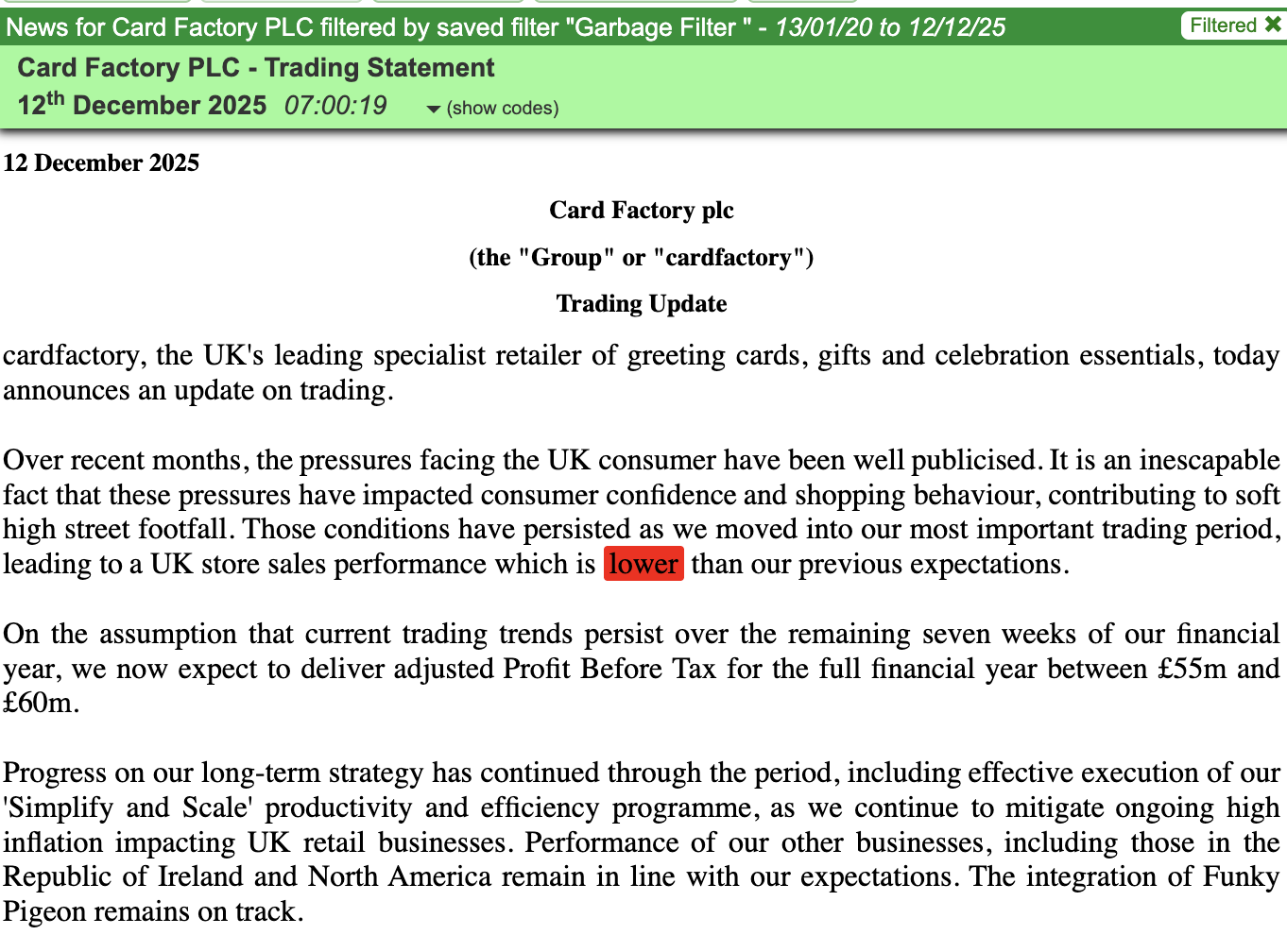
The interim results said the business was performing in line with expectations.
So to the market, it should be a surprise, as it is the first profit warning with potentially more to come.
I know three things before the open:
1) There will be people holding the stock who are likely to exit here because of the profit warning
2) There will be people like me who are looking to short the stock to make a quick profit and push the price down
3) It is unlikely that people will be rushing to average down from the uncrossing as they will want to see the dust settle and also assess the situation, peruse broker notes, before coming to a decision
Therefore, I believe that there is a good chance that the stock will drop from the open, but this depends on the uncrossing price.
Here are the forecasts this morning pre-open.
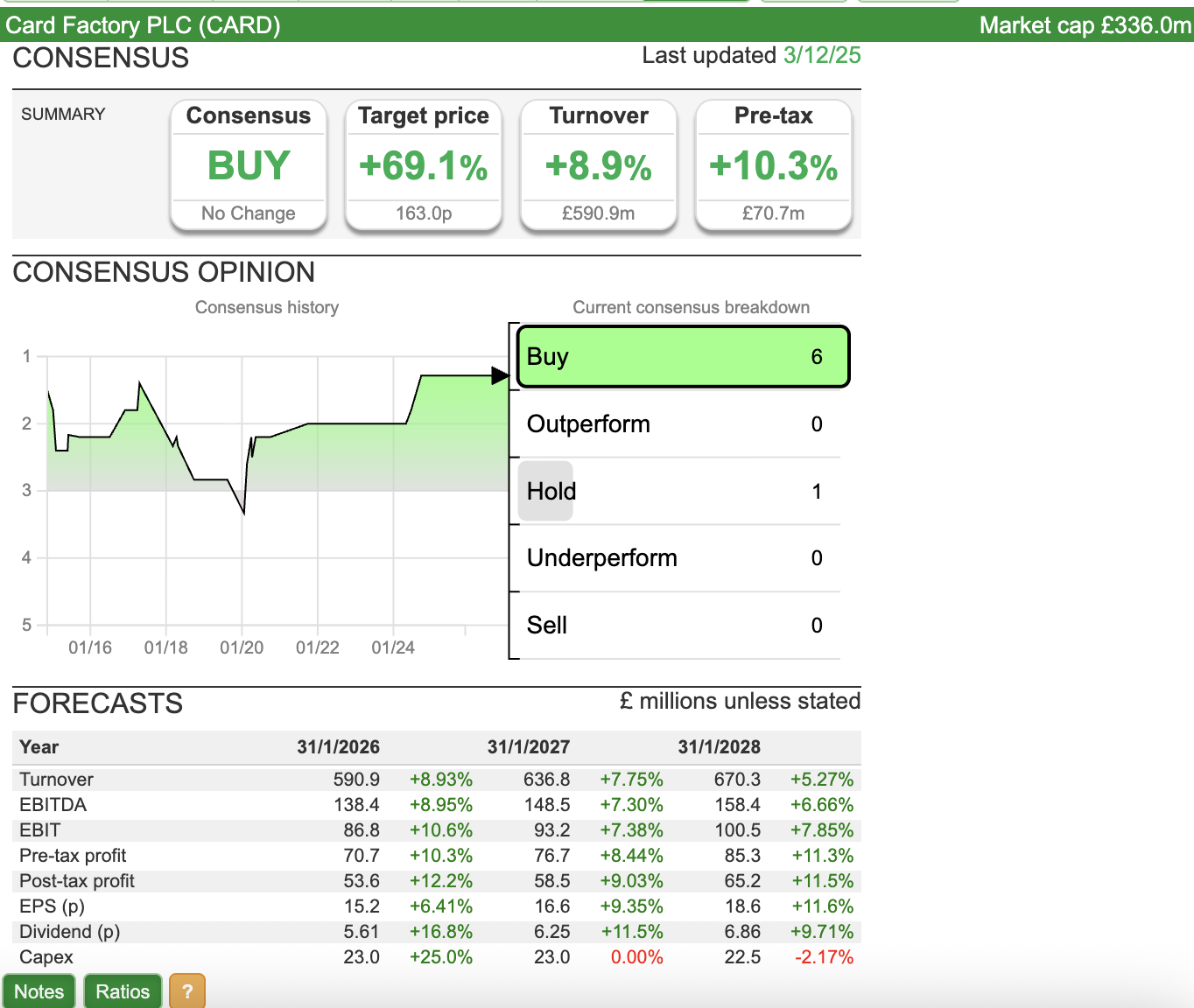
Pre-tax profit was forecast to be £70.7 million.
The company is now telling the market that it expects “to deliver adjusted Profit Before Tax for the full financial year between £55m and £60m.”
And whenever a company gives a range, it’s always safe to assume that the final number will be towards the bottom number.
That’s a 22.2% drop in forecast PBT.
Now, if the stock was to open 40% down, my gut reaction would be that the stock is overreacting to the profit warning.
If the stock is opening down less than 20%, then my gut reaction would be that there is a potential trade here.
Essentially, it is a judgement call based on what is priced in and the reality.
Stocks move in anticipation of news, and also when the reality of that news is released into the market and factored in.
I decided to short the stock and aim to be in the uncrossing trade.
I was filled in the trade at 77.6p, and we can see that this was almost the best price of the day.
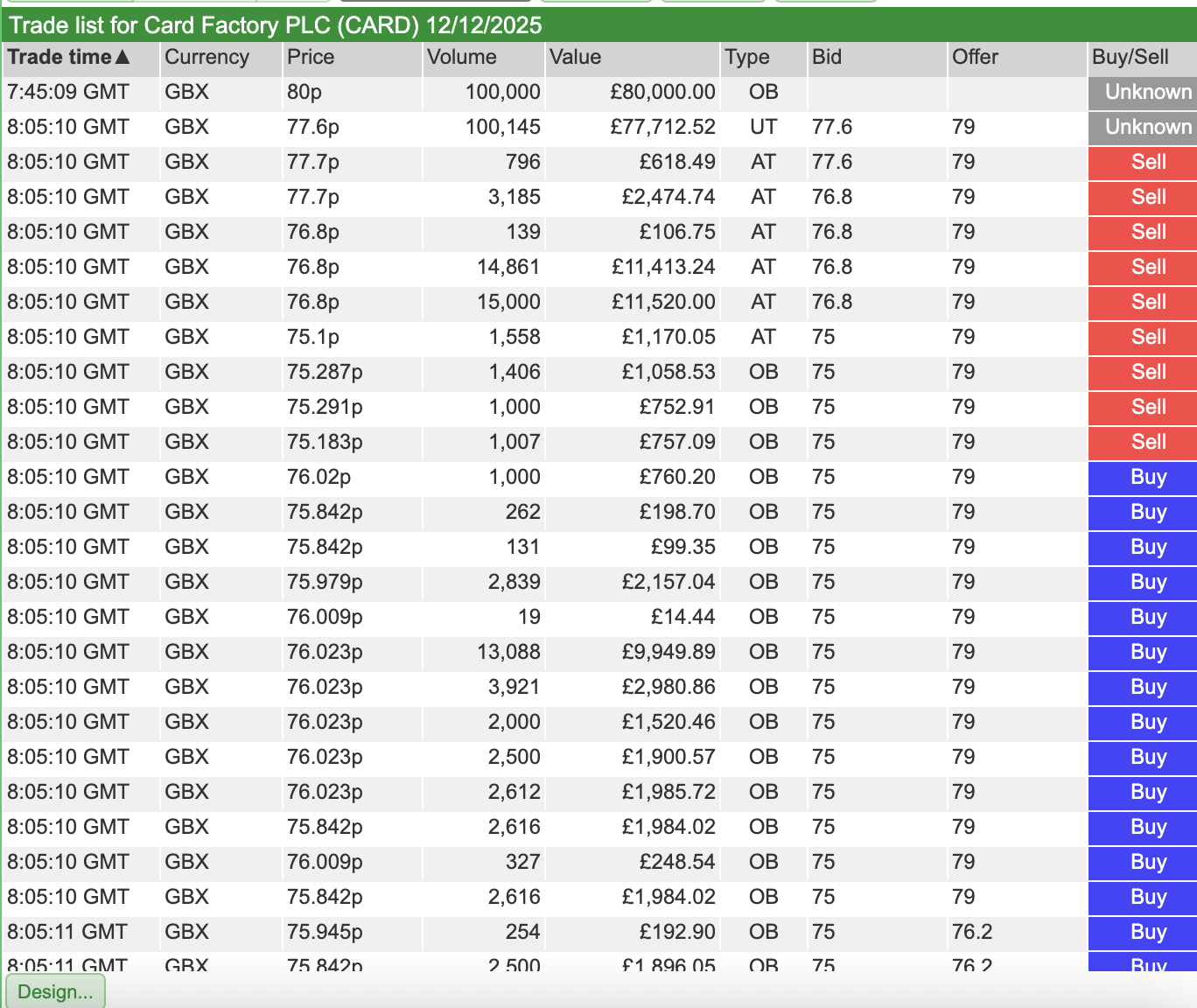
There were less than 4,000 shares sold on the bid at 77.7p, before the price started to fall.
However, I am not saying that the uncrossing trade is always the best price of the day. If the stock had rallied sharply, then it could have been one of the worst.
But the uncrossing trade can give you an opportunity to get involved in the stock right from the first trade, and benefit from any quick movements.
I then closed my trade at 71.2p before the intraday auction was triggered.
Personally, I prefer to trade upgrades in a bull market, as the potential for a move is higher. People are inherently bullish, and rising stock prices entice more and more people to get involved.
But this is one example of how to use auctions to get involved in stocks, either for an intraday trade or a swing trade.
Goodwin a few weeks ago put out a huge profit upgrade. We can see in the chart below that the uncrossing trade was the best print of the day, as the stock then rallied sharply through the day and days afterwards too.
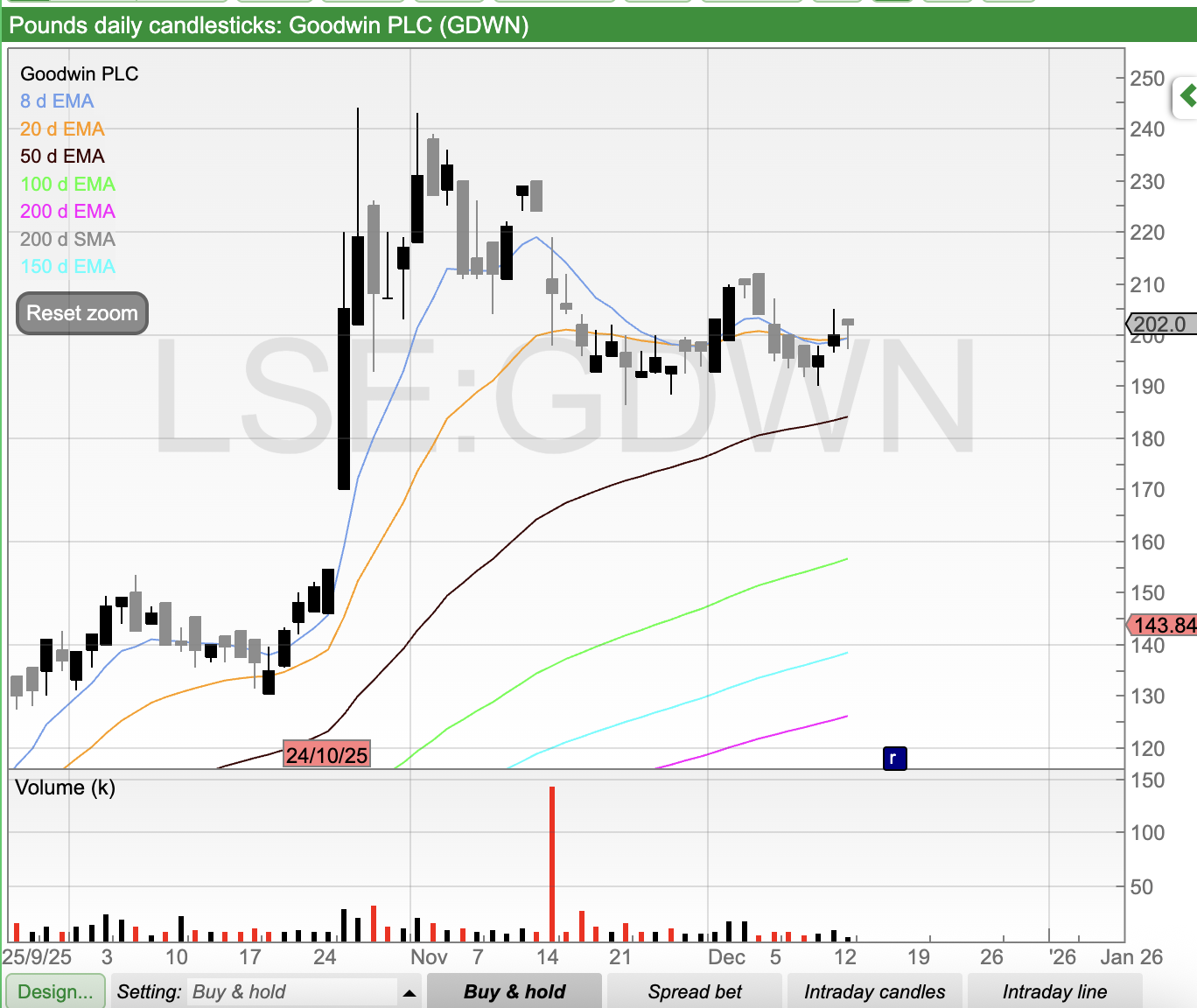
If you want to have the potential to be in a trade right at the very start of the move, then the uncrossing trade will often be close to the best print, if not the best print of the day, when there is going to be momentum in the price, both to the upside and downside.
Michael Taylor
Get Michael’s trade ideas: https://newsletter.buythebullmarket.com/
Free educational content: @shiftingshares
This article is for educational purposes only. It is not a recommendation to buy or sell shares or other investments. Do your own research before buying or selling any investment or seek professional financial advice.


one can see on Level 2 one trade at 77.6p 08.05am, for 100,145 shares, a £77,712 size short position.
If the author is saying this is their trade, can they not update the article to show that though their trading account, the profit should be should be about £6,400 from that trade.